
You have probably heard that quantum physics is impossible to understand. That nobody really gets it, and the experts just fake their confidence. It is a useful myth, but a myth all the same. The subject is strange, not impenetrable, and a good writer can make its central ideas feel within reach.
The best books on quantum physics do not hide the weirdness. They explain what an experiment actually shows, where the analogy breaks down, and why physicists argue about what it all means. Some lean on history, some on plain language, and some on illustrations, but each one respects your intelligence.



The titles below suit different readers, from curious teenagers to parents reading with their kids to adults who last studied science at school.
What Are the Best Books About Quantum Physics?
- Quantum Physics for Beginners
- Reality Is Not What It Seems
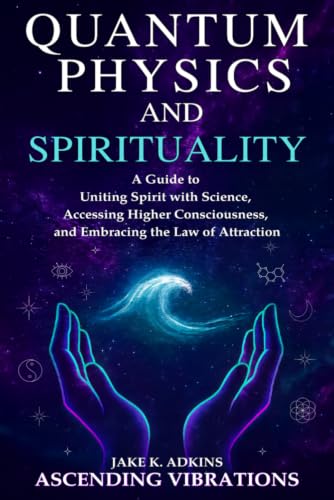
- Quantum Physics and Spirituality
- Quantum Theory
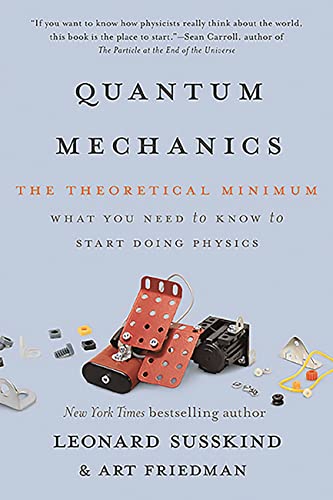
- Quantum Mechanics
- Quantum Physics for Beginners Non-Scientist’s
- Quantum Physics for Beginners and Non-Scientists
- The Holographic Universe
- Quantum Unlocked
- Quantum Physics For Dummies
- The God Equation
- Quantum Physics for Kids
- On the Equality of All Things
- Quantum Physics for Poets
- Dancing Wu Li Masters
| Book Name | Author | Published |
|---|---|---|
| Quantum Physics for Beginners | Pratt, Carl J. | 2021 |
| Reality Is Not What It Seems | Rovelli, Carlo | 2018 |
| Quantum Physics and Spirituality | Vibrations, Ascending, Adkins, Jake K. | 2026 |
| Quantum Theory | Planck, Max | 2023 |
| Quantum Mechanics | Susskind, Leonard, Friedman, Art | 2015 |
| Quantum Physics for Beginners Non-Scientist’s | Academy, Pantheon Space | 2024 |
| Quantum Physics for Beginners and Non-Scientists | Roffe, Ferdinand | 2025 |
| The Holographic Universe | Talbot, Michael | 2011 |
| Quantum Unlocked | Louis-Charles, C | 2026 |
| Quantum Physics For Dummies | Jones, Andrew Zimmerman | 2024 |
| The God Equation | Kaku, Michio | 2022 |
| Quantum Physics for Kids | Finwise, Max | 2026 |
| On the Equality of All Things | Rovelli, Carlo | 2026 |
| Quantum Physics for Poets | Lederman Nobel Laureate, Leon M., Hill, Christopher T. | 2024 |
| Dancing Wu Li Masters | Zukav, Gary | 2001 |
15 Best Books on Quantum Physics
1. Quantum Physics for Beginners
by Pratt, Carl J.

Overview
Quantum Physics for Beginners is a short paperback that walks readers from wave theory to quantum computing. Carl J. Pratt sets out to explain how everything works through simplified explanations of quantum physics and mechanics principles. At 127 pages, it is designed as an accessible entry point for newcomers rather than a technical reference. The book was independently published in March 2021 and is written in English.
Book Details
| Author | Pratt, Carl J. |
| Pages | 127 pages |
| Publisher | Independently published |
| Published | March 14, 2021 |
| Language | English |
This is the shortest and most approachable option on the list. Pratt keeps the explanations simplified, moving from wave theory toward quantum computing without assuming prior physics knowledge. The 127 page length makes it easy to finish in a few sittings.
The writing favors clarity over depth, so expect broad principles rather than dense mathematics. It works well for curious adults who want a first foothold, and for students who need a gentle introduction before heavier texts. Teachers may find it useful as a warm up for a class.
If you want a quick, plain English primer to hand to someone new to the subject, this fits the bill. Readers already familiar with quantum mechanics will likely want something more advanced.
“
A short, simple starting point that carries readers from wave theory to quantum computing without heavy maths.
2. Reality Is Not What It Seems
by Rovelli, Carlo

Overview
Reality Is Not What It Seems takes readers through Carlo Rovelli’s account of modern physics, from the structure of space and time to the ideas behind quantum gravity. This 288 page paperback is a reprint from Riverhead Books, published in January 2018. It is available in English and Italian. Rovelli blends the science with a wider cultural journey through the ideas.
Book Details
| Author | Rovelli, Carlo |
| Pages | 288 pages |
| Publisher | Riverhead Books |
| Published | January 23, 2018 |
| Language | English, Italian |
Rovelli is the most established author here, and the book is the most ambitious in scope. It traces a journey toward quantum gravity, taking in space, time and the nature of reality along the way. The 288 pages give the ideas room to breathe.
The writing is elegant and reflective rather than dry, blending physics with a wider cultural and philosophical journey. It suits readers who want a serious but readable popular science book, and it rewards slower, attentive reading. The reprint edition from Riverhead Books is a solid paperback format.
This is a good pick for adults who enjoyed popular physics before and want to go deeper. It is less of a first primer and more a thoughtful exploration of what space and time really are.
“
A thoughtful journey toward quantum gravity that asks what space, time and reality actually are.
3. Quantum Physics and Spirituality
by Vibrations, Ascending, Adkins, Jake K.
Overview
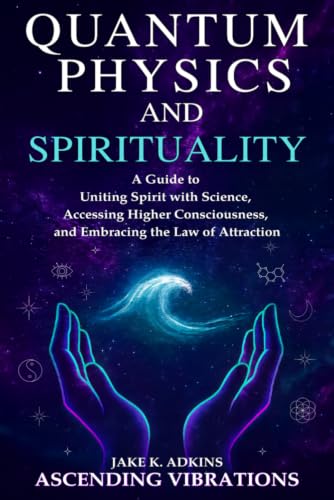
Quantum Physics and Spirituality explores the meeting point between quantum ideas and spiritual practice. Ascending Vibrations and Jake K. Adkins present it as a guide to uniting spirit with science. The 246 page paperback was independently published in May 2026 and is written in English.
Book Details
| Author | Vibrations, Ascending, Adkins, Jake K. |
| Pages | 246 pages |
| Publisher | Independently published |
| Published | May 22, 2026 |
| Language | English |
This book sits at a different angle from the other two. Rather than physics alone, it looks at how quantum ideas might connect with spirituality, higher consciousness and the law of attraction. The 246 pages give the authors space to develop that theme.
It suits readers drawn to the spiritual side of science and open to a more personal, reflective approach. The writing is aimed at a general audience rather than students of physics. Those wanting straight science will find it a stretch.
For gift buyers or readers interested in consciousness and attraction, this offers a bridge between two worlds. It is best approached as a spiritual guide informed by quantum ideas, not a physics textbook.
“
A spiritual guide that tries to unite quantum ideas with consciousness, higher awareness and the law of attraction.
4. Quantum Theory
by Planck, Max

Overview
A paperback collection of Max Planck’s foundational writing on quantum theory, published by Fingerprint. At 168 pages, it presents the ideas that reshaped modern physics in the original thinker’s own voice. The book is in English and German, giving readers access to the material across two languages. It suits readers who want a direct encounter with the early development of quantum ideas rather than a modern retelling.
Book Details
| Author | Planck, Max |
| Pages | 168 pages |
| Publisher | Fingerprint |
| Published | December 21, 2023 |
| Language | English, German |
This is Max Planck’s own writing on quantum theory, which makes it a different kind of reading experience from a modern explainer. The 168 page paperback from Fingerprint keeps things compact and focused. Readers who want to meet the original ideas in the original voice will find it rewarding.
The dual language format in English and German adds a layer for readers curious about the source text. It is not a light introduction, so it suits students and serious readers with some physics background. Teachers may find it useful as a companion to a standard course.
“
Planck’s original writing lets readers meet quantum theory at its source rather than through later retellings.
5. Quantum Mechanics
by Susskind, Leonard, Friedman, Art

Overview
Leonard Susskind and Art Friedman present quantum mechanics as a theoretical minimum, a focused course for readers who want the real framework rather than a popular summary. This 384 page paperback from Basic Books covers the core ideas of the subject in a structured way. It builds understanding step by step for readers willing to engage with the actual theory. It suits motivated learners who want substance over simplification.
Book Details
| Author | Susskind, Leonard, Friedman, Art |
| Pages | 384 pages |
| Publisher | Basic Books |
| Published | May 12, 2015 |
| Language | English |
Susskind and Friedman treat quantum mechanics as something to be learned properly, not skimmed. The 384 page paperback from Basic Books is built as a course in the theoretical minimum, so it moves with purpose through the core framework. Readers get a structured path rather than a tour of curiosities.
This is a book for people who want the real theory and are ready to work for it. The writing assumes curiosity and some comfort with physics, and it rewards steady reading. Students, self learners and teachers looking for a serious companion text will get the most from it.
“
The theoretical minimum approach gives readers the actual framework of quantum mechanics, built step by step.
6. Quantum Physics for Beginners Non-Scientist’s
by Academy, Pantheon Space

Overview
This beginner’s guide opens up the big ideas of quantum mechanics to readers with no science background. It covers key principles, major theories, and landmark experiments, all simplified for the general reader. The second edition runs 274 pages in paperback, published by Pantheon Global Publishing in November 2024. It is written for curious adults who want a clear entry point into a famously difficult subject.
Book Details
| Author | Academy, Pantheon Space |
| Pages | 274 pages |
| Publisher | Pantheon Global Publishing LLC |
| Published | November 7, 2024 |
| Language | English |
Pantheon Space Academy has built this book around accessibility rather than equations. The subtitle promises key principles, major theories, and experiments simplified, and the structure follows that promise by taking each idea one step at a time. Readers who have bounced off denser physics titles will find the pace much gentler here.
At 274 pages, it has room to explain concepts properly without turning into a textbook. The second edition format suggests the material has been refined for newcomers. It works well as a self-study companion or as background reading for a curious adult who wants the ideas without the maths.
This suits absolute beginners, adult learners, and anyone buying a first quantum physics book as a gift. Teachers may also find it useful for plain-language explanations of core concepts. It is not aimed at students who need formal training, but for general readers it is a friendly place to start.
“
Quantum mechanics becomes approachable when its biggest ideas are explained in plain language for curious newcomers.
7. Quantum Physics for Beginners and Non-Scientists
by Roffe, Ferdinand

Overview
Quantum Physics for Beginners and Non-Scientists is a math-free introduction to the strangest ideas in modern physics. Across 134 pages, Ferdinand Roffe walks readers through the most fascinating concepts, bizarre experiments and unresolved mysteries of the subatomic world. The book is written for people with no scientific background, so it avoids equations and jargon in favour of plain explanations. This independently published paperback, released in November 2025, aims to make quantum ideas approachable for curious general readers.
Book Details
| Author | Roffe, Ferdinand |
| Pages | 134 pages |
| Publisher | Independently published |
| Published | November 10, 2025 |
| Language | English |
This is the shortest and most welcoming book on the list, and that is its main strength. Roffe assumes no maths and no prior science, so the explanations stay plain and the pace stays gentle. At 134 pages it is easy to finish in a few sittings, which makes it a good first step for anyone who has felt shut out of physics before.
The focus is on ideas and experiments rather than derivations. Readers meet the bizarre behaviour of the subatomic world through description alone, which suits people who want the story of quantum physics without the working out. The writing is direct and built for non-scientists, so it rarely gets bogged down.
It suits adult beginners, students who want a soft entry point, and gift buyers looking for a low-pressure introduction. Teachers may find it useful as a plain-language reference for the classroom. If you want depth, look elsewhere, but as a first taste it does its job well.
“
A short, maths-free first step into the strange world of the subatomic for complete beginners.
8. The Holographic Universe
by Talbot, Michael

Overview
The Holographic Universe presents Michael Talbot’s argument that reality may work like a hologram, with the whole contained in every part. The book blends science and philosophy, drawing on quantum physics to explore the theory alongside paranormal phenomena. This Harper Perennial reprint runs 338 pages and was published in September 2011.
It is a longer, more speculative read that moves between physics and questions about consciousness, making it a natural fit for readers who enjoy big ideas that cross the line between science and philosophy.
Book Details
| Author | Talbot, Michael |
| Pages | 338 pages |
| Publisher | Harper Perennial |
| Published | September 6, 2011 |
| Language | English |
Talbot’s book is the most ambitious here, and the most speculative. It takes the holographic idea seriously and uses quantum physics as a springboard into questions about consciousness and paranormal experience. Readers looking for a straight physics primer should know that this one wanders well beyond the laboratory.
At 338 pages it asks for more patience than the shorter guides. The writing is idea-driven, moving between science and philosophy, and it rewards readers who enjoy following an argument into uncomfortable territory. Some of the claims are bold, and the book is best read with a curious but critical mind.
It suits readers who like their science mixed with philosophy, and anyone drawn to the stranger edges of quantum theory. Gift buyers should note it is a substantial read rather than a quick introduction. For the right reader, it is a thought-provoking journey.
“
A bold, speculative case that reality itself may be a hologram, blending physics with philosophy.
9. Quantum Unlocked
by Louis-Charles, C

Overview
Quantum Unlocked is a plain English guide to the new reality of quantum physics, part of the Understanding Quantum Physics Series. C. Louis-Charles sets out the strange science beneath everything in 313 pages, aiming to make the subject clear to ordinary readers without sacrificing the ideas. Published by Cybersoft Publishing in May 2026, this paperback sits between the very short introductions and the longer speculative works, offering a fuller treatment of quantum theory in accessible language.
Book Details
| Author | Louis-Charles, C |
| Pages | 313 pages |
| Publisher | Cybersoft Publishing LLc |
| Published | May 30, 2026 |
| Language | English |
Quantum Unlocked finds a middle ground between the brief introductions and the more speculative books. At 313 pages it has room to develop ideas properly, yet the plain English approach keeps the subject within reach. The series framing suggests a structured, step-by-step treatment rather than a loose tour.
Louis-Charles writes for readers who want real substance without a maths degree. The book covers the strange science beneath everything, so expect the core quantum ideas explained carefully and at length. It asks for more time than a short primer but gives more back in return.
This suits committed beginners, adult learners and students who want a thorough but readable guide. Teachers may appreciate it as a plain-language resource. It is a solid choice for anyone ready to go beyond the basics.
“
A thorough plain English guide that takes readers deeper into quantum physics without the maths.
10. Quantum Physics for Dummies
by Jones, Andrew Zimmerman

Overview
This third edition of Quantum Physics For Dummies is a plain English guide to one of the most intimidating subjects in science. Across 352 pages, Andrew Zimmerman Jones walks readers through the core ideas of quantum physics without assuming an advanced maths background. The For Dummies format keeps explanations friendly and step by step, so readers can build understanding gradually rather than meeting a wall of equations.
It is a paperback published in May 2024, aimed at curious adults, students and anyone who wants a patient entry point.
Book Details
| Author | Jones, Andrew Zimmerman |
| Pages | 352 pages |
| Publisher | For Dummies |
| Published | May 7, 2024 |
| Language | English |
The For Dummies series has a long track record of making difficult topics approachable, and this edition applies that formula to a subject many readers find genuinely intimidating. Andrew Zimmerman Jones keeps the tone light and the explanations structured, so each concept builds on the one before. It is a sensible choice for adults who want to understand quantum physics without committing to a formal textbook.
At 352 pages, this is a substantial book rather than a quick overview. The third edition is current as of May 2024, which matters in a field where popular explanations keep evolving. Readers who like the For Dummies layout, with its clear sections and informal voice, will find the format works well here too.
This book suits students starting out, adult learners returning to science, and anyone who has bounced off heavier texts before. It is not aimed at children, and it works best for readers who want a patient, methodical introduction. If you prefer a reference you can dip into rather than read cover to cover, this format fits that habit.
“
A patient, plain English starting point for anyone who has ever felt locked out of quantum physics.
11. The God Equation
by Kaku, Michio

Overview
The God Equation is Michio Kaku’s exploration of the search for a theory of everything, a single framework that could unite the forces of physics. Across 240 pages, Kaku traces the quest to reconcile general relativity with quantum mechanics and explains why this remains one of science’s great open problems. The paperback from Vintage is written for general readers, blending history and big ideas rather than dense mathematics. It suits anyone curious about the frontier questions of modern physics.
Book Details
| Author | Kaku, Michio |
| Pages | 240 pages |
| Publisher | Vintage |
| Published | March 29, 2022 |
| Language | English |
Michio Kaku is a well known popular science writer, and this book plays to that strength. He takes a huge, abstract question, whether physics can be unified into one theory, and makes the stakes clear for a general reader. The result is a book that feels driven by curiosity rather than equations.
At 240 pages, it is compact enough to read in a few sittings, yet it covers a lot of ground. Kaku’s writing connects the history of physics to the open problems of today, which gives the book a sense of momentum. Readers who enjoy narrative science writing will find it more engaging than a conventional textbook.
This one suits adult readers with an interest in cosmology and fundamental physics, including those who want the big picture without the maths. It also makes a thoughtful gift for someone who follows science news. It is not a children’s book and assumes some comfort with abstract ideas, but it asks nothing technical of the reader.
“
A compact tour of physics’ biggest unfinished question, written for curious general readers.
12. Quantum Physics for Kids
by Finwise, Max

Overview
Quantum Physics for Kids is a STEM title that sets out to explain the strangest science in the universe in simple terms, as the subtitle promises. The 140 page paperback from author Max Finwise is independently published and aimed at curious children rather than adults. It takes a subject usually reserved for university courses and reframes it for young readers. It is a natural fit for parents, teachers and gift buyers looking to spark early interest in science.
Book Details
| Author | Finwise, Max |
| Pages | 140 pages |
| Publisher | Independently published |
| Published | March 3, 2026 |
| Language | English |
Very few books attempt to bring quantum physics down to a child’s level, and that alone makes this one worth a look. Max Finwise frames the subject as the strangest science in the universe, which is a smart way to turn confusion into intrigue. The simple language approach keeps the focus on ideas rather than equations.
At 140 pages, it offers young readers a proper book to work through rather than a thin picture book. It is independently published, so it sits outside the usual school or library ranges. For parents and teachers who want a science title that goes beyond the standard topics, this fills a genuine gap.
This book suits curious children, along with the parents, teachers and gift buyers who encourage them. It works well as a classroom extra or a birthday present for a science minded kid. Adults hoping for a deep treatment should look elsewhere, but for young readers it is an inviting first step.
“
A rare attempt to make the strangest science in the universe feel welcoming to young readers.
13. On the Equality of All Things
by Rovelli, Carlo

Overview
Carlo Rovelli explores the deep connections between physics and philosophy, asking what the laws of nature tell us about equality, unity and our place in the world. Drawing on his background in both fields, he looks at how scientific ideas shape the way we think about fairness and shared existence. The book pairs hard science with big questions, written for curious readers who want more than equations. It is a short hardcover of 192 pages, published by Scribner.
Book Details
| Author | Rovelli, Carlo |
| Pages | 192 pages |
| Publisher | Scribner |
| Published | September 15, 2026 |
| Language | English, Italian |
Rovelli writes with a calm, thoughtful voice that makes heavy ideas feel within reach. The book is short at 192 pages, so it moves quickly and never overstays its welcome. Readers who enjoyed his earlier writing will recognise the same mix of science and reflection.
The central pull here is the link between physics and philosophy. Instead of treating them as separate worlds, Rovelli lets them talk to each other, and the result is a book that asks as many questions as it answers. The hardcover format makes it a tidy gift for a thoughtful friend.
This one suits readers who like ideas more than formulas. It is a good pick for philosophy-minded science fans, for teachers looking for discussion material, and for anyone who wants a short, reflective read on what physics says about how we live together.
“
Physics and philosophy meet to ask what equality and shared existence really mean in a connected universe.
14. Quantum Physics for Poets
by Lederman Nobel Laureate, Leon M., Hill, Christopher T.

Overview
Leon M. Lederman, a Nobel Laureate, teams up with Christopher T. Hill to explain quantum physics in language that non-scientists can follow. The book aims to open up a famously strange field without losing the wonder, using clear prose instead of dense maths. It runs 338 pages in paperback from Prometheus, published in August 2024. It is written for readers who want real physics delivered with a light touch.
Book Details
| Author | Lederman Nobel Laureate, Leon M., Hill, Christopher T. |
| Pages | 338 pages |
| Publisher | Prometheus |
| Published | August 6, 2024 |
| Language | English |
The pairing of a Nobel Laureate and a physicist co-author gives the book a strong foundation without making it feel like a lecture. Lederman and Hill keep the focus on ideas and the strange behaviour of the quantum world. The prose is aimed squarely at readers who do not have a science background.
At 338 pages, there is room to go deeper than a quick introduction, and the paperback format keeps it easy to carry and annotate. The writing leans on analogy and plain description rather than equations. That makes it a solid choice for the curious general reader.
It suits adults who want a serious but accessible tour of quantum physics. Teachers may find it useful for background reading, and it works as a gift for someone who likes science but was put off by textbooks.
“
A Nobel Laureate explains the strange world of quantum physics in plain language for ordinary readers.
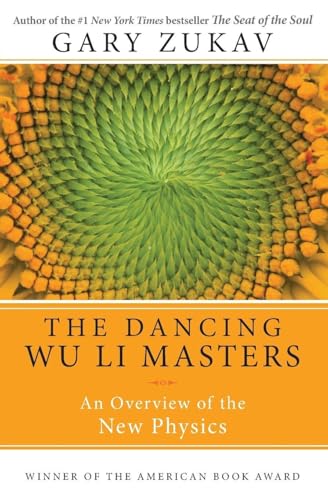
15. Dancing Wu Li Masters
by Zukav, Gary
Overview
Gary Zukav explores quantum physics alongside Eastern philosophy, looking at where modern science and spiritual ideas meet. The book takes the reader through the strange findings of quantum theory and asks what they might mean for how we see ourselves. It is a longer read at 416 pages in paperback from HarperOne, first published in 2001. It is aimed at readers who want science with a philosophical and spiritual angle.
Book Details
| Author | Zukav, Gary |
| Pages | 416 pages |
| Publisher | HarperOne |
| Published | July 24, 2001 |
| Language | English |
Zukav’s book is ambitious, drawing a line between the discoveries of quantum physics and the ideas of Eastern philosophy. The writing is conversational and idea-driven, with the emphasis on meaning rather than maths. It is the kind of book that invites readers to pause and think about what the science implies.
At 416 pages, this is the longest of the three and it takes its time building its argument. The paperback format from HarperOne makes it a practical everyday read. Readers who like a blend of science and spirituality will find plenty to chew on here.
It suits curious general readers, especially those drawn to philosophy or spirituality rather than pure physics. It is also a good pick for book groups that enjoy debate, since the ideas invite disagreement as much as agreement.
“
Quantum physics and Eastern philosophy are brought together to ask what science says about spirit and self.
How to Choose the Best Books on Quantum Physics
Start with Your Goal and Your Level
Before you browse titles, decide what you actually want from the book. Some readers want a gentle first introduction with no maths, while others want a structured account of how the theory developed. Quantum Physics for Beginners and Quantum Physics For Dummies sit at the accessible end, while Quantum Theory and Quantum Mechanics suit readers who are ready for more formal explanations. Matching the book to your starting point saves a lot of frustration.
Look at the Writing Style and the Author
Quantum physics is hard enough without a style that grates on you. Some authors write like storytellers, drawing you in through history and personalities, which is the approach Carlo Rovelli takes in Reality Is Not What It Seems. Others, like Gary Zukav in Dancing Wu Li Masters, connect the physics to broader philosophical ideas. Read a sample page or two if you can, because the voice matters as much as the content.
Check the Format and the Length
These books come in very different shapes. Quantum Physics for Kids and Quantum Physics for Beginners are short, illustrated introductions, while The God Equation by Michio Kaku and The Holographic Universe by Michael Talbot offer longer, more sustained arguments. A slim paperback is easy to finish and good for a commute, but a longer book gives more room for the ideas to breathe. Think about how much time you realistically have.
Decide Between Ideas and Practice
Some readers want concepts and context, others want to work through problems. Quantum Physics for Poets by Leon M. Lederman and Christopher T. Hill leans toward ideas and culture, while Quantum Unlocked and titles aimed at non-scientists focus on making the concepts click without exercises. If you enjoy thinking about meaning, Quantum Physics and Spirituality and On the Equality of All Things take that route. Pick the balance that matches how you like to learn.
Use Reader Feedback as a Guide
Reviews and ratings can tell you whether a book really is beginner friendly, or whether it assumes more than the title suggests. They also flag common complaints, such as a book being too shallow or too dense for its stated audience. Look for comments from readers with a similar background to yours, whether that is a curious parent, a teacher, or an adult returning to science. A quick scan of feedback often tells you more than the blurb.
A Quick Comparison to Help You Decide
| Reader | Good starting points |
|---|---|
| Complete beginner, no maths | Quantum Physics for Beginners, Quantum Physics For Dummies |
| Curious about big ideas | Reality Is Not What It Seems, The God Equation |
| Interested in philosophy and meaning | Quantum Physics and Spirituality, Dancing Wu Li Masters |
| Parent or teacher buying for a child | Quantum Physics for Kids |
None of these categories is rigid, and plenty of readers enjoy moving between them. You might start with a short illustrated guide and later move on to a longer, more demanding book. The key is to be honest about your level and your goal before you spend money. A book that fits you will feel like a conversation, not a test.
How Much Impact Can Books About Quantum Physics Have?
Books about quantum physics can change how you think, but it helps to be clear about what they can and cannot do. They will not turn you into a physicist, and no single book will make the maths click overnight. What they can do is give you a working picture of the ideas, the vocabulary to follow conversations, and a sense of why the subject matters.
That is a real gain, and for most readers it is the gain they were actually looking for. The trick is choosing the right book and using it well.
Speed depends on the book and on you. A short, friendly introduction such as Quantum Physics for Beginners can be read in a few evenings and leaves you able to explain superposition and uncertainty in plain terms. Denser titles like Quantum Theory or Quantum Mechanics ask more of the reader and reward slower reading.
Popular science classics such as Reality Is Not What It Seems or The Holographic Universe are written to be enjoyed, not crammed, so give them time. If you set aside twenty minutes a day, most readers finish a general introduction within a couple of weeks.
Getting More from Each Book
Reading once is a start, not a finish. Quantum ideas are counterintuitive, and most people find that a second pass, even a quick skim, locks the concepts in place. Keep a pen nearby and mark the passages that surprised you. When a chapter introduces a concept like entanglement, try explaining it to someone else in your own words before moving on. The effort of explaining is where understanding actually forms.
Discussion helps more than most readers expect. A friend, a book club, or an online forum gives you a place to test your grasp and hear other interpretations. This matters especially with books that mix physics and philosophy, such as Quantum Physics and Spirituality or The Holographic Universe, where readers reasonably disagree about what the science supports.
Talking it through keeps you thinking critically rather than simply absorbing claims. For parents and teachers, the same principle applies with younger readers, and Quantum Physics for Kids is built for exactly that kind of shared reading.
Being Honest About the Limits
No popular book substitutes for a textbook, and none of these titles will teach you to solve problems or follow derivations. Titles like Quantum Physics For Dummies and Quantum Physics for Beginners and Non-Scientists are honest about being introductions, and that is their strength. Books such as Quantum Physics for Poets or Dancing Wu Li Masters are more interested in ideas and language than in equations, which suits some readers and frustrates others. Know which experience you want before you buy.
It also pays to match the book to your background. A complete beginner will get the most from a gentle guide, while someone with some science training may prefer Quantum Unlocked or The God Equation for a broader sweep. Re-reading matters here too, because a second attempt at a harder book often goes far better once the basics are in place. If a title feels over your head, set it aside and come back after an easier one.
A Realistic Return
| What you put in | What you can expect |
|---|---|
| A few evenings with an introductory book | Comfort with core terms and the main ideas |
| Re-reading and note taking | Deeper recall and the ability to explain concepts |
| Discussing with others | Sharper critical thinking about claims and interpretations |
| Working through a textbook-style title | Problem-solving skill, which popular books alone will not give you |
The honest summary is that these books offer real intellectual value at a modest cost in time. They widen your sense of how the world works and give you the vocabulary to join the conversation. They will not make you a physicist, and they are not meant to. Read with curiosity, revisit the hard parts, and talk about what you learn, and the impact will be worth the effort.
Frequently Asked Questions
What Are the Best Books on Quantum Physics for Complete Beginners?
For someone starting from zero, look for books that explain concepts in plain language before introducing any maths. Books on quantum physics aimed at general readers usually spend time on the ideas behind superposition and entanglement rather than on equations. A short, friendly introduction works better than a dense textbook you will abandon after two chapters. Check the description for phrases like no prior physics needed or accessible introduction.
Think about your goal too. If you want a broad cultural tour, a popular science book by a well known science writer is a good fit. If you plan to study the subject formally, a beginner friendly textbook with worked examples will serve you better. Reading a sample page online tells you quickly whether the author’s style suits you.
Do I Need a Maths or Physics Background to Read Books on Quantum Physics?
It depends entirely on the book. Popular science titles are written for curious adults with no science training and keep the maths to a minimum. They use analogies, diagrams and everyday examples to carry the reader through difficult ideas. These are the safest choice if your last physics lesson was at school.
Textbooks are a different matter. They assume comfort with algebra, calculus and probability, and they build up formalism step by step. Some introductory texts sit in between, offering gentle maths support alongside the concepts. Read the publisher’s description and the table of contents to see which level a book targets before you buy.
Which Books on Quantum Physics Are Suitable for Teenagers or Young Readers?
Several authors write specifically for young adults, using shorter chapters, clear diagrams and relatable examples. Look for books described as suitable for ages 12 and up, or ones written by teachers and science communicators who work with schools. These titles focus on the strange ideas, like wave particle duality, without demanding advanced maths.
Parents and gift buyers should check the reading age and page count in the product details. A slim illustrated guide is often a better gift for a curious teenager than a 600 page university text. Teachers may also find discussion friendly books useful for classroom reading, especially ones with questions or thought experiments at the end of chapters.
What Is the Difference Between Popular Science Books and Textbooks on Quantum Physics?
Popular science books tell a story. They focus on the history, the personalities and the big ideas, and they usually avoid equations. Their aim is understanding and wonder rather than exam preparation. They suit general readers, parents and anyone who wants a readable overview.
Textbooks are structured for learning and problem solving. They include derivations, exercises, and often solutions or further reading lists. Page counts are higher and the pace is slower and more rigorous. If you are taking a course or teaching one, a textbook is the practical choice. If you simply want to understand what quantum physics is about, start with a popular science title.
Are There Good Illustrated or Graphic Books on Quantum Physics?
Yes, illustration heavy guides are a popular entry point. Some books use cartoons, timelines and diagrams to explain concepts like the double slit experiment and the uncertainty principle. The visual format helps readers who find long prose intimidating, and it works well for younger readers and visual learners.
Check whether the illustrations are explanatory or just decorative. A good illustrated guide uses images to carry the argument, not to fill space. Look at the preview pages if available, and check the page count, since graphic style books are often shorter than standard texts.
How Do I Choose the Right Books on Quantum Physics for a Gift?
Start with the recipient. A curious general reader will enjoy an engaging popular science book by a well known author. A student taking physics needs a textbook with exercises. A younger reader may prefer an illustrated guide with a lower reading age. Matching the book to the person matters more than picking the most famous title.
Then check the practical details in the product listing: page count, format, edition and publication date. A recent edition of a textbook usually reflects current teaching. For gifts, a hardback or a short readable paperback often feels more special than a dense reference volume. A brief look at the contents page tells you whether the topics match their interests.
Can Books on Quantum Physics Help Me Understand the Subject Without a Teacher?
Good self study books are written with exactly that reader in mind. Popular science titles assume no teacher and explain each idea from scratch. Some introductory textbooks include worked solutions and study questions, which makes independent learning more realistic. Reading one book slowly and taking notes beats rushing through several.
Be realistic about how far you want to go. Conceptual understanding is achievable through reading alone for most motivated adults. Working through full mathematical treatments is harder without feedback, so pair a textbook with online lectures or a study group if you plan to go deep. Start with one accessible book and build from there.
Last Word
Quantum Physics for Beginners is the safest starting point for most readers. It explains the basics in plain language and does not assume a science background. If you want something more literary and philosophical, Reality Is Not What It Seems suits curious readers who enjoy big ideas. For parents and teachers, Quantum Physics for Kids is the better fit for younger readers.
Before you buy, think about what you actually want from the book. A gentle introduction is best for first contact with the subject. Something more conceptual rewards readers who already know the basics and want a wider perspective. Match the book to your starting point and you will get far more from it.