

Something shifts after you finish a truly good book on this subject. The problems that felt unique to you turn out to be old and solvable, and the next decision looks a little clearer. That is the practical value of reading about business.
There are so many titles now that a shelf can feel like noise. Some are memoirs, some are playbooks, and some are written for teenagers or for families building something together. That range is useful, but it makes books to read for entrepreneurs hard to sort on your own.

We grouped the titles below by the reader they suit, from first ventures to owners ready to grow. Each earns its place for a different reason.
What Are the Best Books About Read for Entrepreneurs?
- I Will Teach You to Be Rich
- Your Next Five Moves
- Buoyant
- The Entrepreneurial Shift
- From Operator to Owner
- The Young Entrepreneur’s Guide to Starting and Running
- Kid Entrepreneur
- The Simple Path to Wealth
- How to Turn $100 into $1,000,000
- Start with Why
- Dare to Lead
- 12 Months to $1 Million
- The Tuttle Twins Guide To Inspiring Entrepreneurs
- Faith Driven Entrepreneur
- Go Do Deals
| Book Name | Author | Published |
|---|---|---|
| I Will Teach You to Be Rich | Sethi, Ramit | 2019 |
| Your Next Five Moves | Bet-David, Patrick | 2021 |
| Buoyant | deVille, Susie | 2022 |
| The Entrepreneurial Shift | Ojha, Bhupendra | 2026 |
| From Operator to Owner | Landry, Liz | 2026 |
| The Young Entrepreneur’s Guide to Starting and Running | Mariotti, Steve | 2014 |
| Kid Entrepreneur | Publishing, Savvy Books | 2025 |
| The Simple Path to Wealth | Collins, J L | 2025 |
| How to Turn $100 into $1,000,000 | McKenna, James, Glista, Jeannine | 2024 |
| Start with Why | Sinek, Simon | 2011 |
| Dare to Lead | Brown, Brené | 2018 |
| 12 Months to $1 Million | Moran, Ryan Daniel | 2020 |
| The Tuttle Twins Guide To Inspiring Entrepreneurs | Connor Boyack | 2020 |
| Faith Driven Entrepreneur | Kaestner, Henry, Greear, J. D. | 2021 |
| Go Do Deals | Harbour, Jeremy | 2020 |
15 Best Books to Read for Entrepreneurs
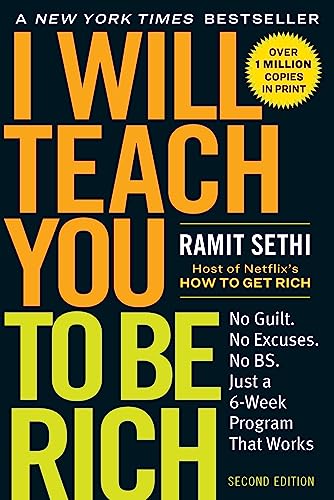
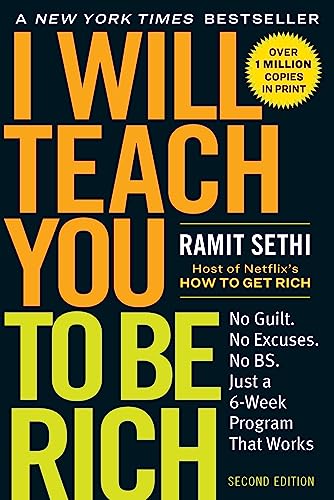
1. I Will Teach You to Be Rich
by Sethi, Ramit
Overview
A revised paperback edition of Ramit Sethi’s personal finance guide, built around a six-week program. It promises practical money advice without guilt or excuses, covering how to handle spending, saving and investing. Published by Workman Publishing Company, it runs 352 pages in English. The book is often bought as a gift and is presented as helpful in various everyday ways.
Book Details
| Author | Sethi, Ramit |
| Pages | 352 pages |
| Publisher | Workman Publishing Company |
| Published | May 14, 2019 |
| Language | English |
What sets I Will Teach You to Be Rich apart is its structure. Ramit Sethi frames the book as a six-week program rather than a loose collection of tips, so readers get a clear sequence to follow. The tone is direct and free of guilt, which suits people who have avoided finance books before.
At 352 pages in paperback, it gives Sethi room to walk through money basics step by step. The writing stays plain and conversational, aimed at readers who want practical action rather than theory. It works well for young professionals and anyone starting to take their finances seriously.
It also makes a sensible gift, since the second edition is widely available and approachable. Entrepreneurs who want their personal finances in order before scaling a business will find it a useful starting point.
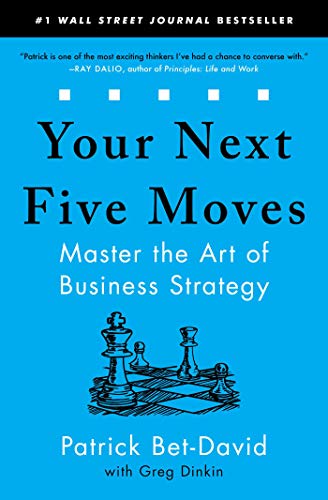
2. Your Next Five Moves
by Bet-David, Patrick

Overview
Patrick Bet-David’s book on business strategy, published by Gallery Books. It focuses on mastering the art of strategy and thinking several moves ahead, in the way a chess player plans. The paperback runs 320 pages in English. It is aimed at readers who want a structured approach to strategic decision making in business.
Book Details
| Author | Bet-David, Patrick |
| Pages | 320 pages |
| Publisher | Gallery Books |
| Published | June 1, 2021 |
| Language | English |
Your Next Five Moves is built around a single strong idea: think ahead like a chess player. Patrick Betth David uses that frame to talk about business strategy and the decisions that shape a company. The focus stays on planning several steps in advance rather than reacting.
The paperback runs 320 pages, giving the material room to develop without feeling bloated. Bet-David writes in a direct, motivational style that suits readers who like energy alongside strategy. Entrepreneurs who feel stuck in day to day firefighting are the natural audience here.
It pairs well with more tactical business reading and works as a gift for a founder who wants to think bigger.
3. Buoyant
by deVille, Susie

Overview
Susie deVille’s guide for entrepreneurs, published by Page Two. The book focuses on becoming wildly successful, creative and free, tying business ambition to creativity and personal freedom. It runs 296 pages in English as a paperback. It is written for entrepreneurs who want more than growth alone and are interested in building a business that supports a creative, unconstrained life.
Book Details
| Author | deVille, Susie |
| Pages | 296 pages |
| Publisher | Page Two |
| Published | September 6, 2022 |
| Language | English |
Buoyant takes a different angle from most business books. Susie deVille writes about success, creativity and freedom as connected goals rather than separate ones. That makes it appealing to entrepreneurs who want their work to feel expansive rather than merely efficient.
At 296 pages in paperback, it is a focused read that blends mindset with practical reflection. The writing is encouraging and personal in tone, suited to readers who respond to ideas about creativity and freedom. Founders feeling burned out or boxed in by routine will likely get the most from it.
It works well as a gift for a creative business owner or anyone rethinking what success should look like.
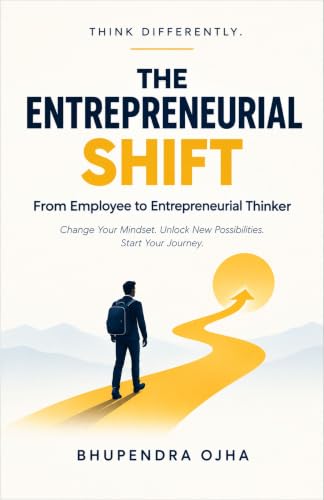
4. The Entrepreneurial Shift
by Ojha, Bhupendra

Overview
The Entrepreneurial Shift is the first book in the From Employee to Entrepreneur series. It focuses on changing how you think before you build anything. The book is about stopping the employee mindset and starting to build your own future. It moves from the early idea stage toward a business that gives you freedom. Bhupendra Ojha writes for people who want to make that mental shift first.
Book Details
| Author | Ojha, Bhupendra |
| Pages | 133 pages |
| Published | September 24, 2026 |
| Language | English |
This is a short book at 133 pages, so it suits readers who want a focused starting point rather than a long manual. The subject is the mindset change between working for someone else and building something of your own. It works well for anyone still in a job who is thinking about the leap. The Kindle format makes it easy to read in short sessions.
Ojha keeps the focus on thinking before doing, which is a useful order for new entrepreneurs. The book is the first in a series, so it reads as an opening step rather than a complete business course. Readers who like a clear, staged approach will appreciate that structure. It is a good pick for people at the very beginning of the journey.
“
Change how you think about work before you try to build a business of your own.
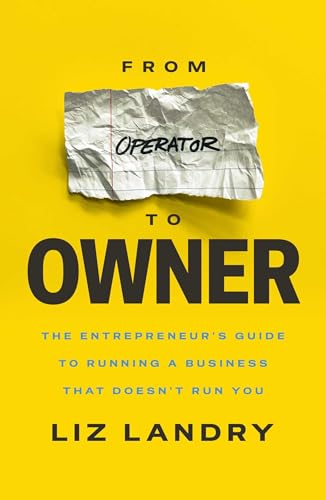
5. From Operator to Owner
by Landry, Liz

Overview
From Operator to Owner is a guide for entrepreneurs who already run a business. Liz Landry writes about running a business that does not run you. The book targets the shift from doing all the work yourself to actually owning and leading the operation. It comes from Mission Driven Press as a 272 page hardcover. It is aimed at founders who want more control over their time and their company.
Book Details
| Author | Landry, Liz |
| Pages | 272 pages |
| Publisher | Mission Driven Press |
| Published | October 20, 2026 |
| Language | English |
At 272 pages in hardcover, this is a substantial read for founders who are already in the thick of running something. The central idea is the move from operator to owner, meaning you stop being the person who does everything. Landry writes for entrepreneurs who feel the business is running them instead of the other way around. That makes it a natural next step for readers past the startup phase.
The book suits owners who want to step back from daily tasks and lead instead. It is published by Mission Driven Press, which suggests a values led angle for readers who care about that. The hardcover format makes it a solid choice as a gift for a founder friend. Anyone juggling too much in their own company will find the theme familiar.
“
A business should serve its owner, not consume the person who built it.
6. The Young Entrepreneur’s Guide to Starting and Running
by Mariotti, Steve

Overview
The Young Entrepreneur’s Guide to Starting and Running is a practical book by Steve Mariotti about turning ideas into money. It is aimed at young people who want to start and run their own business. This updated edition runs 496 pages and comes as a paperback from Crown Currency. It covers the basics of taking an idea and making it earn.
Book Details
| Author | Mariotti, Steve |
| Pages | 496 pages |
| Publisher | Crown Currency |
| Published | April 29, 2014 |
| Language | English |
This is a big book at 496 pages, and it is built as a full guide rather than a quick read. Mariotti writes for young people who want to turn ideas into money, so the tone and scope suit that audience. The updated edition from Crown Currency keeps it current. It works well for teens and young adults who are serious about starting something.
The paperback format makes it easy to hand to a young reader or keep on a classroom shelf. Parents and teachers looking for a gift with real substance will find plenty here to work through. Because it covers both starting and running a business, it grows with the reader. It suits motivated young entrepreneurs who want one book to cover the basics.
“
Young people can turn a good idea into real money with the right guidance.
7. Kid Entrepreneur
by Publishing, Savvy Books

Overview
Kid Entrepreneur is a paperback guide from Savvy Books Publishing aimed at young readers who want to learn about money and business. Running 169 pages, it mixes real stories with practical lessons in a format designed to be fun to read. Published in July 2025, it sits in the Financially Savvy Kid’s Guide series and introduces children to earning, saving and thinking like an entrepreneur.
Book Details
| Author | Publishing, Savvy Books |
| Pages | 169 pages |
| Publisher | Independently published |
| Published | July 23, 2025 |
| Language | English |
Kid Entrepreneur stands out for its friendly approach to a topic many adults find dry. The book pairs real stories with money lessons, so young readers get examples rather than lectures. At 169 pages it has enough room to explore ideas without feeling heavy.
The writing is built to be fun to read, which matters for children picking up a business book on their own. It suits curious kids, parents who want to start money conversations early, and teachers looking for classroom material. The paperback format keeps it easy to share.
“
Money lessons land better with young readers when real stories do the teaching.
8. The Simple Path to Wealth
by Collins, J L

Overview
The Simple Path to Wealth is J L Collins’ guide to financial independence and building a rich, free life. This revised hardcover edition runs 320 pages and lays out a road map for managing money with long term freedom in mind. Published by Authors Equity in May 2025, it speaks to readers who want a clear, steady approach to wealth rather than shortcuts.
Book Details
| Author | Collins, J L |
| Pages | 320 pages |
| Publisher | Authors Equity |
| Published | May 20, 2025 |
| Language | English |
The Simple Path to Wealth makes its name a promise: a road map, not a maze of tricks. J L Collins writes about financial independence and a rich, free life in plain terms. At 320 pages the revised hardcover has space to build its ideas step by step.
It suits entrepreneurs who want their personal finances steady while the business takes risks. The book is for readers who prefer calm, long term thinking over hype. The hardcover edition works well as a reference to revisit.
“
Wealth grows from a simple path followed patiently, not from clever shortcuts.
9. How to Turn $100 into $1,000,000
by McKenna, James, Glista, Jeannine

Overview
How to Turn $100 into $1,000,000 is the newly minted second edition of the guide by James McKenna and Jeannine Glista. Published by Workman Kids in April 2024, this 160 page paperback walks young readers through the idea of starting small and building wealth over time. It is designed to make money concepts approachable for a younger audience.
Book Details
| Author | McKenna, James, Glista, Jeannine |
| Pages | 160 pages |
| Publisher | Workman Kids |
| Published | April 23, 2024 |
| Language | English |
How to Turn $100 into $1,000,000 takes a big promise and makes it a teaching tool. McKenna and Glista build the book around starting small and thinking long term. The second edition from Workman Kids keeps that message fresh for a new group of readers.
At 160 pages it stays light enough for younger readers to finish. The paperback suits parents and teachers who want money basics introduced without pressure. It is a good fit for kids curious about saving and growing what they have.
“
Small money handled with big patience is the start of every fortune.
10. Start with Why
by Sinek, Simon

Overview
Start with Why explores how great leaders inspire people to take action. Simon Sinek argues that the most influential organisations and individuals communicate the purpose behind what they do before explaining how or what they do. Across 256 pages, the book looks at leadership, motivation and the power of a clear sense of purpose. This paperback reprint from Portfolio was published in December 2011 and is written in English.
Book Details
| Author | Sinek, Simon |
| Pages | 256 pages |
| Publisher | Portfolio |
| Published | December 27, 2011 |
| Language | English |
Sinek builds the book around a simple idea: purpose comes first, and everything else follows. The writing is direct and easy to follow, with short chapters that keep the pace moving. It reads less like a dense business text and more like a long, thoughtful conversation.
The core message is aimed at leaders, founders and anyone trying to rally other people around a goal. Sinek repeats his central point often, which helps it stick but can feel slow for readers who grasp it early. Still, the clarity of the argument makes it a useful starting point for thinking about why a business exists.
At 256 pages in paperback, it suits entrepreneurs who want a readable introduction to purpose driven leadership. It also works well as a gift for someone stepping into a leadership role for the first time.
“
People follow a clear reason before they follow a plan, so start with your why.
11. Dare to Lead
by Brown, Brené

Overview
Dare to Lead examines what it takes to lead with courage, honesty and whole hearts. Brené Brown writes about brave work, difficult conversations and the vulnerability that real leadership demands. The hardcover first edition from Random House runs 320 pages and was published in October 2018 in English. It is aimed at leaders and teams who want to build trust and handle hard discussions with honesty.
Book Details
| Author | Brown, Brené |
| Pages | 320 pages |
| Publisher | Random House |
| Published | October 9, 2018 |
| Language | English |
Brown writes with warmth and a conversational tone, mixing research ideas with stories that make the concepts feel human. The book asks leaders to be open about uncertainty and to have the tough conversations they usually avoid. It is reflective rather than prescriptive, and it invites readers to look at their own habits.
The 320 pages give the ideas room to breathe, though some readers may find the pace slower than a typical business book. It suits managers, founders and team leaders who care about culture and trust as much as results. The hardcover first edition also makes a solid gift for someone stepping into leadership.
This is less a step by step manual and more a guide to a mindset. Readers who want practical courage in everyday workplace moments will get the most from it.
“
Real leadership asks for honesty and vulnerability, especially in the conversations we would rather avoid.
12. 12 Months to $1 Million
by Moran, Ryan Daniel

Overview
This book sets out a step by step plan for launching a product business within a single year. Ryan Daniel Moran explains how to choose a winning product, build a real company around it, and grow toward seven figure revenue. Published by BenBella Books in 2020, the hardcover runs 240 pages and is aimed at aspiring entrepreneurs who want a practical path rather than theory.
Book Details
| Author | Moran, Ryan Daniel |
| Pages | 240 pages |
| Publisher | BenBella Books |
| Published | May 5, 2020 |
| Language | English |
Ryan Daniel Moran writes for people who want to start selling products but feel stuck at the beginning. The book is organised around picking a winning product first, then building a real business around it rather than chasing quick wins. At 240 pages in hardcover, it stays focused and moves at a steady pace.
The tone is direct and practical, with the twelve month frame giving each stage a sense of urgency. Moran spends time on the thinking behind product selection, which is where many new sellers go wrong. Readers who like clear steps and real world framing will find it easy to follow.
This one suits first time entrepreneurs and anyone planning a product based business. It also works for readers who want a structured plan they can act on straight away. The hardcover format makes it a reasonable gift for someone about to take the leap.
“
Pick the right product first, then build a real business around it within a year.
13. The Tuttle Twins Guide to Inspiring Entrepreneurs
by Connor Boyack

Overview
Connor Boyack introduces young readers to real entrepreneurs and the ideas that drove them. The book is built as a guide, pairing short profiles with lessons about ambition, risk and creating value for others. It is a hardcover from Libertas Press, 174 pages long, published in November 2020. It sits within the Tuttle Twins series, which presents big ideas to a younger audience in an approachable way.
Book Details
| Author | Connor Boyack |
| Pages | 174 pages |
| Publisher | Libertas Press |
| Published | November 11, 2020 |
| Language | English |
This is the pick for readers who are still young but curious about how businesses start. Boyack writes short, digestible profiles, so the book works well as a read-aloud or as independent reading for older children. The 174-page hardcover format gives it a sturdy feel for a shelf or a classroom.
The focus is on the mindset behind entrepreneurship: spotting opportunities, taking risks and serving other people. Families who want to introduce these ideas early will find it a gentle starting point. It also suits teachers looking for discussion material about work and ideas.
Adults reading alongside a child may find it a useful conversation starter rather than a deep manual. It is best treated as an introduction, not a complete course. For a young reader who asks how businesses work, it is a friendly place to begin.
“
Entrepreneurship starts with noticing a problem and daring to solve it.
14. Faith Driven Entrepreneur
by Kaestner, Henry, Greear, J. D.

Overview
Kaestley, Henry and Greear write for business owners who want their work to reflect their faith. The book explores purpose, calling and what it means to build something as a form of service. It is a 192-page hardcover from Tyndale Momentum, published in August 2021. The tone is reflective and encouraging, aimed at Christians thinking through the role of work in their lives.
Book Details
| Author | Kaestner, Henry, Greear, J. D. |
| Pages | 192 pages |
| Publisher | Tyndale Momentum |
| Published | August 31, 2021 |
| Language | English |
This one speaks to the inner life of an entrepreneur as much as the practical side. The authors treat business as a calling, and the writing stays reflective rather than technical. It is a hardcover of 192 pages, comfortable to read in short sittings.
The themes are purpose, stewardship and creating value with intention. Readers who feel torn between ambition and faith will find the framing useful. It works well for small groups or church book clubs, where the questions can be discussed openly.
It is less a how-to guide and more a companion for the journey. Expect encouragement and reflection rather than step-by-step tactics. It suits founders who want their work to mean something beyond profit.
“
Work becomes meaningful when it is treated as a calling rather than a career.
15. Go Do Deals
by Harbour, Jeremy

Overview
Jeremy Harbour writes a practical guide to buying and selling businesses. The book covers the deal process from start to finish, aimed at entrepreneurs who want to grow through acquisition rather than building from scratch. It is a 210-page paperback from Morgan James Publishing, released in December 2020. The approach is direct and action-oriented, with the title itself pushing readers to move.
Book Details
| Author | Harbour, Jeremy |
| Pages | 210 pages |
| Publisher | Morgan James Publishing |
| Published | December 8, 2020 |
| Language | English |
Harbour writes for the entrepreneur who is ready to act rather than study theory. The book walks through buying and selling businesses in plain language, with a direct, no-nonsense tone. At 210 pages in paperback, it is compact enough to work through quickly.
The energy of the title carries into the content: get moving, find deals, make offers. Readers who want a practical overview of the acquisition process will find it useful. It suits founders who already run something and are looking for the next step.
It is not a dense academic text, so expect fast reading and practical framing. Beginners may want to pair it with deeper resources on negotiation and finance. For someone ready to pursue deals, it is a motivating starting point.
“
Growth often comes faster through buying the right business than building one from zero.
How to Choose the Best Books to Read for Entrepreneurs
Start with the Reader’s Goal and Experience Level
Entrepreneurs read for different reasons. Some want a broad mindset shift, others want a step by step plan they can act on this week. It helps to name your goal before you browse. A first time founder may want a gentle on ramp like The Entrepreneurial Shift, while a seasoned owner might prefer something more tactical such as Your Next Five Moves. Matching the book to where the reader actually is saves a lot of half finished reading.
Look at Writing Style and Tone
These books range from personal and story driven to direct and instructional. Start with Why leans on narrative and big ideas, while 12 Months to $1 Million reads more like a roadmap. Neither approach is better, but one will suit you more on a given day. Think about whether you want to be challenged, reassured or simply given a checklist.
Skim a few sample pages if you can, since the voice of the author is often the difference between finishing and abandoning a book.
Decide Between Ideas and Practical Exercises
Some titles are built around concepts you reflect on, and others ask you to do work as you read. Dare to Lead sits more in the reflective camp, while Go Do Deals and From Operator to Owner lean toward action and decisions. If you like journaling, worksheets or prompts, check whether a book includes them before you buy. Readers who prefer pure ideas may find exercise heavy books slow, and doers may find idea books too abstract.
Weigh Format and Length
Format matters more than people expect. Some of these books are short and easy to carry, like Kid Entrepreneur, while others are denser and better suited to a desk. Consider whether you want a paperback to annotate, an ebook for travel, or something you can read in a few sittings.
Page count is a rough guide to commitment, so check it against the time you realistically have. A slim book you finish beats a thick one that sits on the shelf.
Match the Book to the Reader
Not every entrepreneurship book is written for the same audience. The Young Entrepreneur’s Guide to Starting and Running and How to Turn $100 into $1,000,000 suit younger readers and beginners, while The Tuttle Twins Guide To Inspiring Entrepreneurs works well for families and curious kids. Faith Driven Entrepreneur speaks to readers who want values woven into their work. If you are buying as a gift, the reader’s age and interests should guide you more than the title alone.
Check Reader Feedback and Reviews
Reviews are a quick way to sense whether a book delivers on its promise. Look for comments about pacing, clarity and whether the advice feels usable, not just star counts. Patterns across several reviews tell you more than one glowing or angry comment. It also helps to see who reviewers are, since a book loved by new founders may frustrate experienced operators. A little reading between the lines goes a long way.
A Simple Way to Compare Your Shortlist
Once you have a few candidates, line them up against your goal, preferred style and available time. This small table shows how the factors might guide a choice.
| What to weigh | Question to ask |
|---|---|
| Goal and level | Do I want mindset, strategy or a step by step plan? |
| Writing style | Do I prefer story driven or direct instruction? |
| Exercises or ideas | Will I actually do the prompts and worksheets? |
| Format and length | Can I finish this in the time I have? |
| Reader feedback | Do reviews mention clarity and usable advice? |
There is no single best book here, only the one that fits the reader in front of you. Take your time, compare two or three options, and pick the one you are most likely to open tonight. That small decision is often the most useful part of the whole process.
How Much Impact Can Books About Read for Entrepreneurs Have?
A book can change how you think about a problem, but it cannot run the business for you. That is the honest starting point. What a good book on entrepreneurship offers is a shift in perspective, a framework you can borrow, or the story of someone who solved a problem similar to yours. The gain is real, but it arrives through your own effort, not from turning pages alone.
Some lessons land quickly. A chapter on pricing, negotiation or how to frame an offer can be applied the same week. Other ideas take longer to absorb, especially ones that ask you to change a habit or rethink how you spend your time. Expect a mix. A few books will give you one idea that pays for itself many times over, and plenty of chapters will simply confirm what you already suspected. Both outcomes are useful.
What You Can Realistically Gain
- A clearer way to describe your business and its value.
- Frameworks for decisions you keep putting off.
- Language for problems you have felt but not named.
- Confidence that others have faced the same mess and come through it.
- Practical prompts that turn reading into action.
Notice what is missing from that list: certainty, shortcuts and guarantees. No book can tell you whether your idea will work in your market. What it can do is help you ask better questions before you spend money or time. Treat every book as a thinking tool, not an instruction manual.
How to Get More from Each Book
The biggest difference between readers who benefit and readers who forget everything is what happens after the last page. Keep a notebook while you read and write down only the ideas you could act on this month. Then pick one and try it in a small, low-risk way. A single applied idea beats ten underlined passages.
Re-reading matters more than most people expect. A second pass six months later often surfaces ideas you skimmed past because you were not ready for them. You will also notice how much your thinking has moved. If a book felt obvious the first time, that is usually a sign you have grown.
Discussion adds another layer. A small group, a co-founder or a mentor can push back on the parts you accepted too easily. Explaining an idea out loud exposes the gaps in your understanding faster than reading alone ever will. Even a short monthly conversation about one chapter is enough to keep the ideas alive.
Where Books Stop Helping
Books are written for a broad audience, so the specifics rarely match your situation exactly. Advice that worked for a founder in one industry may not transfer to yours. Authors also tend to describe what worked, which means the failures and lucky breaks are often less visible. Read with a questioning mind and test claims against your own numbers.
It also helps to match the book to your stage. A memoir or a big-picture book on purpose, such as Start with Why, suits someone still shaping their direction. A practical guide on systems or money suits someone already operating. Reading far ahead of your stage can feel inspiring but rarely sticks, because you have nothing to attach it to yet.
Finally, keep the reading habit modest. One book a month, applied properly, will do more for your business than twelve books skimmed in a rush. The goal is not to finish a shelf. It is to change one decision, then another.
Frequently Asked Questions
What Are the Best Books to Read for Entrepreneurs Who Are Just Starting Out?
For a first-time founder, the most useful books to read for entrepreneurs tend to cover the basics before big strategy. Look for titles on how to validate an idea, talk to customers and run a small business without wasting money. Books like The Lean Startup by Eric Ries focus on testing ideas quickly, while The E-Myth Revisited by Michael E. Gerber explains why so many small businesses get stuck working in the business instead of on it.
A good starting shelf mixes practical how-to with mindset. Books on habits and decision making, such as Atomic Habits by James Clear, help you build the discipline a new venture demands. Pick two or three titles rather than ten, and read them with a notebook open. The goal is to apply one idea per week, not to finish a reading list.
Are Books to Read for Entrepreneurs Useful If I Already Run a Business?
Yes, especially if you pick titles that match your current stage. Early-stage books on idea testing may feel basic once you have customers, so look for books on scaling, hiring, pricing and leadership instead. The Hard Thing About Hard Things by Ben Horowitz deals with the messy people and cash problems that show up after the launch phase, and it is written for founders already in the middle of it.
The real value comes from reading with a specific problem in mind. If hiring is your bottleneck, choose a book on building teams. If growth has stalled, choose one on marketing or sales. Owners who treat reading as research for a live decision get far more from these books than those who read passively.
Which Books to Read for Entrepreneurs Are Best for Someone Who Does Not Like Long Business Books?
Short, focused books work well for busy founders. Many popular titles in this space run around 200 pages or fewer and are written in plain, direct language. Books like Who Moved My Cheese? by Spencer Johnson are short parables you can finish in an evening, and they still leave you with a clear idea to think about.
Another option is to choose books built around a single method, so each chapter gives you something you can use right away. Rework by Jason Fried and David Heinemeier Hansson is a good example, with short chapters and a blunt, practical tone. You can read a chapter on a commute and act on it the same day.
What Should I Look for When Buying Books to Read for Entrepreneurs as a Gift?
Think about the person’s stage and interests first. A new founder may enjoy an encouraging, story-driven book about starting out, while a seasoned owner might prefer something on strategy or leadership. Classic titles like How to Win Friends and Influence People by Dale Carnegie suit almost anyone because the lessons apply to selling, hiring and partnerships alike.
Format matters for a gift too. Hardcover editions feel more substantial, while paperback or audiobook versions suit readers who travel. Check the page count and reading level so the book fits the person’s habits. A short, well-known title is often a safer gift than a dense 400-page manual they may never open.
Do I Need to Read Classic Business Books Before Newer Ones?
Not necessarily, but the classics still earn their place. Older titles such as Think and Grow Rich by Napoleon Hill and The 7 Habits of Highly Effective People by Stephen Covey shaped a lot of modern business thinking, and reading them helps you spot where newer books borrowed their ideas. They tend to be slower reads, with more stories and principles than checklists.
Newer books often move faster and focus on current tools, markets and startup culture. A sensible approach is to alternate: one classic, then one recent title that matches your industry. That way you get timeless principles alongside advice you can apply this year.
How Many Books to Read for Entrepreneurs Should I Get Through in a Year?
There is no correct number, and more is not automatically better. Many founders find that six to twelve books a year is realistic alongside running a company, because each one needs time to sink in. One book applied properly beats ten books skimmed and forgotten.
Choose a pace you can keep. Some readers prefer one book a month with notes and a follow-up action, while others read in bursts during quiet periods. If a book stops being useful, put it down and move on. Reading should feed your decisions, not become another task on your list.
Where Can I Find Reliable Recommendations for Books to Read for Entrepreneurs?
Start with sources that explain why a book is recommended, not just that it is popular. Founder interviews, podcast guest lists and reading lists from business schools often include a short reason for each pick, which helps you judge whether it fits your situation. Look for recommendations tied to a specific problem, such as pricing, hiring or first sales.
Reviews and sample chapters are useful for judging writing style and difficulty before you buy. Read the first few pages to check the tone and whether the author gets to the point. Combine a few trusted lists, then pick the titles that keep appearing and match your stage. That filter usually narrows a long list to a handful worth buying.
Last Word
For most entrepreneurs, I Will Teach You to Be Rich by Ramit Sethi is the best overall pick. It is a practical, plain spoken guide to money habits, and it suits readers who want a straightforward system rather than hype. If you prefer strategy over personal finance, Your Next Five Moves by Patrick Bet-David is a strong choice for founders thinking about their next steps.
Parents and teachers shopping for younger readers should look at Kid Entrepreneur, which introduces business ideas in an accessible way. Gift buyers who want something thoughtful for a faith driven founder will find Faith Driven Entrepreneur a better fit than a general business book.
Before you buy, match the book to the reader’s stage.