

Many people assume these personality tests act as a rigid box to define your entire future. In reality, these frameworks are just tools to help you identify your natural preferences and communication styles. They do not dictate your potential or limit what you can achieve in life.
The best myers briggs books help you understand why you interact with the world in a specific way. They move beyond simple labels to explain how different motivations drive our daily actions. These authors provide practical language to describe how you process information and make decisions, which can improve your relationships and professional life.



I assembled these titles to assist your study of your own type through the lens of psychology and human behavior. These guides range from deep academic studies to accessible handbooks for everyday use, and each one offers a unique perspective on human personality. Enjoy reading these works.
What Are the Best Books About Myers Briggs?
- Gifts Differing
- The Book of Personality Tests
- The 16 Personality Types
- Structural Typology
- The INFJ Handbook
- The INFJ Handbook
- Decode Your Personality
- Myers-Briggs by the Book
- Do What You Are
- The MBTI Code
- Type Talk at Work
- Please Understand Me II
- Essentials of Myers-Briggs Type Indicator Assessment
- Myers-Briggs 16 Personality Types Core Concepts Series
- Type Talk
| Book Name | Author | Published |
|---|---|---|
| Gifts Differing | Isabel Briggs Myers, Peter B. Myers | 1995 |
| The Book of Personality Tests | Haulwen Nicholas | 2020 |
| The 16 Personality Types | Dr. A.J. Drenth | 2017 |
| Structural Typology | Nikolay Petyaev | 2025 |
| The INFJ Handbook | Marissa Baker | 2015 |
| The INFJ Handbook | Marissa Baker | 2019 |
| Decode Your Personality | Dario Nardi | 2023 |
| Myers-Briggs by the Book | Jim Berge | 2015 |
| Do What You Are | Paul D. Tieger, Barbara Barron | 2021 |
| The MBTI Code | Rebecca F. Robert | 2025 |
| Type Talk at Work | Otto Kroeger, Janet M. Thuesen | 2002 |
| Please Understand Me II | David Keirsey | 1998 |
| Essentials of Myers-Briggs Type Indicator Assessment | Naomi L. Quenk | 2009 |
| Myers-Briggs 16 Personality Types Core Concepts Series | Julian Smith | 2025 |
| Type Talk | Otto Kroeger, Janet M. Thuesen | 1989 |
Best Myers Briggs Books
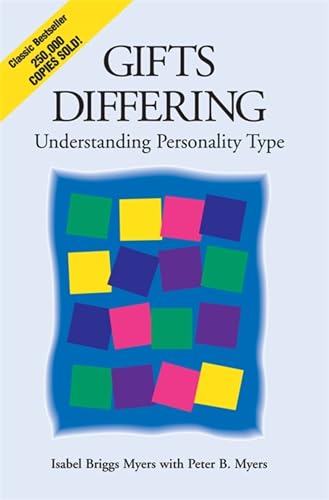
1. Gifts Differing
by Isabel Briggs Myers, Peter B. Myers

Overview
Gifts Differing by Isabel Briggs Myers and Peter B. Myers is a beloved classic for understanding personality type. Like a thumbprint, personality type provides an instant snapshot of a person’s uniqueness. Drawing on concepts originated by Carl Jung, this foundational book distinguishes four categories of personality styles and shows how these qualities determine the way people perceive the world and make choices. It serves as an essential guide for anyone wanting to comprehend human differences deeply.
Book Details
| Author | Isabel Briggs Myers, Peter B. Myers |
| Pages | 248 pages |
| Publisher | CPP |
| Published | January 1, 1995 |
| Language | English |
This foundational text stands out by tracing modern personality typology back to its roots in the psychological concepts of Carl Jung. The authors establish four distinct categories of personality styles to help readers see how innate qualities shape daily perceptions and decision making. Their approach treats individual differences as valuable gifts rather than flaws.
Readers encounter clear explanations across two hundred forty-eight pages of insightful text. The writing remains accessible while offering profound depth on how psychological types influence personal growth and relationships. It offers a structured way to look at human uniqueness without relying on complex academic jargon.
This book suits dedicated readers, psychology enthusiasts, and anyone seeking a comprehensive understanding of the Myers Briggs framework. Gift buyers will find it a meaningful choice for students or professionals interested in human behavior.
“
Understanding your unique personality style illuminates the path toward personal growth and better human connections.
2. The Book of Personality Tests
by Haulwen Nicholas

Overview
From the complex, traditional personality tests that are built on Jung’s original theories, such as Myers-Briggs Type Indicator, to the fun quizzes in glossy magazines telling us what type of sandwich we are, we have an endless fascination with uncovering who we are and what makes us tick. This compelling book offers a wide variety of tests that invite readers to explore their inner selves, examine their habits, and understand their unique personalities through engaging quizzes.
Book Details
| Author | Haulwen Nicholas |
| Pages | 144 pages |
| Publisher | Wellfleet Press |
| Published | September 15, 2020 |
| Language | English |
| Series | Puzzlecraft |
This title captures our endless fascination with uncovering who we are and what makes us tick. Haulwen Nicholas presents a variety of self assessment tools that range from traditional frameworks to lighter explorations. Readers can easily navigate the 144 page volume to explore their inner habits and preferences.
The content balances traditional theories rooted in psychological models with lighthearted quizzes reminiscent of glossy magazine features. This mixture creates an accessible and entertaining reading experience for anyone curious about their own behavior. The format invites casual browsing or focused introspection depending on the reader’s mood.
Gift buyers and casual readers looking for an engaging pastime will find this book particularly appealing. It suits individuals who enjoy self discovery without wading through overly academic or dense psychological texts. The 7.5 by 8.5 inch format makes it a handy volume for a coffee table or a thoughtful present.
“
Explore your inner self and discover what makes you tick through a fun collection of engaging personality quizzes.
3. The 16 Personality Types
by Dr. A.J. Drenth

Overview
The 16 Personality Types by Dr. A.J. Drenth explores the fundamental human search for self and identity. Understanding personality typology and learning about specific types like INFJ allows readers to clarify who they are, discover how they should live, and figure out what they should do with their lives.
Book Details
| Author | Dr. A.J. Drenth |
| Pages | 228 pages |
| Publisher | Andrew Drenth |
| Published | June 29, 2017 |
| Language | English |
This book dives deep into the search for self that leads many people to explore personality typology. It addresses the core human desire to understand identity and figure out the best path forward in life. Readers looking to decode their type will find clear psychological insights within these pages.
Dr. A.J. Drenth writes in a thoughtful and engaging style that makes complex personality theories accessible to everyday readers. The text covers detailed profiles, underlying theory, and type development without getting bogged down in overly dense academic jargon. It strikes a great balance between psychological depth and practical self reflection.
This volume suits curious minds, psychology enthusiasts, and anyone on a personal journey of self discovery. Gift buyers will find it a meaningful present for friends or family members who love analyzing human behavior. It is especially helpful for readers who want to move past basic quiz results and explore genuine type development.
“
Understanding your unique personality type is the first essential step toward clarifying your identity and designing a purposeful life.
4. Structural Typology
by Nikolay Petyaev

Overview
In Part Six of Structural Typology, readers are introduced to a new concept of interaction environments. This framework is grounded in David Keirsey temperament model and interpreted through the lens of Jean Piaget genetic epistemology. Mastery of this specific framework significantly improves the typologist observer skill. The book provides a focused exploration of these psychological concepts across its concise format, helping readers develop deeper analytical abilities when observing different personality styles and environmental dynamics within the broader context of structural typology systems.
Book Details
| Author | Nikolay Petyaev |
| Pages | 27 pages |
| Published | May 28, 2025 |
| Language | English |
This short publication offers readers a specialized look into personality frameworks by blending David Keirsey and Jean Piaget theories. The text explores interaction environments to help observers refine their typological analysis skills. At twenty seven pages, it delivers concentrated content without unnecessary fluff for dedicated typology students.
The writing relies on structured theoretical concepts to bridge temperament models with genetic epistemology. Readers looking for advanced analytical tools will find the material engaging and precise. It requires a foundational understanding of typology to fully grasp the nuances presented throughout the chapters.
This volume suits serious typology students and observers who want to sharpen their classification methods. It fits well into professional or academic study routines rather than casual reading. Anyone following the structural typology series will appreciate this targeted addition to the framework.
“
This concentrated guide merges classic temperament models with genetic epistemology to sharpen the analytical skills of dedicated personality observers.
5. The INFJ Handbook
by Marissa Baker

Overview
The INFJ Handbook by Marissa Baker explores the unique qualities and inner workings of INFJs, who are known as the rarest Myers-Briggs personality type. The book addresses who these individuals are, how their minds function, and how they view themselves. It also examines the perceptions of others regarding this specific personality group. Readers are introduced to the core concepts of Myers-Briggs theory before diving deep into the distinct nuances associated with the INFJ type.
Book Details
| Author | Marissa Baker |
| Pages | 69 pages |
| Published | June 25, 2015 |
| Language | English |
This concise guide focuses entirely on the rarest Myers-Briggs personality type. It breaks down complex psychological concepts into accessible explanations. Readers will find thoughtful explorations of how INFJs think and interact with the world around them.
The writing style is engaging and supportive. It offers clear insights without feeling overwhelming or overly academic. This makes the content approachable for anyone wanting a focused look at a single personality category.
This book is well suited for INFJs looking to understand themselves better. It also works wonderfully for friends, family members, and partners who want to gain deeper insight into the rare personality type of someone they care about.
“
Understanding the rare INFJ mindset unlocks deep personal insight and improves connections with the people around you.
6. The INFJ Handbook
by Marissa Baker

Overview
This handbook explores the INFJ personality type, which is known for being the rarest in the Myers-Briggs system. Written by Marissa Baker, the text delves into what makes these individuals unique, examining how their minds work and how they view themselves. It also looks at how other people perceive them in daily life. Readers are taken through an introduction to Myers-Briggs theory before diving deep into the specific nuances, traits, and characteristics that define the INFJ experience across 109 pages.
Book Details
| Author | Marissa Baker |
| Pages | 109 pages |
| Publisher | Independently published |
| Published | September 2, 2019 |
| Language | English |
Marissa Baker dives into the inner world of the rarest Myers-Briggs personality type with a focused lens. The text helps readers understand how INFJs process information, view their own identities, and navigate social relationships. By breaking down complex psychological concepts into approachable ideas, the writing remains accessible to anyone curious about this specific type.
The reading experience is both reflective and informative. It offers clear explanations of personality nuances without feeling overly academic or dry. Readers receive a comprehensive view of the cognitive traits that shape the INFJ daily reality, making it easy to connect the theory to real human behavior.
This handbook suits INFJs who want a deeper understanding of their own minds, as well as friends and family members seeking better communication. Gift buyers will find it to be a thoughtful choice for anyone fascinated by psychology and self-discovery. It serves as a dedicated resource for readers wanting to explore one specific personality profile in detail.
“
Unlocking the unique mind of the rarest personality type provides profound clarity for both INFJs and the people who love them.
7. Decode Your Personality
by Dario Nardi

Overview
Decode Your Personality goes beyond traditional Myers Briggs types by introducing sixty four brain based subtypes. Written by Dario Nardi and published in November 2023, this extensive guide is designed to help readers discover their best path for their unique life and personality. Whether you already know your type such as ESTJ or INFP, or you are just beginning to explore cognitive dynamics, this book offers deeper insights into human behavior.
Book Details
| Author | Dario Nardi |
| Pages | 396 pages |
| Publisher | Independently published |
| Published | November 2, 2023 |
| Language | English |
This comprehensive 396 page paperback dives deep into the nuances of human behavior. It offers readers a chance to explore advanced concepts beyond standard typology. The author uses brain based insights to map out distinct subtypes for every personality profile.
Readers seeking a more granular understanding of cognitive dynamics will find plenty of value here. The writing breaks down complex psychological concepts into accessible ideas. It suits serious typology enthusiasts who want to look beyond basic categorizations.
Gift buyers looking for psychology fans will appreciate the depth of this independent publication. The structured approach helps people map out personal growth strategies. It remains a fascinating resource for anyone eager to understand individual uniqueness.
“
Explore sixty four brain based subtypes to unlock a much deeper understanding of your unique personality and life path.
8. Myers-Briggs by the Book
by Jim Berge

Overview
Myers-Briggs by the Book relates Myers-Briggs personality types to biblical spiritual gifts. Jim Berge explores the Myers-Briggs Type Indicator as a personality inventory that makes no judgment calls and contains no right or wrong answers. Instead, it simply tells you how you are wired. The book draws on the author’s long enjoyment of studying and discussing typology, comparing different tests and their unique focuses to provide insights into how personality types intersect with biblical spiritual concepts.
Book Details
| Author | Jim Berge |
| Pages | 38 pages |
| Published | December 26, 2015 |
| Language | English |
This concise volume bridges the gap between psychological personality typing and spiritual exploration. Jim Berge brings a personal perspective to the Myers-Briggs Type Indicator, examining how different personality profiles relate to biblical spiritual gifts. The text is tailored for readers interested in spiritual growth and self-discovery.
At just thirty-eight pages, the book offers a quick and focused read without unnecessary filler. The writing remains accessible and grounded in the author’s own appreciation for personality inventories. It treats the Myers-Briggs system with respect, noting that the framework avoids value judgments and focuses purely on how individuals are naturally wired.
Readers looking to connect their faith with psychological self-awareness will find unique value here. It suits church members, study groups, and individuals who enjoy blending personality typology with spiritual reflection. The short format makes it an easy afternoon read for anyone curious about how their internal wiring interacts with spiritual service.
“
Discover how your natural personality wiring intersects with biblical spiritual gifts through a thoughtful exploration of the Myers-Briggs framework.
9. Do What You Are
by Paul D. Tieger, Barbara Barron

Overview
This bestselling guide helps readers find a fulfilling career through the secrets of personality type. Finding a job that you are passionate about can be incredibly difficult, but it does not have to be that way. Authored by Paul D. Tieger and Barbara Barron, this revised and updated edition utilizes your unique personality traits to help you navigate today’s workforce. Discover the perfect career for you and unlock your potential using proven methods.
Book Details
| Author | Paul D. Tieger, Barbara Barron |
| Pages | 384 pages |
| Publisher | Little, Brown Spark |
| Published | April 13, 2021 |
| Language | English |
Authored by Paul D. Tieger and Barbara Barron, this book serves as a practical manual for aligning your career path with your specific personality type. The revised edition speaks directly to modern professionals navigating a changing workforce. It provides clear steps for discovering work that feels genuinely satisfying and meaningful.
Readers will appreciate the straightforward approach to matching personal strengths with professional environments. The authors break down complex ideas into actionable advice for job seekers and career changers alike. Each section guides you through the process of identifying your unique working style without unnecessary complications.
This guide suits anyone feeling stuck in their current job or searching for a new professional direction. It makes an excellent gift for recent graduates entering the job market for the first time. The thoughtful insights help readers build long term career satisfaction through self awareness.
“
Aligning your natural personality traits with the right career path unlocks lasting professional satisfaction and daily fulfillment.
10. The MBTI Code
by Rebecca F. Robert
Overview
The MBTI Code is a guide written by Rebecca F. Robert to help readers understand their personality. Published by PublishDrive in 2025, the 154 page book explores why people react to situations in specific ways. It looks at why certain individuals seem to understand us completely while others misunderstand us. Through this work, readers embark on an exciting journey of self discovery. The book uncovers the deep truths of personality and explains the sixteen Myers Briggs personality types in detail.
Book Details
| Author | Rebecca F. Robert |
| Pages | 154 pages |
| Publisher | PublishDrive |
| Published | April 10, 2025 |
| Language | English |
This 154 page book acts as a helpful guide for anyone who wants to understand human behavior better. It explores the reasons behind our daily reactions and interpersonal dynamics in a clear way. Readers can expect an engaging journey of self discovery as they examine the sixteen different personality types.
The writing focuses on helping people decode why certain individuals feel like kindred spirits while others seem entirely foreign. It breaks down complex psychological concepts into accessible ideas for everyday readers. Anyone curious about the mechanics of human interaction will find plenty of value here.
This volume suits readers who are new to typology as well as those looking to deepen their existing knowledge. It makes a thoughtful gift for friends or family members who enjoy introspection. The compact format also makes it an easy addition to any personal development bookshelf.
“
Unlock the hidden patterns of your mind and improve your relationships by exploring the sixteen personality types.
11. Type Talk at Work
by Otto Kroeger, Janet M. Thuesen

Overview
Type Talk at Work by Otto Kroeger and Janet M. Thuesen explores how the sixteen personality types determine your success on the job. The 416-page revised edition addresses common workplace scenarios, such as how different types handle deadlines, project management, and managerial feedback. Readers learn how understanding personality differences can improve professional communication and reduce friction in the office environment.
Book Details
| Author | Otto Kroeger, Janet M. Thuesen |
| Pages | 416 pages |
| Publisher | Delta |
| Published | July 30, 2002 |
| Language | English |
Otto Kroeger and Janet M. Thuesen wrote this 416-page guide to help professionals navigate workplace dynamics using personality typology. The authors examine how diverse behavioral styles influence daily tasks, deadlines, and interactions with bosses or colleagues. Readers will find practical guidance on bridging communication gaps in professional settings.
The book uses clear English and relatable scenarios to illustrate why certain individuals crave structured project timelines while others thrive in chaos. These insights help workers decode management styles and peer behaviors that previously caused confusion or frustration.
This revised edition suits professionals, team leaders, and managers seeking better collaboration strategies. Gift buyers can choose this book for graduates entering the workforce or colleagues looking to improve their career success through self-awareness.
“
Knowing your workplace personality type transforms daily office friction into productive professional collaboration.
12. Please Understand Me II
by David Keirsey

Overview
David Keirsey continues his investigation into personality differences, refining his theory of the four temperaments and defining the facets of character that distinguish one person from another. Building on twenty years of research, this expanded and updated edition forms the basis of Please Understand Me II. Readers will find deep insights into temperament, character, and intelligence, helping them better comprehend human behavior and the unique ways individuals interact with the world around them.
Book Details
| Author | David Keirsey |
| Pages | 350 pages |
| Publisher | Prometheus Nemesis Book Co |
| Published | January 1, 1998 |
| Language | English |
This comprehensive book stands out by offering a deep dive into the four temperaments and the distinct facets of human character. David Keirsey builds upon decades of research to refine his psychological theories and present them in a clear format. Readers will find that the writing breaks down complex behavioral patterns into understandable concepts that apply directly to everyday life.
The reading experience is both engaging and enlightening, guiding you through the intricacies of intelligence and temperament. Keirsey explains how different personality types function, making it easy to reflect on your own habits and the actions of those around you. The content is structured logically across its 350 pages, allowing for smooth navigation through the various character traits.
This guide suits anyone looking to improve their personal relationships, self-awareness, and understanding of human psychology. It is particularly valuable for readers who enjoy exploring personality typology beyond basic definitions and want a thorough examination of character. Whether you are a student of psychology or simply curious about human nature, this book provides enduring value.
“
Unlocking the mysteries of the four temperaments reveals the underlying motivations that shape every human interaction.
13. Essentials of Myers-Briggs Type Indicator Assessment
by Naomi L. Quenk

Overview
This book provides professionals with an authoritative source of advice and guidance on how to administer, score, and interpret the MBTI. It helps practitioners quickly acquire the essential knowledge and skills needed to confidently use the Myers-Briggs Type Indicator assessment appropriately and effectively in their work.
Book Details
| Author | Naomi L. Quenk |
| Pages | 208 pages |
| Publisher | Wiley |
| Published | July 20, 2009 |
| Language | English |
| Series | Essentials of Psychological Assessment |
This guide serves as an authoritative resource for professionals who need to administer, score, and interpret the MBTI with confidence. Written for practitioners seeking reliable guidance, it streamlines the process of mastering the assessment.
The text focuses heavily on practical application and professional competence. It breaks down technical concepts into manageable guidance, making it a reliable reference for everyday use.
Readers will appreciate the clear and focused approach designed specifically for practitioners. It suits professionals looking to sharpen their assessment skills without wading through unnecessary fluff.
“
A practical guide for professionals to administer and interpret the MBTI with confidence.
14. Myers-Briggs 16 Personality Types Core Concepts Series
by Julian Smith

Overview
This comprehensive guide simplifies the Myers-Briggs framework to help readers understand themselves and others better. It answers common questions about why certain people thrive in chaos while others need structure, and why some individuals make fast decisions while others mull every option twice. Written in clear and plain English, the book breaks down the core concepts of personality typology to improve work, learning, and relationships for everyone.
Book Details
| Author | Julian Smith |
| Pages | 174 pages |
| Publisher | Independently published |
| Published | November 19, 2025 |
| Language | English |
| Series | Core Concepts Series |
The book breaks down complex personality dynamics into clear and accessible concepts. It speaks directly to everyday challenges in communication, learning, and workplace environments without getting bogged down in overly academic jargon.
Readers will appreciate the straightforward writing style, which guides them through the nuances of different personality types. Julian Smith focuses on practical applications that make recognizing behavioral patterns in yourself and your peers much easier.
This guide suits anyone looking to improve their personal relationships or workplace interactions through a better grasp of personality types. It is an ideal starting point for readers who want a practical, no nonsense approach to the framework.
“
Understanding your unique personality blueprint is the simplest way to improve every interaction you have.
15. Type Talk
by Otto Kroeger, Janet M. Thuesen

Overview
This book determines your personality type using a scientifically validated method based on the work of C.G. Jung. It helps readers gain insight into why others behave the way they do and why you are the person you are. Through engaging examples and scenarios, such as choosing how to celebrate with a crowd or just a few friends, the book guides you through the sixteen distinct personality types that influence how we live, love, and work every single day.
Book Details
| Author | Otto Kroeger, Janet M. Thuesen |
| Pages | 304 pages |
| Publisher | Dell |
| Published | September 1, 1989 |
| Language | English |
Otto Kroeger and Janet M. Thuesen deliver a practical guide that uses the work of Carl Jung to explore the sixteen personality types. The writing style is engaging and accessible, making complex psychological concepts easy to digest for everyday readers. It offers a fascinating look at why people react differently to common social situations and life choices.
The reading experience is both eye-opening and deeply reflective. It helps you understand your own quirks while building empathy for friends, family members, and colleagues who view the world through a different lens. The authors excel at translating abstract type theory into relatable human behaviors that mirror real life.
This book suits curious readers, gift buyers, and anyone eager to improve their interpersonal relationships through self-discovery. It is particularly valuable for readers wanting a solid foundation in personality typing without getting bogged down in dense academic jargon.
“
Understanding your unique personality type unlocks the hidden reasons behind how you live, love, and interact with the world.
How to Choose the Best Myers Briggs Books
Understand Your Primary Goal
Deciding which book to pick starts with knowing why you want to learn about personality types. Some readers look for a broad overview of the sixteen types to help them understand friends and family. Other people want to improve their career path or workplace dynamics. If you need a deep dive into the theory, look for academic or foundational texts. If you want quick tips for daily life, choose books that focus on practical applications and personal growth.
Assess Your Knowledge Level
Personality theory ranges from beginner friendly to highly technical. If you are new to the subject, start with books that explain basic concepts without using too much jargon. Books like Type Talk or Do What You Are offer accessible entry points for most readers. If you already know your type and want to explore the nuances of cognitive functions, look for advanced titles like Structural Typology or Essentials of Myers-Briggs Type Indicator Assessment. Matching the book to your current understanding makes the reading process much smoother.
Consider the Writing Style
Every author brings a different voice to the study of personality. Some books read like professional manuals, while others feel like conversational coaching sessions. Myers-Briggs by the Book or The 16 Personality Types often provide structured information, whereas books like The INFJ Handbook or The MBTI Code focus on specific niches or modern interpretations. Think about whether you prefer a dry, objective tone or a more engaging and narrative style. You will learn more effectively when the tone of the book matches your personal preference for how information is presented.
Evaluate Practical Exercises
Some books are purely theoretical, while others act as workbooks filled with prompts and activities. If you learn by doing, look for titles that include reflection questions, checklists, or action plans. Please Understand Me II and The Book of Personality Tests offer different ways to interact with the content. Think about whether you want to just read or if you want to actively apply the lessons to your life. A book with interactive elements can be a great tool for those who like to track their progress.
Format and Length Preferences
Think about your reading habits when choosing between a short guide and a comprehensive volume. Shorter books are often easier to finish in a single sitting and are great for quick reference. Longer, more detailed books like Gifts Differing provide a thorough history and context that smaller guides might omit. Consider if you need a portable paperback for your commute or a larger resource to keep on your desk. The format you choose will influence how often you actually reach for the book.
Reader Feedback and Reputation
While you should form your own opinions, looking at how others use these books can be helpful. Some books have earned a reputation for being the gold standard in the field, such as the works by Isabel Briggs Myers. Other titles like Decode Your Personality or the Myers-Briggs 16 Personality Types Core Concepts Series might be newer or focus on specific modern contexts. See if the book is frequently recommended by professionals or if it is commonly found in libraries. Taking a moment to see if the book is well regarded can save you time.
Quick Comparison Table
| Book Title | Best For | Primary Focus |
| Gifts Differing | Foundational theory | History and core concepts |
| Type Talk | Beginners | Communication and relationships |
| Do What You Are | Career planning | Professional growth |
| The INFJ Handbook | Specific types | Niche personality traits |
| Type Talk at Work | Office dynamics | Professional environments |
Tips for Getting the Most Out of Your Reading
Once you have selected your books, try to read them with an open mind. It is often helpful to keep a notebook nearby as you read. You can jot down how certain descriptions of personality traits match your own experiences. Do not feel pressured to agree with every single point the author makes. Personality theory is meant to be a framework for understanding, not a rigid set of rules that define you.
Take your time with the material, especially if you are reading a dense, academic title. It is often better to read one chapter and reflect on it for a few days than to rush through the entire book in one weekend. You might even want to revisit specific sections when you are facing a challenge in your personal or professional life. Many readers find that the insights gained from these books become more valuable as they apply them to different situations over time.
Do not be afraid to mix and match different authors. Reading one perspective on a specific personality type might be helpful, but checking how another author describes the same type can offer a more rounded view. The study of personality is a broad field with many different interpretations. By exploring multiple books, you will gain a better sense of which theories resonate with your own way of seeing the world. Most importantly, use these books to foster empathy for others rather than just labeling the people around you.
How Much Impact Can Books About Myers Briggs Have?
Reading books about the Myers-Briggs Type Indicator can provide a fresh perspective on how you interact with the world. These books offer structured frameworks to help you understand your preferences and the preferences of those around you. You might find that your communication style becomes clearer once you identify your core tendencies. Many readers feel a sense of relief when they realize that their natural way of processing information is shared by others.
The impact of these books often depends on how much effort you put into applying the concepts. Simply reading through a title like Gifts Differing or Type Talk will give you a baseline knowledge of the theory. To gain real value, you should try to observe these patterns in your daily life. You might notice that your colleagues approach meetings differently or that friends prefer specific social settings. Discussing these concepts with others can also turn a solitary reading experience into an interactive learning process.
It is helpful to treat these books as guides rather than rigid rulebooks. Everyone has a unique personality that extends beyond a four-letter code. If you find that a certain description does not fit you perfectly, that is normal. The goal is to use the framework to spark self-reflection and improve your empathy toward others. Re-reading specific chapters during different life stages can reveal new insights as your circumstances change.
If you are looking for practical applications, books like Do What You Are or Type Talk at Work are designed to bridge the gap between theory and action. These titles focus on career choices and workplace dynamics. You might find it useful to keep a journal while you read. Jotting down how a specific personality trait manifests in your own behavior can make the material feel much more concrete.
Some readers find it helpful to look at multiple perspectives. You could compare the core concepts in the Myers-Briggs 16 Personality Types Core Concepts Series with the more specialized advice found in The INFJ Handbook. Comparing these viewpoints helps you avoid seeing personality types as boxes. Instead, you can see them as tools for growth and better relationships.
Here is a quick look at how you might integrate these books into your personal growth routine.
| Method | Benefit |
| Active Reflection | Connects theory to your own experiences. |
| Group Discussion | Offers diverse viewpoints on personality types. |
| Periodic Re-reading | Provides new insights as you encounter new situations. |
| Practical Application | Helps in navigating professional and social challenges. |
Do not expect an overnight transformation in your personality or your relationships. Learning to understand these frameworks is a gradual process. You will likely find that your patience with others increases as you recognize that they are simply operating from a different set of psychological preferences. This shift in mindset is one of the most common benefits reported by readers.
It is also important to remember that these books are not clinical diagnostic tools. They are meant for personal development and exploration. If you are using Essentials of Myers-Briggs Type Indicator Assessment for professional training, it is best to combine the reading with proper guidance or workshops. Always keep an open mind and be willing to challenge your own assumptions as you progress through the material.
If you are just starting out, you might want to pick up a general overview like The 16 Personality Types or The Book of Personality Tests. These books provide a broad foundation that makes it easier to dive into more technical works like Structural Typology or The MBTI Code later on. Even books like Please Understand Me II can serve as a great introduction to the history and philosophy behind the system.
Ultimately, the best way to get the most out of these books is to stay curious. Use the information to ask better questions about your own motivations and the motivations of those you care about. When you approach the text as a starting point for discovery, the potential for personal growth is significant. Keep your favorite books handy for reference and enjoy the process of learning more about what makes you and others tick.
Frequently Asked Questions
Which Myers-Briggs Book Was Written by Isabel Briggs Myers?
The foundational text in this field is Gifts Differing, authored by Isabel Briggs Myers alongside Peter B. Myers. This definitive work explains the theoretical framework behind the indicator, showing how different psychological types perceive the world and make decisions. It remains an essential read for anyone wanting to understand the original concepts directly from the source.
Isabel Briggs Myers developed these ideas to make Carl Jung’s psychological types useful in everyday life. Her book details the four preferences and explains how they combine to form the sixteen distinct profiles. Readers interested in the historical and theoretical roots of personality typing will find this volume indispensable for their collection.
Are There Specific Myers-Briggs Books for Career Guidance?
Do What You Are by Paul D. Tieger, Barbara Barron, and Kelly Tieger is the go-to resource for aligning your personality type with a satisfying career. This guide helps readers identify their natural strengths and blind spots. It offers practical advice on finding the right job, succeeding in the workplace, and navigating career transitions based on your specific four letter code.
Another helpful option for professional environments is Type Talk at Work by Otto Kroeger and Janet M. Thuesen. This book applies personality type concepts to common office challenges like communication, leadership, and teamwork. It suits professionals, managers, and gift buyers looking to improve workplace dynamics using personality insights.
What Is a Good Book for Understanding the INFJ Personality Type?
Readers looking for deep insights into a specific profile often choose The INFJ Handbook. This book focuses entirely on the INFJ personality, exploring how this rare type experiences relationships, personal growth, and daily life. It serves as a thoughtful guide for individuals who identify with this profile as well as friends and family members wanting to understand them better.
The content breaks down common traits, strengths, and challenges associated with the INFJ type in clear detail. It makes a wonderful gift for readers who enjoy targeted psychological profiles rather than broad overviews of all sixteen types. The writing style remains accessible and engaging for anyone interested in self discovery.
Which Book Helps Explain All Sixteen Personality Types Clearly?
The 16 Personality Types by Dr. A.J. Drenth offers a thorough exploration of all sixteen profiles through the lens of cognitive functions. This book provides deep psychological insights into how each type processes information and interacts with the world. It suits readers who want to move beyond basic descriptions and understand the underlying mechanics of personality theory.
Another great choice for a comprehensive overview is Type Talk by Otto Kroeger and Janet M. Thuesen. This classic guide introduces the sixteen types in an approachable, conversational tone with plenty of real life examples. It works well for beginners and makes an engaging gift for anyone curious about personality psychology.
Are There Technical Books for Professional Myers-Briggs Practitioners?
Essentials of Myers-Briggs Type Indicator Assessment by Naomi L. Quenk provides a professional, in-depth look at administering and interpreting the tool. This volume is designed primarily for practitioners, counselors, and educators who use the assessment in professional settings. It covers psychometric properties, ethical considerations, and best practices for feedback sessions.
Structural Typology by Alice von Hildebrand offers another scholarly approach to personality types and human nature. This book appeals to readers interested in the philosophical foundations of typology. It works best for students, teachers, and serious scholars rather than casual readers looking for quick lifestyle tips.
What Book Is Best for Exploring Personality Tests in General?
The Book of Personality Tests offers a fun and varied collection of quizzes and assessments for curious readers. This title explores different ways people measure behavior and temperament, including concepts related to the Myers-Briggs framework. It suits readers who enjoy interactive self-discovery exercises and want a lighthearted approach to psychology.
This book makes an entertaining gift for party hosts, teenagers, and psychology enthusiasts alike. The engaging format encourages readers to test themselves and their friends while learning more about human behavior. It provides an accessible entry point into the wider world of personality profiling.
How Can I Improve My Relationships Using Personality Type Books?
Please Understand Me II by David Keirsey expands on temperament theory and helps readers understand interpersonal dynamics. This classic text explores how different personality types communicate, love, and conflict with one another. It offers valuable insights for partners, parents, and teachers wanting to improve their relationships through better empathy and understanding.
Another practical resource for interpersonal communication is The MBTI Code, which helps decode the behaviors and motivations of different types. By learning how other people perceive the world, readers can reduce friction in personal and professional relationships. These books provide actionable advice for anyone looking to connect more effectively with those around them.
Last Word
For most readers, Gifts Differing remains the essential starting point because it explains the core theory directly from the original creators. If you want practical career advice, Do What You Are suits job hunters and managers very well.
Readers seeking quick insights into specific cognitive profiles will appreciate The INFJ Handbook. Think about your main goal before you buy, whether that means understanding your own habits or improving communication at work.