
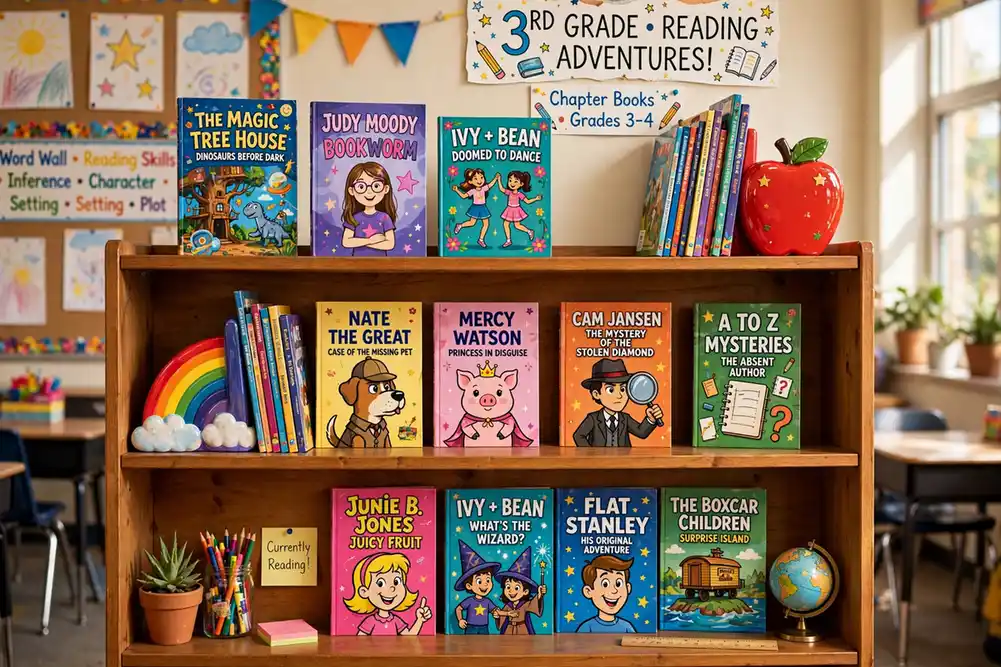
People often assume that third grade is simply a time for children to sharpen their existing reading skills. In reality, it is a significant transition period where the focus shifts from learning to read toward reading to learn. It is the moment when stories start to feel more complex and independent reading becomes a genuine source of joy.
The best Books For 3rd Graders do more than just fill time. They bridge the gap between simple picture books and dense novels, offering characters that mirror the social dynamics of the classroom or the curiosity of a growing mind. These stories provide a safe space to explore new ideas while building the stamina needed for longer texts.


We have gathered a variety of titles that support this shift. From engaging chapter books and historical accounts to skill building workbooks, these options offer something for every student.
What Are the Best Books About 3Rd Graders?
- Channie's One Page
- The School is Alive!
- Miss Nelson Is Missing!
- Carson Dellosa Grades 1-3 Beginning Traditional Cursive Handwriting
- Beezus and Ramona
- Ramona Quimby, Age 8
- InvestiGators
- Junie B. Jones's Third
- The Best Seat in Second Grade
- Tales of a Fourth Grade Nothing
- The Clue of the Left-Handed Envelope
- Island of the Blue Dolphins
- Scholastic Success with Reading Comprehension Grade 3 Workbook
- Captivating History for Curious Kids
| Book Name | Author | Published |
|---|---|---|
| Channie's One Page | ||
| The School is Alive! | Jack Chabert | 2014 |
| Miss Nelson Is Missing! | Harry G. Allard Jr. | 1985 |
| Carson Dellosa Grades 1-3 Beginning Traditional Cursive Handwriting | Carson Dellosa Education | 2013 |
| Beezus and Ramona | Beverly Cleary | 1990 |
| Ramona Quimby, Age 8 | Beverly Cleary | 1992 |
| InvestiGators | John Patrick Green | 2020 |
| Junie B. Jones's Third | Barbara Park | 2003 |
| The Best Seat in Second Grade | Katharine Kenah | 2006 |
| Tales of a Fourth Grade Nothing | Judy Blume | 2007 |
| The Clue of the Left-Handed Envelope | George E. Stanley | 2000 |
| Island of the Blue Dolphins | Scott O'Dell | 2010 |
| Scholastic Success with Reading Comprehension Grade 3 Workbook | Scholastic Teaching Resources | 2022 |
| Captivating History for Curious Kids | Jordan Moore | 2025 |
Best Books for 3rd Graders
1. Channie's One Page

Overview
Channie’s One Page is a specialized math workbook designed for children in grades 2 and 3. This visual writing paper uses a patent pending, color-coded block system to help students practice single-digit multiplication problems. Each page features 25 problems with large boxes that encourage proper number size and alignment.
A green shade anchors the bottom numbers, making it easier for students to separate problems from answers. This tool promotes academic discipline and independent work through a highly visual approach that simplifies daily math repetition and improves overall penmanship.
This workbook stands out for its focus on visual clarity, which is excellent for building confidence in young mathematicians. The color-coded blocks and green shading provide a structured environment that helps children maintain consistent number alignment. It simplifies the learning process by reducing the frustration often associated with cluttered math practice pages.
The format is designed for daily use and encourages students to work independently. Because each sheet is tear-off, children can focus on one small task at a time without feeling overwhelmed by a thick book. This approach helps create a sense of accomplishment as they move through the multiplication exercises.
It is a helpful resource for parents and teachers who want to supplement primary school math. The workbook is particularly well-suited for elementary students who need extra support with accuracy and spacing. It makes practicing multiplication feel like a manageable, organized activity.
“
This visual math workbook provides an organized and color-coded way for young students to master single-digit multiplication with ease.
2. The School Is Alive!
by Jack Chabert

Overview
The School is Alive! introduces readers to Eerie Elementary, a school that is much more than it seems. As part of the Branches line by Scholastic, this early chapter book is specifically crafted for children who are just starting to read on their own. The story features high-interest content and a fast-paced plot to keep young readers engaged.
With illustrations appearing on every page and text that is easy to read, it is designed to build reading confidence through an exciting, slightly spooky school mystery.
Book Details
| Author | Jack Chabert |
| Pages | 96 pages |
| Reading Age | 6 – 8 years |
| Grade Level | 1 – 3 |
| Publisher | Scholastic Inc. |
| Published | June 24, 2014 |
| Language | English |
This book is an excellent choice for newly independent readers who enjoy a touch of mystery. The fast-paced plot ensures that children stay hooked from the beginning, which is vital for maintaining interest in early chapter books. It manages to be engaging without being overly complex for young students.
The inclusion of illustrations on every page is a standout feature for this age group. These visuals provide helpful context for the story, making the reading process less intimidating and more interactive. It strikes a great balance between text and art to keep readers moving forward.
Teachers and parents will appreciate how this book supports the transition to longer stories. It is perfectly suited for children in grades 1 through 3 who are ready to move beyond picture books. The eerie setting provides a fun and unique hook that encourages kids to pick up the next volume.
“
A spooky and fast-paced mystery, this book is designed to turn new readers into confident fans of chapter books.
3. Miss Nelson Is Missing!
by Harry G. Allard Jr.

Overview
Miss Nelson is missing is a beloved story by author Harry G. Allard Jr. about a sweet teacher whose class is always misbehaving. When their quiet and mild-mannered teacher goes missing, the children think it is funny at first. Soon, the misbehaving class has to deal with their iconic substitute teacher. This hilarious school story explores behavior for children and is even being adapted into a Netflix movie starring Melissa McCarthy.
Book Details
| Author | Harry G. Allard Jr. |
| Pages | 32 pages |
| Reading Age | 4 – 7 years |
| Grade Level | Preschool – 3 |
| Publisher | Clarion Books |
| Published | October 28, 1985 |
| Language | English |
Harry G. Allard Jr. crafts a timeless and humorous tale about classroom behavior that resonates with young readers. The story captures the chaos of a misbehaving class getting a reality check when their sweet teacher disappears. It brings a playful energy to everyday school life.
The narrative balances humor with a gentle lesson about appreciation and respect. Children find great amusement in the sudden shift in the classroom dynamics when the substitute teacher arrives. The familiar school setting makes the comedic twists instantly relatable to elementary students.
This picture book suits young readers, parents, and teachers looking for a fun story about classroom rules. Gift buyers will find it to be a delightful addition to any child’s bookshelf. Fans of classic school stories will appreciate its enduring charm.
“
A misbehaving class learns a hilarious lesson in appreciation when their sweet teacher suddenly disappears and is replaced by a strict substitute.
4. Carson Dellosa Grades 1-3 Beginning Traditional Cursive Handwriting
by Carson Dellosa Education

Overview
Carson Dellosa Grades 1-3 Beginning Traditional Cursive Handwriting by Carson Dellosa Education is a 32-page workbook featuring focused practice for young learners. Spanning 11 inches by 8.5 inches, this writing book helps children practice writing upper- and lowercase letters, number words, and more in cursive. Students learn to form and connect letters together using a lined practice page and an alphabet reference chart. It also includes dry erase number and letter tracing activities.
Book Details
| Author | Carson Dellosa Education |
| Pages | 32 pages |
| Reading Age | 6 – 9 years |
| Grade Level | 1 – 3 |
| Publisher | Carson Dellosa Education |
| Published | January 2, 2013 |
| Language | English |
Carson Dellosa Education provides a structured approach to penmanship through targeted practice pages. The workbook features dry erase activities that make learning interactive and repeatable for young students. It is designed to guide children smoothly from basic letter forms to connected cursive writing.
The format is straightforward, featuring a handy alphabet reference chart alongside lined practice pages. This layout helps children build confidence as they master upper- and lowercase letters as well as number words. The activities keep students engaged without feeling overwhelmed.
This workbook suits teachers and homeschoolers looking for a dependable curriculum supplement for elementary students. Parents will find it to be a useful tool for extra practice at home. It is an ideal gift for children building foundational writing skills.
“
This focused workbook helps young learners master cursive writing through engaging tracing activities and structured practice pages.
5. Beezus and Ramona
by Beverly Cleary

Overview
Beezus and Ramona is a humorous Newbery Award‑winning story that follows Beezus Quimby as she navigates life with her four‑year‑old sister Ramona. The book explores the ups and downs of sisterhood, capturing the everyday challenges and playful moments that both the younger and older siblings of the family will enjoy.
Ramona’s wild imagination and disregard for rules often clash with Beezus’s desire for order, creating a lively narrative that celebrates family dynamics and the unique bond between sisters.
Book Details
| Author | Beverly Cleary |
| Pages | 176 pages |
| Reading Age | 4 – 9 years |
| Grade Level | 3 – 7 |
| Publisher | HarperCollins |
| Published | May 1, 1990 |
| Language | English |
| Series | Ramona Quimby |
Beezus and Ramona captures the playful chaos of sibling life in a light‑hearted tone that resonates with both younger and older readers. The narrative follows Beezus’s attempts to navigate the world while her four‑year‑old sister Ramona’s imagination runs wild.
The humor comes from everyday mishaps and the contrast between Beezus’s sense of responsibility and Ramona’s carefree spirit. Readers laugh at absurd situations while reflecting on the bonds that hold a family together.
The writing is accessible and engaging, making it an excellent choice for independent readers aged 4‑9. Its 176‑page length offers a satisfying reading experience without overwhelming younger readers.
Parents and teachers appreciate the themes of rivalry and cooperation, while gift buyers rely on the Newbery Award as a mark of quality. Beezus and Ramona provides a funny look at everyday family life.
“
Sibling rivalry turns into a heartwarming adventure when a four‑year‑old’s imagination meets a sister’s quest for order.
6. Ramona Quimby, Age 8
by Beverly Cleary

Overview
Ramona Quimby, Age 8 is a Newbery Honor edition that adds a special foreword by Amy Poehler and an exclusive interview with author Beverly Cleary. The story follows 8‑year‑old Ramona as she balances the expectations of growing up with her playful spirit. The book captures her desire to be seen as reliable while navigating the everyday adventures that test her sense of responsibility.
The added commentary provides insight into the author’s intent and the character’s enduring appeal to readers aged seven to eight.
Book Details
| Author | Beverly Cleary |
| Pages | 208 pages |
| Reading Age | 7 – 8 years |
| Grade Level | 3 – 7 |
| Publisher | HarperCollins |
| Published | October 1, 1992 |
| Language | English |
| Series | Ramona Quimby |
Ramona Quimby, Age 8 adds a foreword from Amy Poehler and an interview with Beverly Cleary, deepening the reader’s understanding of the character’s motivations and the author’s intent, for new readers and longtime fans, exploring growth and resilience.
The story follows 8‑year‑old Ramona as she balances expectations of growing up with her playful spirit, contrasting reliability with spontaneous adventures for a relatable, humorous narrative that captures everyday life and family dynamics, encouraging empathy.
With 208 pages, the book keeps readers engaged, while its accessible style suits independent readers aged seven to eight, encouraging continued learning and curiosity, fostering confidence and curiosity.
Parents and teachers value the foreword and character growth; gift buyers rely on the Newbery Honor as a mark of quality, inviting readers to laugh, learn, and grow with a protagonist, adventure.
“
A playful 8‑year‑old learns the weight of responsibility while her bold adventures keep her readers laughing.
7. InvestiGators
by John Patrick Green

Overview
InvestiGators follows secret agent alligators as they solve mysteries and fight crime. Written by John Patrick Green, this graphic novel brings together fast-paced action and humor for young readers. With more than four million copies in print, the book is a favorite for children transitioning to longer stories. It serves as a great bridge for fans of other popular graphic novel series looking for their next fun read, and the fun continues with related spin-off titles.
Book Details
| Author | John Patrick Green |
| Pages | 208 pages |
| Reading Age | 6 – 9 years |
| Grade Level | 2 – 5 |
| Publisher | First Second |
| Published | February 25, 2020 |
| Language | English |
This graphic novel stands out by offering an engaging entry point for children who enjoy visual storytelling. The humor and bright artwork keep kids turning pages eagerly.
The reading experience is lively and fast-paced, making it accessible for developing readers. It captures attention through fun characters and clever mystery plots.
It suits young graphic novel fans, especially those branching out from other humorous series. Parents and teachers will appreciate how it builds reading confidence.
“
Alligator secret agents combine quirky humor with thrilling mysteries to spark a lifelong love of reading in children.
8. Junie B. Jones's Third
by Barbara Park

Overview
Junie B. Jones’s Third boxed set collects books nine through twelve of the iconic chapter book series by Barbara Park. This collection invites readers to laugh out loud with the outspoken and funny main character. Known for making reading fun, the series has sold over eighty million copies worldwide. This four-book set provides a wonderful way for fans to enjoy multiple adventures in one convenient package.
Book Details
| Author | Barbara Park |
| Reading Age | 6 – 8 years |
| Grade Level | 1 – 4 |
| Publisher | Random House Books for Young Readers |
| Published | May 27, 2003 |
| Language | English |
This boxed set stands out because it gathers four hilarious stories featuring a beloved and unforgettable character. The writing captures an authentic childlike voice that children find endlessly entertaining.
The reading experience is lighthearted and genuinely funny, which keeps young readers hooked from start to finish. It turns independent reading into a joyful daily activity.
It suits young chapter book readers who love humorous stories about school and everyday life. Gift buyers and parents will find this set to be a reliable hit.
“
Hilarious school adventures and a wonderfully funny protagonist make independent reading an absolute joy for children.
9. The Best Seat in Second Grade
by Katharine Kenah

Overview
Sam has the best seat in second grade because he sits right next to George Washington, who is the class pet hamster. Sam decides to bring his hamster buddy along on the class field trip to the science museum. However, disaster strikes during the visit when George jumps right out of Sam pocket and into the museum Hamster Habitat.
Katharine Kenah tells this charming back to school story with expressive watercolor illustrations that help bring the lively museum setting and the tiny runaway pet to life for young readers.
Book Details
| Author | Katharine Kenah |
| Pages | 48 pages |
| Reading Age | 6 – 7 years |
| Grade Level | Kindergarten – 3 |
| Publisher | HarperCollins |
| Published | August 1, 2006 |
| Language | English |
| Series | I Can Read Level 2 |
This delightful early reader book captures the fun and unpredictability of school life. The story focuses on a relatable classroom pet adventure that appeals directly to children who love animals and school field trips.
Katharine Kenah creates an engaging reading experience with accessible text and lively illustrations. The pacing keeps children turning the pages eagerly while they find out if Sam can safely recover his runaway hamster friend.
The book is an ideal choice for young children, parents, and teachers looking for engaging classroom stories. It suits developing readers who want to practice their skills with a fun and cheerful narrative.
“
A simple school field trip turns into a rescue mission when a curious class pet decides to explore the museum.
10. Tales of a Fourth Grade Nothing
by Judy Blume

Overview
Tales of a Fourth Grade Nothing is the first book in the classic Fudge series by bestselling author Judy Blume. The story is packed with wacky and earthy disasters caused by a younger sibling. Jeff Kinney, author of the Diary of a Wimpy Kid series, shares that Judy Blume was his favorite author as a kid and that this particular title was his absolute favorite book.
Young readers will discover plenty of humor and relatable family dynamics as they dive into the chaotic and amusing world of the main character and his unforgettable brother Fudge.
Book Details
| Author | Judy Blume |
| Pages | 160 pages |
| Reading Age | 8 – 9 years |
| Grade Level | 3 – 7 |
| Publisher | Puffin Books |
| Published | April 5, 2007 |
| Language | English |
This classic story stands out for its hilarious and honest portrayal of family life with an unpredictable younger sibling. Judy Blume delivers timeless humor that continues to entertain generations of children.
The writing style is engaging and funny, featuring wacky situations that easily capture the attention of young readers. The reading experience is lighthearted, fast paced, and full of memorable family mishaps.
The book suits children, parents, and gift buyers searching for a funny and enduring chapter book. It is especially great for third graders ready to enjoy classic stories about sibling rivalry.
“
As a kid, Judy Blume was my favorite author, and Tales of a Fourth Grade Nothing was my favorite book.
11. The Clue of the Left-Handed Envelope
by George E. Stanley

Overview
A mysterious note arrives in the classroom, targeting Amber Lee Johnson with an anonymous message. Everyone loves their new teacher, Mr. Merlin, who used to be a spy. He knows all about secret codes and the strange and gross ways that police solve mysteries. Now, the class must use those very investigative skills to solve a puzzle in their own room.
This engaging beginning mystery challenges young readers to follow along with the clues and figure out who sent the strange letter.
Book Details
| Author | George E. Stanley |
| Pages | 64 pages |
| Reading Age | 7 – 8 years |
| Grade Level | 1 – 4 |
| Publisher | Aladdin |
| Published | October 1, 2000 |
| Language | English |
George E. Stanley crafts an engaging mystery tailored for young readers who love puzzles and classroom adventures. The story introduces a former spy teacher who shares real investigative techniques, making the classroom setting feel exciting and interactive.
The book spans sixty four pages, offering an accessible reading experience for children in grades one through four. The illustrated format and relatable characters keep the pacing lively and maintain interest from start to finish.
This book suits young sleuths, classroom teachers looking for fun read alouds, and parents seeking engaging stories that encourage critical thinking. It provides an entertaining introduction to the mystery genre for children aged seven to eight.
“
A former spy teacher helps his students solve classroom mysteries using secret codes and clever investigative clues.
12. Island of the Blue Dolphins
by Scott O'Dell

Overview
Scott O Dell presents a gripping tale of survival, strength, and courage based on the true story of a Nicoleño Indian girl living entirely alone on an island off the coast of California. On San Nicolas Island, dolphins play in the waves and seabirds wheel overhead as the young protagonist faces the ultimate test of resilience.
This Newbery Medal winning classic has captivated generations of readers with its powerful depiction of a solitary life shaped by nature, resourcefulness, and fierce determination in a wild landscape.
Book Details
| Author | Scott O'Dell |
| Pages | 192 pages |
| Reading Age | 8 – 11 years |
| Grade Level | 3 – 7 |
| Publisher | Clarion Books |
| Published | February 8, 2010 |
| Language | English |
Scott O Dell delivers a timeless classic that explores profound themes of survival, courage, and inner strength. The narrative places a lone protagonist in a breathtaking natural setting, creating an intense and unforgettable reading journey.
Spanning one hundred ninety-two pages, the book offers a deeper narrative challenge suited for readers aged eight to eleven. The prose is rich and evocative, drawing children into a historically grounded tale of endurance.
This novel suits mature young readers, teachers planning literature units, and gift buyers looking for award winning children literature. It remains a powerful companion for anyone interested in stories of human resilience.
“
A young girl demonstrates extraordinary courage and survival skills while living completely alone on a remote island.
13. Scholastic Success with Reading Comprehension Grade 3 Workbook
by Scholastic Teaching Resources

Overview
Scholastic Success with Reading Comprehension Grade 3 Workbook provides targeted reinforcement through more than forty ready to use practice pages. Published by Scholastic Teaching Resources, the book presents high interest stories paired with motivating exercises designed to build essential comprehension skills. Straightforward directions guide third graders through each activity, making the material easy to follow during study sessions.
The resource supports young learners as they practice core skills, whether they complete assignments in an elementary classroom or work on educational tasks at home alongside parents.
Book Details
| Author | Scholastic Teaching Resources |
| Pages | 48 pages |
| Reading Age | 8 – 9 years |
| Grade Level | 3 and up |
| Publisher | Scholastic Teaching Resources |
| Published | February 1, 2022 |
| Language | English |
| Series | Scholastic Success with Reading Comprehension |
This workbook focuses entirely on strengthening literacy skills through structured, practical activities. Clear instructions accompany each exercise, allowing children aged eight to nine to navigate assignments with confidence.
Short, high interest reading passages anchor every activity. The motivating format keeps students engaged while reinforcing essential skills across forty-eight pages of focused practice.
The resource suits teachers looking for supplemental classroom worksheets as well as parents guiding extra practice at home. It offers reliable, direct support for third graders building solid reading comprehension habits.
“
Targeted stories and clear exercises offer third graders direct practice to strengthen fundamental reading comprehension skills.
14. Captivating History for Curious Kids
by Jordan Moore

Overview
Captivating History for Curious Kids presents a collection of nonfiction short stories focused on real events and unbelievable facts from around our strange world. Written by Jordan Moore and published by Red Panda Press, the text bypasses traditional timelines to deliver true tales filled with surprising details. These strange historical accounts encourage young readers to discover how real happenings can become page turning adventures.
Spanning one hundred and thirty pages, the book reveals fascinating moments in world history designed specifically to spark curiosity in children.
Book Details
| Author | Jordan Moore |
| Pages | 130 pages |
| Reading Age | 8 – 12 years |
| Publisher | Red Panda Press |
| Published | September 16, 2025 |
| Language | English |
Jordan Moore delivers an entertaining nonfiction collection that transforms historical facts into lively narratives. Moving past dry timelines, the book presents unusual real events as brisk adventures that hold attention.
The short story format works well for readers aged eight to twelve who enjoy strange discoveries. Each true account offers curious details about world history across a manageable one hundred and thirty pages.
This title suits young history fans, reluctant readers, and parents searching for an engaging gift. It makes past events feel fresh, surprising, and accessible for third graders seeking intriguing nonfiction.
“
Real historical events become exciting, fast-paced adventures through surprising true stories that spark natural curiosity.
How to Choose the Best Books for 3Rd Graders
Third grade is a remarkable turning point for young readers. Children often transition from learning how to read into reading to discover new ideas and stories. Finding titles that match this changing stage can build confidence and keep enthusiasm high. With a little guidance, selecting the right mix of stories and practice materials becomes a joyful process.
Every child develops their reading habits at an individual pace during this year. Some readers breeze through longer chapter books, while others feel more comfortable with graphic novels or illustrated adventures. Parents, teachers, and gift buyers can create a welcoming reading environment by paying attention to a few core factors. Taking time to assess specific interests and daily habits helps ensure each choice provides the right balance of support and challenge.
Reading Level and Personal Goals
Before picking a title, consider what the reader hopes to achieve during their quiet reading time. Some children want to relax with familiar characters, while others need gentle encouragement to build stamina. If a reader is making the jump to solo reading, books like The School is Alive! or The Clue of the Left-Handed Envelope offer accessible language and exciting plots.
Advanced readers seeking a richer emotional journey might prefer classic titles such as Island of the Blue Dolphins or Tales of a Fourth Grade Nothing.
It is also helpful to clarify whether the book is meant for solo enjoyment, bedtime sharing, or classroom skill building. Read-aloud sessions allow children to enjoy complex plots and vocabulary that might feel intimidating on their own. Meanwhile, independent reading books should feel manageable so the child can read without constant stopping. Matching the book to your specific goal prevents frustration and keeps reading sessions positive.
Writing Style and Visual Format
The visual layout of a page plays a huge role in how approachable a book feels to an eight or nine-year-old. Full-color graphic novels like InvestiGators use visual humor and dialogue bubbles to engage visual learners. Other titles, such as Miss Nelson Is Missing! or The Best Seat in Second Grade, pair lively artwork with clear text to keep pages moving quickly. For children who feel overwhelmed by dense blocks of text, artwork provides helpful context and regular breathing room.
Writing tone is equally important when looking for titles that hold a reader’s attention. Humorous, conversational narration often resonates strongly with this age group, as seen in Ramona Quimby, Age 8 or Junie B. Jones’s Third. Relatable dialogue and funny everyday dilemmas help children see their own lives reflected on the page. Choosing a voice that sounds natural and engaging helps reluctant readers stay invested until the final chapter.
Book Length, Pacing, and Chapter Design
Page counts can make a big psychological difference to a developing third grader. A hefty novel with small print might cause hesitation, whereas shorter chapters create regular stopping points and feelings of accomplishment. Series like Beezus and Ramona break their storylines into episodic chapters that fit neatly into daily reading schedules. Knowing that a chapter break is only a few pages away encourages children to finish just one more section.
Fast pacing also helps maintain focus for children who are easily distracted. Mystery plots, school adventures, and comedic misunderstandings keep the plot moving forward with very little downtime. When events unfold rapidly, children are less likely to abandon the book halfway through. Look for stories that establish a clear problem early and resolve it with satisfying energy.
Practical Practice Versus Storytelling
Balancing fictional stories with educational practice resources can help reinforce essential school skills. Some third graders benefit greatly from targeted practice, such as using Scholastic Success with Reading Comprehension Grade 3 Workbook to sharpen understanding. Other children may need to improve penmanship with resources like Carson Dellosa Grades 1-3 Beginning Traditional Cursive Handwriting or Channie’s One Page. Integrating non-fiction options like Captivating History for Curious Kids can also satisfy young minds that love real-world facts.
To help determine what format best fits your child, consider how different book styles serve unique learning needs. Each category provides distinct advantages depending on whether the priority is entertainment, skill reinforcement, or visual engagement. The table below outlines several common book types along with their primary benefits. Reviewing these options makes it easier to plan a balanced home or classroom library.
| Book Format | Primary Benefit | Ideal Reader |
|---|---|---|
| Illustrated Chapter Books | Builds narrative stamina with visual support | Transitional readers moving past early readers |
| Graphic Novels | High visual engagement and brisk pacing | Visual thinkers and reluctant readers |
| Classic Middle Grade Novels | Rich vocabulary and deeper character exploration | Confident solo readers and family read-alouds |
| Skill Workbooks | Targeted practice for handwriting and comprehension | Students needing structured academic reinforcement |
| Non-Fiction and History | Introduces fascinating real-world facts and events | Curious kids who love true stories and trivia |
Gathering feedback directly from your young reader is just as vital as reviewing book descriptions. Asking children what genres, themes, or characters they enjoyed most gives valuable clues for future selections. When children have a voice in choosing their next title, they feel a greater sense of ownership over their reading journey. Watching which books they pick up repeatedly will guide you toward choices they truly cherish.
Remember that reading tastes can shift quickly as children grow throughout the third grade year. Offering a diverse collection of graphic novels, chapter books, and informative non-fiction ensures there is always something appealing on hand. With patience, warmth, and steady encouragement, every young reader can discover stories that spark curiosity and a lasting love of books.
How Much Impact Can Books About 3Rd Graders Have?
Books about the lives of third graders offer more than just a way to pass the time. These stories act as mirrors and windows for children who are navigating a pivotal year in their development. When a child reads about characters facing similar social pressures or academic challenges, they often feel a sense of relief. Seeing a protagonist manage a difficult day at school helps a child realize they are not alone in their experiences.
Third grade is a time when reading skills shift from learning to read toward reading to learn. Books like The School is Alive! or the classic tales featuring Ramona Quimby provide relatable scenarios that keep students engaged with the text. By following these characters, children can practice empathy and social problem solving in a safe, fictional environment. This process helps them build confidence as they encounter more complex themes in their own lives.
The impact of these books is most significant when reading becomes a shared activity. Parents and teachers can help children get the most out of their reading by asking open questions about the plot. You might ask how a character like Junie B. Jones or Ramona Quimby would handle a specific situation at home or in class. This encourages children to apply the lessons they encounter in stories to their daily routines.
Repetition also plays a vital role in how children internalize these narratives. Re-reading a favorite book allows a child to notice new details and deepen their understanding of character motivations. It is common for children to return to the same stories multiple times because the familiarity provides comfort. Encourage this habit, as it helps build fluency and strengthens their connection to the material.
While books offer great benefits, they are not a substitute for real-world guidance. A story can introduce a concept, but a conversation with an adult helps solidify the lesson. Use these books as conversation starters rather than expecting them to teach life skills on their own. The following table highlights how different types of books can be used to support a third grader’s growth.
How to Use Different Book Types
| Book Category | Primary Benefit | Suggested Activity |
|---|---|---|
| Humorous Fiction | Building reading confidence | Discuss why the character’s choices were funny. |
| Educational Workbooks | Reinforcing specific skills | Set aside time for short, focused practice. |
| Classic Literature | Broadening perspectives | Talk about how the setting differs from today. |
| Mystery Stories | Developing critical thinking | Ask the reader to predict the ending. |
You might also consider incorporating supplemental materials if a child needs extra support in specific areas. For instance, using Carson Dellosa Grades 1-3 Beginning Traditional Cursive Handwriting or Channie’s One Page can improve fine motor skills alongside reading practice. These resources are designed to be practical tools rather than stories, and they serve a different purpose in a child’s development. Consistency is key when introducing these materials, so try to keep practice sessions short and positive.
If your child is interested in history or non-fiction, titles like Captivating History for Curious Kids can spark a lifelong interest in the world. These books help children see how history is composed of real stories, much like the fiction they enjoy. When a child finds a topic they are passionate about, their reading stamina often increases naturally. Do not feel the need to push specific genres if they are not interested, as the goal is to foster a positive association with books.
Teachers often find that using a variety of formats keeps the classroom environment dynamic. Mixing graphic novels like InvestiGators with chapter books such as Tales of a Fourth Grade Nothing ensures that every reader finds something that matches their current comfort level. It is important to remember that reading levels can fluctuate, and some children may enjoy reading books that seem slightly below their grade level for relaxation. This is perfectly normal and should be encouraged as part of a healthy reading diet.
Ultimately, the best approach is to keep the experience low-pressure and fun. If a child finds a book that is too difficult or boring, it is okay to put it aside and try something else. The objective is to keep them coming back to the page willingly. Whether you are using Scholastic Success with Reading Comprehension Grade 3 Workbook for skill building or diving into The Clue of the Left-Handed Envelope for a mystery, the focus should remain on the joy of discovery.
Keep in mind that every child develops at their own pace. A book that resonates deeply with one student may not capture the interest of another, and that is to be expected. By providing a wide selection of titles and staying involved in the process, you provide the scaffolding necessary for them to become independent readers. Celebrate their progress, no matter how small, and keep the library shelves stocked with diverse options to ensure they always have something new to explore.
Frequently Asked Questions
What Are the Best Types of Books for 3rd Graders to Encourage Reading?
Third graders are typically between eight and nine years old. At this age, children often transition from simple picture books to longer stories with more complex plots. Books that feature relatable characters and themes like friendship, school life, or light adventure are usually the most engaging choices. Look for titles that offer a balance of text and illustrations to help maintain interest.
Series are particularly effective for this age group because they build familiarity with characters. When a child enjoys the first book, they are often motivated to read the rest of the series. Teachers and parents often recommend chapter books that bridge the gap between early readers and middle grade novels. Choosing stories that reflect the child’s personal interests will always lead to a more positive reading experience.
How Long Should Books for 3rd Graders Be?
There is no single rule for the perfect page count for this age group. Most third grade chapter books range from eighty to one hundred and fifty pages. This length provides enough substance to develop a plot without becoming overwhelming for a developing reader. The physical size of the book matters less than the spacing of the text on the page.
Larger fonts and generous margins make a book feel more accessible and less intimidating. If a book looks like a dense wall of text, a child might feel discouraged before they even begin. Many popular books for this level include occasional illustrations that break up the text. These visual elements provide a welcome rest for the eyes and help keep the reader engaged throughout the story.
Are Graphic Novels Good Books for 3rd Graders?
Graphic novels are an excellent choice for children in the third grade. These books use a combination of visual storytelling and dialogue to convey the narrative. Many reluctant readers find graphic novels much less daunting than traditional chapter books. The visual context helps with comprehension, as the pictures provide clues about the action and the emotions of the characters.
These books are not just for entertainment, as they require children to process both text and images simultaneously. This helps build visual literacy and reading confidence. You can find graphic novels that cover a wide range of genres, including mystery, humor, and fantasy. Adding a few graphic novels to a home or classroom library is a great way to diversify the reading options available to students.
Should I Look for Specific Themes in Books for 3rd Graders?
Third grade is a time of social and emotional growth. Children are often interested in stories about navigating peer relationships, solving problems, and exploring new interests. Books that feature characters dealing with everyday challenges can help children process their own experiences. Themes of empathy, kindness, and perseverance are common in high quality literature for this age group.
Consider the child’s personality when selecting themes. Some children prefer realistic fiction that mirrors their daily life, while others enjoy escaping into fantasy worlds. It is helpful to offer a variety of genres to see what captures their imagination. By exposing them to different themes, you help them discover their own preferences and develop a lifelong habit of reading for pleasure.
How Can I Tell If a Book Is Too Difficult for a 3rd Grader?
A common way to check if a book is appropriate is the five finger rule. Have the child read a single page of the book aloud. Every time they encounter a word they cannot pronounce or do not understand, they should hold up one finger. If they reach five fingers by the end of the page, the book might be slightly too challenging for independent reading.
Keep in mind that this method is just a guideline. Some children may be happy to work through a more difficult book if the story is exciting enough. You can also read more challenging books aloud to them. Shared reading is a wonderful way to enjoy stories that are above their current independent reading level while still building vocabulary and comprehension skills.
Are Non-Fiction Books for 3rd Graders Worth Buying?
Non-fiction is a fantastic addition to any third grade collection. Many children have specific passions, such as space, animals, history, or science. Non-fiction books allow them to dive deep into these topics and learn facts that interest them. These books are often highly visual, featuring photographs or diagrams that make the information easy to digest and fun to explore.
Reading non-fiction helps build background knowledge that is useful for school assignments. It also encourages children to ask questions and seek out answers. When a child is curious about a subject, they are naturally more motivated to read. Whether it is a book about how things work or a biography of a famous person, non-fiction provides a different kind of reading satisfaction.
Where Can I Find Recommendations for Books for 3rd Graders?
Finding the right books starts with understanding what the child enjoys. Local libraries are a great resource, as librarians are experts at suggesting titles based on a child’s interests. They can point you toward popular series or hidden gems that fit the third grade reading level. Many libraries also offer reading lists that can guide your choices.
School teachers are another valuable source of information. They see which books circulate most in the classroom and which stories get children excited. You can also look for books that have been recommended by reputable educational organizations or literacy groups. Ultimately, the best recommendations come from observing what the child is already interested in and finding books that build upon those specific curiosities.
Last Word
For a reliable foundation, Channie’s One Page is the best overall pick for students needing structured practice. It is perfect for children who benefit from consistent, clear guidance during their daily writing tasks. If you want something that sparks excitement, InvestiGators is a great choice for reluctant readers who enjoy fast paced humor and clever visuals. For those who prefer classic storytelling, Ramona Quimby, Age 8 remains a relatable staple that captures the daily experiences of a young student perfectly.
When you decide which book to purchase, think about the current interests of the child. Matching a story to their personal hobbies or school curriculum will help them stay engaged. Focus on the themes they enjoy most to ensure that reading feels like a reward rather than a chore.