
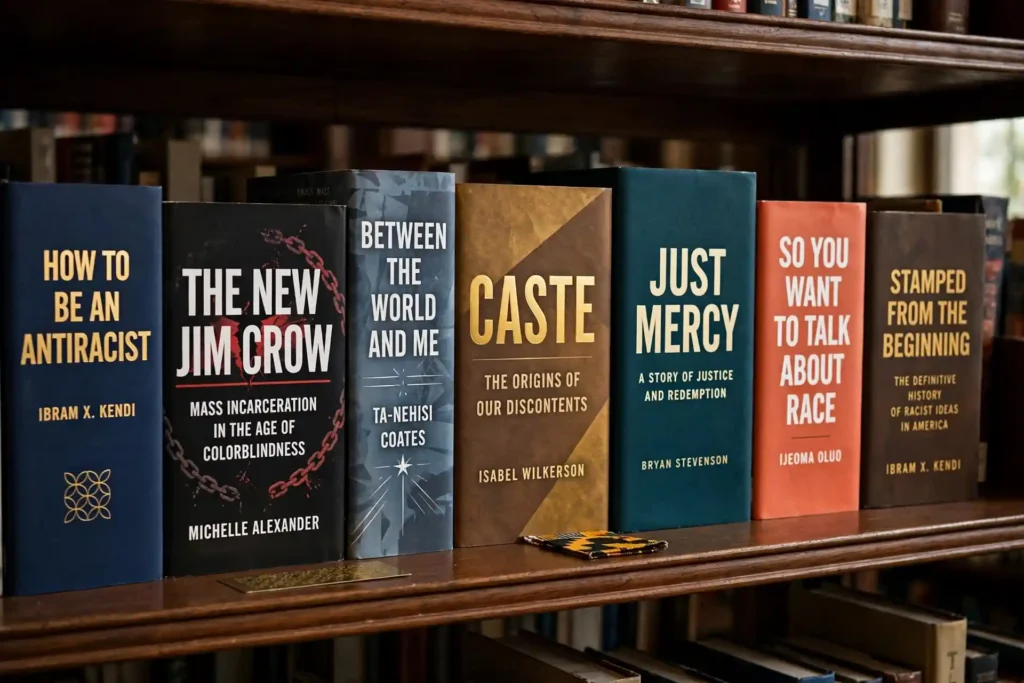
We all hope to understand the roots of prejudice and move toward a more just society, yet the path can feel overwhelming. Reading helps us see beyond headlines and personal bias, giving us the tools to act with empathy.
Sometimes the sheer amount of material leaves us unsure where to start, and we wonder which titles actually cut through the noise. If you’re looking for guidance that blends research, personal stories, and practical steps, the question becomes: which books on racism awareness truly deserve a place on our shelves?

Below we’ve gathered a curated selection that balances scholarly insight with accessible narratives, so you can choose the right guide for your classroom, book club, or personal journey. Each entry includes a brief look at the author’s perspective, the book’s core themes, and the ideal readers, making it easier to match a title to your needs.
What Are the Best Books About Racism Awareness?
- Race, Racism, and Science
- How to Fight Racism
- Racism for White People
- Let’s Talk About Differences
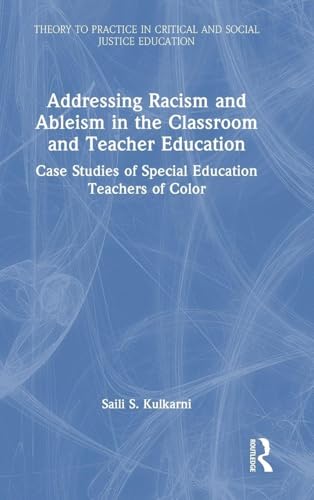
- Addressing Racism and Ableism in the Classroom
- Getting on the Bus (Part
- Voice of a Racist
- Be Antiracist
- Little Book About Racism, A
- Where Racism First Learned to Sing
- Medical Apartheid
- No Difference Between Us
- Do the Work!
| Book Name | Author | Published |
|---|---|---|
| Race, Racism, and Science | John P. Jackson, Nadine M. Weidman | 2005 |
| How to Fight Racism | Jemar Tisby | 2021 |
| Racism for White People | Martin Jackson | 2020 |
| Let’s Talk About Differences | Colour Art | 2020 |
| Addressing Racism and Ableism in the Classroom | Saili S. Kulkarni | 2025 |
| Getting on the Bus (Part | Dr David Lee Propst | 2020 |
| Voice of a Racist | M.V. Terrance | 2026 |
| Be Antiracist | Ibram X. Kendi | 2020 |
| Little Book About Racism, A | Jelani Memory | 2025 |
| Where Racism First Learned to Sing | Dr. Kweli T. Kwaza | 2026 |
| Medical Apartheid | Harriet A. Washington | 2008 |
| No Difference Between Us | Jayneen Sanders | 2016 |
| Do the Work! | W. Kamau Bell, Kate Schatz | 2022 |
13 Best Books On Racism Awareness Worth Reading
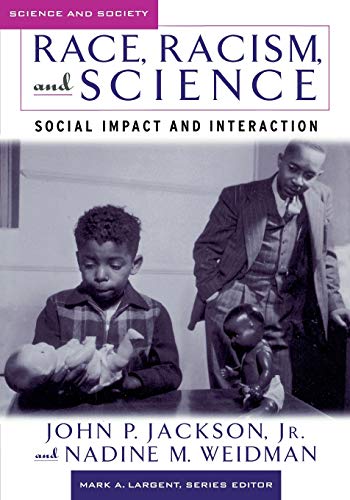
1. Race, Racism, and Science
by John P. Jackson, Nadine M. Weidman

Overview
This study examines the complex relationship between scientific research and concepts of race from the eighteenth century onward. During this period, natural historians developed distinct racial categories, creating a legacy where scientific findings served as a double-edged sword. For antiracist advocates, scientific discovery held the potential to provide clear evidence capable of ending racial prejudice. At the same time, scientific claims historically interacted with societal biases, shaping ongoing debates surrounding racial categories, scientific authority, and social justice across generations.
Book Details
| Author | John P. Jackson, Nadine M. Weidman |
| Pages | 424 pages |
| Publisher | Rutgers University Press |
| Published | September 29, 2005 |
| Language | English |
John P. Jackson and Nadine M. Weidman offer a thorough examination of the historical intersection between scientific inquiry and racial theories. The writing focuses on how natural historians and later researchers approached human variation. It avoids sensationalism in favor of structured academic analysis.
At 424 pages, the volume provides significant depth for those interested in intellectual history. The prose moves carefully through centuries of documentation and institutional developments. Readers will encounter an informative account of how scientific claims influenced broader cultural views on race.
This work suits university students, educators, and serious readers researching the history of science and society. Published by Rutgers University Press, it serves as a detailed reference text. It is an excellent selection for institutional libraries and academic coursework.
“
Scientific theories have historically played a dual role by reinforcing racial categories while offering tools to challenge prejudice.
2. How to Fight Racism
by Jemar Tisby

Overview
How to Fight Racism focuses on confronting racial injustice with practical action. Serving as a follow-up to the author’s previous bestselling work, the book encourages readers to move beyond conversation and equip themselves for tangible change. It connects Christian principles with racial justice efforts, providing guidance on how communities can actively dismantle prejudice. The text emphasizes practical application, motivating individuals and groups to pursue meaningful systemic change through a faith-based lens.
Book Details
| Author | Jemar Tisby |
| Pages | 240 pages |
| Publisher | Zondervan |
| Published | January 5, 2021 |
| Language | English |
Jemar Tisby provides an action-oriented framework that moves discussions of racial awareness toward practical engagement. The text balances moral urgency with concrete steps. Its focus on proactive justice separates it from purely theoretical treatments of the subject.
Spanning 240 pages, the book maintains an engaging and direct style. Tisby uses accessible language to communicate complex historical and social realities. Readers are guided through a structured process designed to build lasting habits of advocacy.
This title suits Christian readers, church leaders, and study groups seeking to integrate faith with racial justice. It earned the 2022 ECPA Christian Book Award for Faith and Culture. It also works well as a gift for community organizers.
“
Confronting racial injustice requires communities of faith to move beyond discussion and commit to active racial justice.
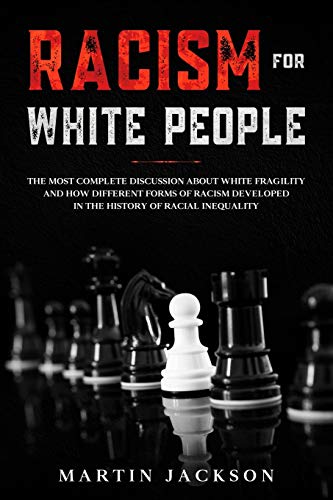
3. Racism for White People
by Martin Jackson

Overview
This publication provides a direct discussion on white fragility and the historical development of different forms of racism. It opens with everyday observations regarding physical appearance and diversity, questioning why human differences have led to structural inequalities. The text addresses how racial disparities were formed over time and explores the discomfort that often arises during conversations about race. It aims to help readers understand the historical roots of bias.
Book Details
| Author | Martin Jackson |
| Pages | 116 pages |
| Publisher | Independently published |
| Published | August 12, 2020 |
| Language | English |
Martin Jackson approaches the topic of racial disparity through straightforward, accessible questions. The book unpacks white fragility and historical bias without dense terminology. It uses familiar examples of human diversity to begin its analysis.
At 116 pages, this is a concise and quick read. The author keeps paragraphs short and the language conversational throughout. This format allows readers to engage with sensitive historical concepts in an approachable setting.
This independently published guide suits introductory readers, parents, and community members looking for a basic overview. It serves as a starting point for discussions on inequality and personal awareness. It is ideal for those who prefer brief introductions.
“
Recognizing physical diversity is the starting point for exploring the history of racial inequality and white fragility.
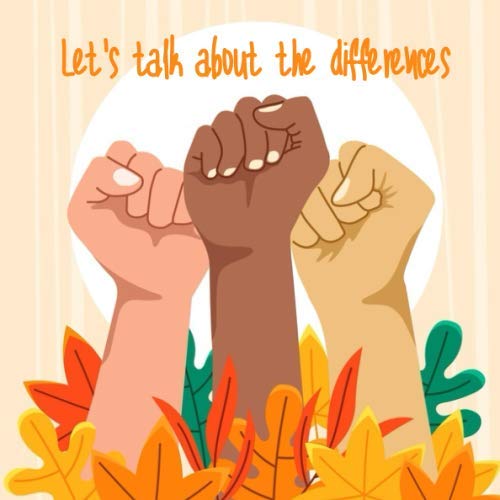
4. Let’s Talk About Differences
by Colour Art

Overview
Let’s Talk About Differences is created for young children entering preschool and early grades. The book addresses the common tendency among young learners to judge peers based on skin color due to a lack of understanding. It presents the human body as a wonder and teaches the fundamental importance of respecting others. Parents can use this resource as an accessible tool to introduce concepts of tolerance, human variation, and basic empathy.
Book Details
| Author | Colour Art |
| Pages | 25 pages |
| Publisher | Independently published |
| Published | June 7, 2020 |
| Language | English |
Colour Art presents an early childhood resource designed to foster empathy and open conversations about skin tone. It addresses the natural curiosity of young learners in school settings. The book focuses on instilling respect before harmful biases take hold.
With a length of 25 pages, the volume is tailored for short attention spans. The large print format makes it comfortable for shared reading between adults and emerging readers. Its visual layout encourages direct engagement with the core themes.
This book is best suited for parents, nursery staff, and primary school teachers. It provides an uncomplicated way to address fairness and racial differences in early learning environments. It also functions well as an educational gift for young households.
“
Teaching young children to appreciate skin differences builds an early foundation of respect and mutual understanding.
5. Addressing Racism and Ableism in the Classroom
by Saili S. Kulkarni

Overview
This scholarly work explores the intersection of racial prejudice and disability within educational environments. It centers the personal narratives and experiences of special education teachers of color, highlighting an underserved demographic in public education. The text analyzes the systemic tensions that occur where race and disability meet in classrooms and teacher preparation programs. By presenting these perspectives, the volume offers critical insight into improving equity and practice across contemporary learning institutions.
Book Details
| Author | Saili S. Kulkarni |
| Pages | 142 pages |
| Publisher | Routledge |
| Published | October 16, 2025 |
| Language | English |
Saili S. Kulkarni brings vital focus to the overlapping issues of racial bias and disability discrimination. By elevating the voices of special education teachers of color, the work highlights crucial workplace and classroom dynamics. It addresses institutional gaps that standard educational literature often overlooks.
The 142-page volume balances specialized research with practical institutional analysis. The writing is precise, academic, and structured for professionals. Readers will appreciate the systematic examination of systemic inequities within modern teacher training.
This text is designed for teacher educators, special education staff, school administrators, and education researchers. Published by Routledge, it fits seamlessly into advanced education courses and policy seminars. It offers essential perspectives for reforming instructional environments.
“
Centering special education teachers of color exposes the critical tensions between race, disability, and classroom equity.
6. Getting on the Bus (Part
by Dr David Lee Propst

Overview
Getting on the Bus (Part is a biography that recounts the experiences of a student dealing with hidden racism, unfair labeling, and social and emotional injustice. The work explores the serious emotional issues connected to subtle prejudice, linking these ongoing struggles directly to school violence, bullying, and youth suicides. Dr David Lee Propst examines how these unseen factors influence educational settings and addresses systemic problems that schools face, highlighting the deep personal consequences of overlooked bias on young learners.
Book Details
| Author | Dr David Lee Propst |
| Pages | 107 pages |
| Publisher | Independently published |
| Published | July 16, 2020 |
| Language | English |
Dr David Lee Propst brings a distinct biographical approach to the study of prejudice within schools. Spanning 107 pages, this independently published volume targets the quiet, everyday patterns of mistreatment that young people often encounter without public notice. It reveals how subtle bias shapes a student’s emotional well-being.
The text connects personal accounts of being labeled and mistreated to wider systemic failures in the school environment. It directly links unchecked discrimination to grave issues like bullying and youth distress. The prose maintains an earnest and urgent tone throughout the recounting.
Readers move through a focused, concise examination of institutional environments. The accessible page count makes it easy to complete in a few sittings, yet the issues it raises remain serious and thought-provoking.
This work suits educators, school administrators, and parents seeking to understand the overlooked emotional challenges minority students confront. It also offers valuable perspective for counselors who work directly with school-aged children.
“
Unseen discrimination within school hallways creates lasting emotional wounds that educators must actively identify and resolve.
7. Voice of a Racist
by M.V. Terrance

Overview
Voice of a Racist examines contemporary racial discourse by asking whether the term racist now serves to shut down open dialogue rather than foster honest engagement. Starting from an April 2025 incident where a Black teenager is convicted of murdering a white teenager at a track meet, the book addresses the media firestorm and television reactions that follow. M.V. Terrance questions established assumptions about discrimination, challenging conventional narratives that shape how the public interprets modern racial conflict.
Book Details
| Author | M.V. Terrance |
| Pages | 209 pages |
| Published | July 8, 2026 |
| Language | English |
M.V. Terrance uses a high-profile fictional legal case to anchor a 209-page examination of cultural controversy. The writing focuses closely on media reactions and public rhetoric, exploring how racial arguments are framed on television. This narrative device allows the author to critique how everyday vocabulary influences national debates.
The central focus is the way serious terminology can sometimes halt productive conversations instead of encouraging deeper thought. By examining the aftermath of a fatal track meet dispute, the book deconstructs conventional assumptions about bias. Its tone is analytical and designed to confront popular viewpoints directly.
The digital reading experience is smooth, supported by standard accessibility features like screen reader capabilities and Word Wise. Readers encounter an unfolding discussion that moves from an intense court case into broader philosophical questions.
This text suits readers interested in cultural commentary, media criticism, and debates over modern terminology. It is best for adults who want an unconventional perspective on current racial discussions.
“
Racial labels can shut down meaningful inquiry when they are used to end difficult public discussions rather than clarify them.
8. Be Antiracist
by Ibram X. Kendi

Overview
Be Antiracist is a guided journal designed to help individuals examine their personal understanding of race and commit to active change. Written by Ibram X. Kendi, this volume provides structured opportunities for ongoing reflection, awareness, and concrete action. The text emphasizes that antiracism is an active process requiring sustained effort and consistent self-examination rather than a single fixed goal, guiding readers step by step toward contributing to an antiracist future.
Book Details
| Author | Ibram X. Kendi |
| Pages | 192 pages |
| Publisher | One World |
| Published | October 6, 2020 |
| Language | English |
Ibram X. Kendi shifts the conversation on race into an active personal workbook across 192 pages. Unlike passive reading experiences, this journal asks participants to evaluate their own thoughts, actions, and assumptions through guided reflection. It offers a practical framework for anyone looking to build an enduring commitment to equity.
The writing presents antiracism as an ongoing journey rather than an instant transformation. Kendi’s structure encourages readers to pair inward contemplation with outward steps in their daily routines. The language is reflective, accessible, and grounded in steady personal accountability.
Working through this One World publication feels like participating in an ongoing private seminar. The physical dimensions give ample space for notes, making the writing process smooth and deliberate over many months.
This book suits dedicated readers, workshop participants, and educators who want a hands-on tool for personal development. It also serves as a thoughtful gift for anyone wishing to translate awareness into daily practice.
“
Building an antiracist mindset requires ongoing personal reflection and steady, deliberate choices rather than reaching a final destination.
9. Little Book About Racism, A
by Jelani Memory

Overview
Little Book About Racism, A provides young children and their caregivers with an accessible explanation of what racism is and how to recognize it. Jelani Memory presents the subject in a clear format designed specifically for babies, toddlers, and grownups. The text demonstrates that open family conversations about fairness and discrimination can start at the earliest ages, giving adults the necessary vocabulary to discuss a challenging concept with preschool children.
Book Details
| Author | Jelani Memory |
| Pages | 23 pages |
| Reading Age | Baby – 3 years |
| Publisher | DK Children |
| Published | March 11, 2025 |
| Language | English |
| Series | A Little Book |
Jelani Memory tackles a vital topic for early childhood through this concise 23-page release from DK Children. The book sets itself apart by introducing the concept of bias directly to toddlers and babies. It helps parents talk about tricky societal topics without resorting to confusing jargon.
The writing remains remarkably straightforward, using short explanations that fit the developmental needs of very young learners. Memory demonstrates that children notice differences early and benefits from honest, calm discussions. The content acts as a steady bridge between adult knowledge and child comprehension.
Reading this board book format feels natural and comforting for families during routine storytime. The brief length ensures that restless young listeners stay engaged from the first page to the last.
This title is ideally tailored for parents, preschool teachers, and caregivers of children aged up to three years. It also makes an exceptional, thoughtful baby shower gift for families eager to raise socially conscious children.
“
Conversations about equity and fairness are simple enough to begin during the earliest stages of toddler development.
10. Where Racism First Learned to Sing
by Dr. Kweli T. Kwaza

Overview
Where Racism First Learned to Sing reveals how prejudice is absorbed early in life through childhood songs, playground games, and traditional nursery rhymes. Dr. Kweli T. Kwaza argues that inequality is not merely taught through official policies, legislation, or formal history curricula. Instead, it is passed down through seemingly harmless cultural rituals and spoken traditions during infancy, showing how subtle linguistic and musical influences embed racial bias before children can even speak.
Book Details
| Author | Dr. Kweli T. Kwaza |
| Pages | 61 pages |
| Reading Age | 12 – 18 years |
| Publisher | Independently published |
| Published | January 2, 2026 |
| Language | English |
Dr. Kweli T. Kwaza presents a unique thesis across 61 pages by examining the earliest sources of cultural conditioning. The book stands apart by focusing on childhood rhymes and games rather than standard political or historical texts. It exposes how everyday traditions can subtly reinforce long-standing societal hierarchies.
The writing moves quickly through compelling arguments regarding language acquisition, nursery folklore, and youthful social habits. Kwaza demonstrates that bias is often introduced through familiar melodies long before children encounter formal educational settings. The tone is sharp, critical, and deeply focused on early development.
Readers will find this brief, independently published volume easy to read in one sitting, yet filled with provocative concepts. It encourages careful scrutiny of popular traditions that many families accept without question.
This work is well suited for teenagers, young adults aged 12 to 18, and parents who wish to reexamine childhood culture. High school teachers and cultural researchers will also find value in its unique analytical perspective.
“
Prejudice often takes root through familiar playground songs and everyday rhymes long before children encounter formal history.
11. Medical Apartheid
by Harriet A. Washington

Overview
Medical Apartheid presents a comprehensive historical investigation into the mistreatment of Black Americans as unwilling and unwitting subjects of medical experimentation. Covering the era from colonial times through to the modern day, author Harriet A. Washington details how the medical establishment subjected Black people to systematic testing and clinical abuse. This historical account connects past medical practices directly to contemporary concerns surrounding public health and racial justice, offering essential perspective on institutional medicine.
Book Details
| Author | Harriet A. Washington |
| Pages | 528 pages |
| Publisher | Vintage |
| Published | January 8, 2008 |
| Language | English |
Harriet A. Washington delivers an authoritative and deeply researched historical account across 528 pages. Published by Vintage in a reprint edition, this study stands out for its extensive scope, documenting centuries of systemic medical mistreatment. The text presents complex historical records with unwavering clarity and analytical precision.
Reading this volume is an intense and eye-opening experience. Washington methodically builds her historical case, examining the long-lasting impact of racial exploitation in clinical research. The prose demands careful attention as it uncovers forgotten narratives that shaped the development of American healthcare.
This book suits historians, public health professionals, bioethicists, and educators who need a detailed record of institutional bias. Serious readers focused on racial justice and medical ethics will find it an indispensable research resource and reference work.
“
[Washington] has unearthed a shocking amount of information and shaped it into a riveting, carefully documented book.
12. No Difference Between Us
by Jayneen Sanders

Overview
No Difference Between Us introduces young readers to twins Jess and Ben. While Jess is a girl and Ben is a boy, they share fundamental similarities that far outweigh their differences. Jayneen Sanders uses a familiar narrative and cheerful illustrations to guide children through concepts of gender equality, respectful relationships, empathy, tolerance, acceptance, self-esteem, choice, and emotional awareness, emphasizing that people are fundamentally more alike than different.
Book Details
| Author | Jayneen Sanders |
| Pages | 32 pages |
| Reading Age | 2 – 9 years |
| Grade Level | Preschool – 3 |
| Publisher | Educate to Empower Publishing |
| Published | August 1, 2016 |
| Language | English |
Jayneen Sanders creates an accessible learning experience designed for young readers between two and nine years old. Spanning 32 pages from Educate to Empower Publishing, this illustrated book pairs a gentle narrative with vibrant visual artwork. Its approachable storytelling format makes abstract concepts tangible for early learners.
The reading experience is interactive and reassuring for children from preschool through third grade. Sanders highlights everyday moments between the twins, showing that personal interests and feelings transcend basic categories. The gentle tone helps young children build empathy and self-esteem without feeling overwhelmed by complex lectures.
This title suits preschool and elementary school teachers seeking classroom resources on equality and kindness. It is also an excellent choice for parents and gift buyers looking to introduce foundational discussions about mutual respect at home.
“
Children learn empathy and equality by recognizing that shared human feelings matter far more than superficial differences.
13. Do the Work!
by W. Kamau Bell, Kate Schatz

Overview
Do the Work! offers an interactive antiracist activity book designed for individuals overwhelmed by racial injustice and seeking practical action. Authored by W. Kamau Bell and Kate Schatz, the book provides readers with a hands-on exploration of systemic racism. Through thought-provoking exercises and engaging visual elements, this revelatory workbook helps readers develop an active understanding of institutional bias and learn methods to dismantle it.
Book Details
| Author | W. Kamau Bell, Kate Schatz |
| Pages | 176 pages |
| Publisher | Workman Publishing Company |
| Published | July 19, 2022 |
| Language | English |
Authors W. Kamau Bell and Kate Schatz take a distinctive hands-on approach across 176 pages from Workman Publishing Company. Presented in an illustrated first edition, this workbook stands out because it turns complex sociological concepts into engaging participatory exercises. Its creative activities guide readers through challenging themes without losing momentum.
Working through this text offers an energetic and thought-provoking experience. The format encourages direct reader involvement, making serious study feel active and personal. Bell and Schatz blend clear explanations with interactive prompts that challenge assumptions about systemic inequality.
This book suits adult readers, college students, community organisers, and study group participants who prefer actionable learning over passive reading. It also makes a valuable resource for educators seeking interactive materials for workshops on systemic change.
“
Dismantling systemic racism requires active personal participation through guided reflection and hands-on engagement.
How to Choose the Best Books on Racism Awareness
Choosing the right book on racism awareness begins with understanding what you hope to achieve. Different readers come to this topic with varied backgrounds, emotional readiness, and specific goals. Some want a gentle introduction for a classroom, while others need a deeply researched historical study or a step by step guide to daily activism. Taking a moment to assess your primary motivation will quickly point you toward the most useful titles.
Because this subject covers everything from social history and science to personal psychology, the scope of available reading material is broad. A parent looking to guide young children will naturally look for different features than a university student or workplace leader. You will find that books in this category vary widely in length, tone, and overall complexity. Considering a few practical factors in advance ensures you find a title that informs, challenges, and sustains your attention.
Matching the Reader’s Goals and Starting Knowledge
Your current level of familiarity with the subject should be the primary guide for your selection. If you are brand new to studying racial dynamics, a heavy academic volume can feel overwhelming and counterproductive. Introductory books provide clear definitions, accessible language, and relatable examples to help readers build a foundational vocabulary. Starting with an accessible overview allows you to absorb key ideas without feeling lost in specialized terminology.
Readers who already understand core concepts often benefit from titles that examine specific institutions or historical intersections. For instance, works that explore science, medicine, or legal systems offer a focused lens that deepens existing awareness. A book like Medical Apartheid or Race, Racism, and Science provides detailed historical context that connects past practices to present inequalities. These specialized studies are ideal for readers who want rigorous evidence and clear historical documentation.
Parents and educators face a different set of challenges when introducing these themes to younger audiences. Children need simple language, engaging visual elements, and stories that highlight fairness, kindness, and empathy. Titles such as Let’s Talk About Differences, A Little Book About Racism, or No Difference Between Us are designed specifically to spark healthy dialogue with early readers. Matching the material to the emotional and cognitive stage of a child helps prevent confusion while encouraging positive social habits.
Teachers and school administrators often require resources tailored specifically to learning environments. Educational texts need to balance theory with practical classroom management and curriculum development. A resource such as Addressing Racism and Ableism in the Classroom gives teachers actionable strategies to support diverse groups of students. Selecting a book with clear instructional value helps educators turn broad awareness into tangible pedagogical improvements.
Choosing the Right Format, Length, and Target Age
The physical or digital format of a book can significantly shape how you absorb its lessons. Traditional paperbacks and hardcovers allow readers to highlight passages, take notes in the margins, and dog ear essential pages for later reference. Audiobooks can make challenging material easier to digest during commutes or daily routines, especially when narrated by the author. Digital editions provide the convenience of portability and search tools, which is helpful when tracking specific terms or citations across a lengthy text.
Page count is another important element to weigh before making a purchase. A comprehensive historical text spanning hundreds of pages requires a major commitment of time and mental energy. In contrast, concise guides or illustrated handbooks deliver core concepts quickly without demanding weeks of sustained study. Choosing a length that fits your reading schedule makes it far more likely that you will complete the text and absorb its primary message.
Age grading is critical when buying books intended for children, teenagers, or young adults. Board books and picture books use concise sentences and bright illustrations to hold the attention of toddlers and early readers. Middle grade and young adult books introduce more nuanced social dynamics through character driven stories or frank conversational prose. Checking the recommended reading age ensures that the young person receives information that is both developmentally appropriate and genuinely interesting.
Adult readers should also consider whether an anthology, a continuous narrative, or a modular guide fits their reading habits. Anthologies allow you to read standalone essays across different sitting sessions without losing the narrative thread. Single author narratives build a cumulative argument from the first chapter to the last, requiring sequential reading. Modular guides let you jump directly to the chapters that address your immediate workplace or community concerns.
Balancing Theoretical Ideas with Practical Exercises and Action
Some books focus on explaining historical roots, philosophical ideas, and systemic structures, while others prioritize everyday action. Theoretical books are essential for understanding why modern disparities exist and how institutions evolved over generations. They help readers analyze power structures, historical legislation, and cultural narratives with critical clarity. However, purely conceptual books may not offer immediate steps for personal or community change.
Workbooks and action oriented titles take the opposite approach by turning ideas into concrete practices. Books such as Do the Work!, How to Fight Racism, or Be Antiracist incorporate reflection prompts, self assessments, and specific checklists. These tools encourage readers to evaluate their own habits, workplace cultures, and community policies directly. Engaging with exercises helps transform abstract understanding into personal responsibility and practical change.
Many readers find that combining both styles produces the most lasting educational benefit. Starting with a historical or conceptual volume establishes the foundational facts and critical context you need. Following up with an interactive journal or workbook helps you apply those broad concepts to your daily relationships and professional environment. Balancing both perspectives ensures that your awareness is grounded in factual history while remaining focused on positive action.
When selecting a workbook, consider how much writing space, structure, and guidance the pages provide. Some interactive titles offer open ended reflection questions that require deep journaling in a separate notebook. Others provide structured charts, multiple choice prompts, and guided checklists directly on the page. Choosing a format that matches your personal learning style ensures that you complete the exercises consistently.
| Category Type | Primary Focus | Best Suited For |
|---|---|---|
| Historical and Scientific Studies | Systemic analysis, archival research, and institutional histories | Academic researchers, advanced readers, and history enthusiasts |
| Action Guides and Workbooks | Self reflection prompts, behavioral checklists, and community strategies | Book clubs, community organizers, and proactive individuals |
| Children and Picture Books | Empathy building, visual representation, and simple language | Parents, preschool teachers, and early elementary classrooms |
| Educational and Professional Texts | Curriculum design, policy reform, and workplace integration | Teachers, school administrators, and corporate diversity leaders |
| Personal Narratives and Memoirs | Lived experiences, emotional journeys, and social commentary | General readers seeking personal perspective and deep empathy |
Evaluating Writing Style and Personal Perspectives
The author’s voice and approach have a major influence on how comfortable and engaging a book feels to read. Some authors use a direct, challenging tone designed to shake readers out of complacency and push them into uncomfortable reflection. Other writers adopt an inviting, conversational tone that encourages steady learning without inducing guilt or defensiveness.
A title like Racism for White People or Voice of a Racist approaches the topic with specific viewpoints and frankness that appeal to distinct reading preferences.
Memoirs and personal reflections provide a human dimension that purely analytical texts often lack. Reading about real life experiences allows readers to understand the emotional weight and daily realities of prejudice. Books such as Getting on the Bus (Part or Where Racism First Learned to Sing invite you into personal journeys and regional histories. These lived perspectives help foster genuine empathy and personal connection alongside factual awareness.
Checking reader feedback and independent reviews before purchasing is an excellent way to gauge the effectiveness of the writing style. Reader reviews often highlight whether a book felt clear, overly dense, repetitive, or emotionally compelling. They can also alert you to whether an interactive workbook truly offers novel exercises or simply repeats familiar platitudes. Paying attention to reviews from people with similar goals helps ensure that the book meets your specific expectations.
Finally, consider who the author is and the background they bring to the conversation. Writers with backgrounds in law, medicine, sociology, or primary education bring distinct methodologies to their work. An academic researcher will approach the subject with strict data citations and historical archives, while an activist will highlight grassroots organizing. Choosing an author whose perspective aligns with your questions will make your reading journey both rewarding and educational.
How Much Impact Can Books About Racism Awareness Have?
Understanding What Reading Can and Cannot Do
Books give readers an accessible way to examine complex social realities from the comfort of home. A single title can reshape your perspective, introduce historical context, and clarify ideas that felt confusing before. At the same time, turning a final page does not instantly solve systemic injustice or wipe out unconscious biases. Reading is best viewed as an essential foundation rather than a complete solution on its own.
Real change rarely happens overnight just because you finished a chapter. While you can absorb new vocabulary and factual history in a single afternoon, shifting long-held habits takes continuous effort. Books point out patterns that you might otherwise overlook in daily conversations and institutional policies. They give you the tools to notice problems, but the actual work happens when you step away from the page.
Realistic Expectations: What You Gain and When
Readers can expect immediate gains in language and theoretical understanding. Within a few chapters of a structured title, you will likely feel more capable of defining systemic issues clearly. Historical texts provide context that explains modern disparities, while practical workbooks offer prompts for personal reflection. These mental shifts happen quickly, often within days or weeks of starting a title.
Deeper behavioral changes require considerably more time and patience. Unlearning reflexive reactions and building confidence to challenge discrimination in public settings is an ongoing process. You might still feel awkward, hesitant, or uncertain during difficult conversations at work or around the family dinner table. That discomfort is normal, and books can serve as steady reference guides when those moments arise.
Turning Pages into Practical Action
The most effective way to maximize the impact of your reading is to connect ideas directly to daily life. Passive reading often leads to forgotten insights once the book is back on the shelf. Active engagement helps bridge the gap between abstract concepts and real-world behavior. Here are practical ways to get more out of every title:
- Take written notes and highlight passages that challenge your current assumptions.
- Discuss key concepts with friends, colleagues, or reading groups to test your understanding.
- Identify one concrete habit or routine you can alter based on what you learned.
- Revisit difficult chapters after several months to see how your perspective has evolved.
Sharing what you read with others creates accountability and broadens your viewpoint. When you discuss a chapter with peers, you encounter questions and interpretations that you might have skipped. This shared reflection transforms solitary learning into a collaborative effort. It also helps you practice talking about sensitive topics with clarity and care.
Finding the Right Approach for Each Reader
Different books serve distinct purposes depending on where you are in your journey. Parents and educators often need gentle, clear entry points like Let’s Talk About Differences, No Difference Between Us, or Little Book About Racism, A to introduce core principles to children. These titles focus on fundamental human dignity, fairness, and clear communication suitable for young ages. Using age-appropriate resources prevents confusion and helps children build empathy naturally.
Adult readers seeking practical strategies often benefit from titles that emphasize direct application. Books such as How to Fight Racism and Do the Work! present readers with structured frameworks, activities, and specific steps to take in their communities. Meanwhile, deep historical studies like Medical Apartheid or Race, Racism, and Science provide the factual grounding necessary to understand how institutional inequities developed over centuries. Choosing a book that matches your immediate goal ensures you remain engaged without feeling overwhelmed.
When teachers look to adjust classroom environments, titles like Addressing Racism and Ableism in the Classroom offer targeted guidance for school settings. For adults examining personal habits and everyday assumptions, books such as Racism for White People or Be Antiracist prompt sustained self-examination. Personal narratives like Where Racism First Learned to Sing, Getting on the Bus (Part, and Voice of a Racist provide individual perspectives that illuminate broader cultural experiences.
Matching your specific role to the right book format makes learning far more relevant and manageable.
Reader Goals and Recommended Approaches
Organizing your reading plan around specific objectives makes the material easier to digest. Readers who match their reading approach to their current goals tend to retain more practical knowledge. The overview below outlines common reading goals alongside helpful ways to approach each type of text.
| Reading Goal | Primary Focus | Best Practical Approach |
|---|---|---|
| Teaching Young Learners | Empathy and fundamental fairness | Read aloud together and answer spontaneous questions simply. |
| Historical Understanding | Origins of systemic disparities | Read slowly, take detailed notes, and track recurring historical patterns. |
| Personal Reflection | Examining inner habits and assumptions | Complete workbook exercises and pause after tough chapters to journal. |
| Practical Community Action | Developing tangible interventions | Form study groups and implement action checklists in daily routines. |
The Value of Returning to the Text
Books about awareness and equity are rarely meant to be consumed only once. As your life circumstances change and you gain more practical experience, returning to earlier reads will reveal insights you previously missed. Passages that once seemed theoretical often take on urgent, practical meaning when you encounter related situations at school or work. Re-reading allows you to assess your personal progress and refine your responses over time.
Keeping reference titles accessible on your desk or bedside table makes continuous study easy. You can review a specific chapter before attending a community meeting or leading a discussion. Regular review keeps critical ideas at the front of your mind, preventing old habits from returning unnoticed. This sustained practice turns reading from a temporary interest into a permanent tool for personal growth.
A single book cannot dismantle centuries of inequity on its own, but it can inspire the person holding it to take meaningful steps forward. When thoughtful reading is paired with honest conversation and concrete action, the cumulative effect is substantial. By approaching these texts with humility, curiosity, and patience, readers equip themselves to make steady contributions in their communities. The journey begins on the page, but its true measure lies in what you choose to do next.
Frequently Asked Questions
What Age Group Are the Books on Racism Awareness Suitable For?
The titles span a range of reading levels, from picture‑book style works such as Little Book About Racism that use simple language and vivid illustrations, to more analytical texts like Race, Racism, and Science that assume a mature reader. Younger children will benefit from the clear, concrete narratives found in books like Let’s Talk About Differences, which introduce concepts of fairness and respect in a gentle way.
Older readers, including teenagers and adults, can engage with the nuanced arguments and historical context presented in How to Fight Racism and Medical Apartheid.
Because the series includes both narrative and instructional formats, parents and educators can match a book to a child’s developmental stage. For early elementary ages, look for titles that blend storytelling with bright visuals, while middle‑school and high‑school readers can handle the denser discussions found in Racism for White People and Addressing Racism and Ableism in the Classroom. The variety ensures that every learner can find a suitable entry point into the conversation.
Are These Books Appropriate for Classroom Use?
Many of the titles are written with educators in mind, offering discussion prompts and lesson‑friendly structures. Addressing Racism and Ableism in the Classroom explicitly targets teachers, providing strategies for creating inclusive environments and handling bias among students. Similarly, Getting on the Bus and No Difference Between Us are designed to foster dialogue, making them useful for group activities and guided reading sessions.
The books also align with common curriculum goals around social studies, health, and character education. Teachers can incorporate them into units on civil rights, diversity, or ethics, and the clear language of titles like Be Antiracist supports scaffolded learning. By selecting a text that matches the maturity of the class, educators can facilitate meaningful conversations while meeting educational standards.
Do the Books Include Illustrations or Visual Elements?
Several titles in the collection are known for their strong visual components. Little Book About Racism, for example, combines concise text with colorful illustrations that help younger readers grasp abstract ideas. A, Where Racism First Learned to Sing also uses a mix of artwork and narrative to convey its message, making the content more engaging for visual learners.
While more scholarly works such as Race, Racism, and Science focus on textual analysis, they often incorporate charts, diagrams, or historical photographs to support their arguments. The presence of visual aids varies by book, so readers looking for picture‑heavy formats should prioritize the titles that explicitly mention illustrations in their descriptions. Overall, the series offers a balance of visual and textual content to suit different learning preferences.
Can These Books Help Adults Understand Racism Better?
Absolutely. The series includes titles aimed at adult readers seeking deeper insight into systemic bias and personal responsibility. How to Fight Racism and Racism for White People provide clear frameworks for recognizing privilege and taking actionable steps toward change. Medical Apartitude explores the historical mistreatment of marginalized groups in healthcare, offering a sobering look at how racism permeates institutions.
For those interested in self‑reflection and allyship, Be Antiracist and Do the Work! present practical guidance on confronting unconscious bias and fostering inclusive spaces. These books blend research, personal anecdotes, and concrete recommendations, making them valuable resources for anyone wanting to expand their understanding and contribute to equity. Whether for personal growth or professional development, the collection equips adults with knowledge and tools to address racism in everyday life.
Are There Books That Address Racism Alongside Other Forms of Oppression?
Yes, the collection intentionally broadens the conversation beyond race alone. Addressing Racism and Ableism in the Classroom tackles both racial bias and disability discrimination, offering educators a holistic approach to inclusive teaching. Similarly, No Difference Between Us emphasizes intersectionality, highlighting how race intersects with gender, class, and other identities to shape lived experiences.
These titles encourage readers to recognize the layered nature of oppression and to adopt strategies that consider multiple axes of marginalization. By presenting case studies and actionable steps, the books help readers develop a more comprehensive understanding of social justice, making them useful for activists, educators, and anyone committed to fostering equity across diverse communities.
Which Books Are Good for Beginners Who Are New to the Topic of Racism?
For readers taking their first steps, titles that blend storytelling with clear explanations are ideal. Let’s Talk About Differences introduces core concepts of fairness and empathy through relatable scenarios, making it accessible for those unfamiliar with the terminology. Little Book About Racism offers a concise, illustrated overview that demystifies complex ideas without overwhelming the reader.
If you prefer a slightly more detailed yet still approachable guide, How to Fight Racism breaks down the mechanics of bias into actionable steps, while Do the Work! encourages personal reflection in a straightforward manner. These books provide a solid foundation, allowing newcomers to build confidence before moving on to more in‑depth analyses like Race, Racism, and Science.
Where Can I Find These Books on Racism Awareness?
The titles are widely available through major online retailers, independent bookstores, and many public libraries. Because the page already includes product links, you can click directly on each title to see purchasing options, including paperback, hardcover, and e‑book formats. Some schools and community centers also stock these books as part of their diversity collections.
If you prefer a physical copy, checking the local bookstore’s social‑justice or education section often yields results. For instant access, the e‑book versions can be downloaded to tablets or e‑readers, which is convenient for classroom use or personal study. Exploring multiple outlets ensures you can select the format and price point that best fits your needs.
Last Word
Our top recommendation is Race, Racism, and Science, a thorough work that blends historical analysis with contemporary research, giving readers a clear picture of how bias is built and maintained. The author’s scholarly yet readable style suits college students, teachers, and anyone seeking an evidence‑based understanding.
A strong runner‑up is How to Fight Racism, offering actionable strategies for individuals and groups confronting systemic inequities. Its practical tone works well for community organizers and high school educators. For younger readers, Little Book About Racism delivers core concepts in an illustrated format that sparks conversation.
When choosing a title, consider the reader’s age, the depth of analysis needed, and whether a paperback or digital edition fits your use.