
Choosing the right literature books for high school can feel overwhelming. Between classics, modern novels, poetry, and short story collections, there are countless options. The right choices depend on reading level, interests, and what a student needs for class or personal growth.
This guide breaks down the key factors to consider, from accessibility and themes to cultural relevance and supporting materials. Whether you are a parent, teacher, or student, you will find practical tips for building a reading list that engages and challenges without frustration.
Our goal is to help you select literature books for high school that spark curiosity and support learning. With a little guidance, you can match readers with books they will remember long after the final page.


What Are the Best Literature Books for High School?
- High-Interest, Low-Reading-Level Books for Teens
- HSPT Exam Prep for Catholic High Schools
- Ever After High A School Story 3 Books
- Ever After High
- Payback Time
- The Catcher in the Rye
- Les Misérables
- The Book Of Everything
- To Kill a Mockingbird
- Top 200 Drugs Simplified
- New York City SHSAT Prep Book 2026-2027
- Fahrenheit 451
- How to Win at College
- The Boy in the Striped Pajamas (Young Reader’s
- The Call of the Wild
| Book Name | Author | Published |
|---|---|---|
| High-Interest, Low-Reading-Level Books for Teens | Fanatomy, Dr. | 2025 |
| HSPT Exam Prep for Catholic High Schools | Prep, Revo, Collins, Rose | 2026 |
| Ever After High A School Story 3 Books | Suzanne Selfors | 2023 |
| Ever After High | Selfors, Suzanne | 2015 |
| Payback Time | Deuker, Carl | 2012 |
| The Catcher in the Rye | J. D. Salinger | 2001 |
| Les Misérables | Larsen, Matt, Hugo, Victor | 2018 |
| The Book Of Everything | Students, High School | 2025 |
| To Kill a Mockingbird | Lee, Harper | 2002 |
| Top 200 Drugs Simplified | Burns, PharmD, P. | 2025 |
| New York City SHSAT Prep Book 2026-2027 | ROWLAND, TESSA | 2026 |
| Fahrenheit 451 | Ray Bradbury | 2012 |
| How to Win at College | Newport, Cal | 2005 |
| The Boy in the Striped Pajamas (Young Reader’s | Boyne, John | 2007 |
| The Call of the Wild | London, Jack | 2021 |
15 Best Literature Books for High School
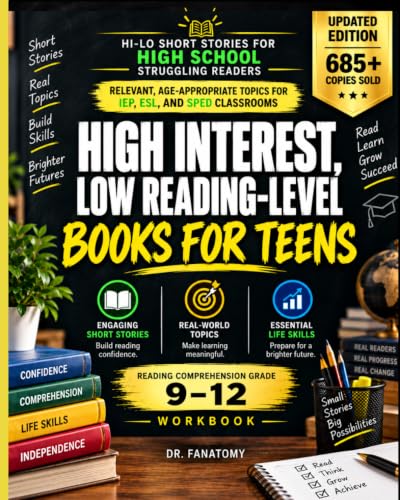
1. High-Interest, Low-Reading-Level Books for Teens
by Fanatomy, Dr.

Overview
This paperback collection from Dr. Fanatomy offers hi-lo short stories written for high school students who struggle with reading. The topics are designed to be relevant and age appropriate for teens, so the material respects older readers while keeping the reading level accessible. It runs 112 pages and was independently published in August 2025. The stories are aimed at supporting readers in IEP programs and other settings where confidence and engagement matter as much as decoding skills.
Book Details
| Author | Fanatomy, Dr. |
| Pages | 112 pages |
| Publisher | Independently published |
| Published | August 7, 2025 |
| Language | English |
This collection stands out because it treats struggling teen readers with respect. The stories are short and the reading level is low, but the topics are chosen to feel relevant to high school life rather than childish. That balance is hard to find, and it is what makes the book useful for teachers and parents alike.
Dr. Fanatomy writes in plain, direct prose that keeps momentum going. Each story is brief enough to finish in a single sitting, which gives readers a real sense of accomplishment. The 112 page paperback format is easy to carry and easy to dip into during class or tutoring sessions.
This book suits high school readers who need support, along with the teachers, aides and parents who work with them. It is a practical classroom and home resource rather than a novel to read cover to cover. Anyone building a hi-lo shelf for teens will find it a sensible addition.
“
Short, respectful stories that give struggling teen readers a real chance to finish and feel proud.
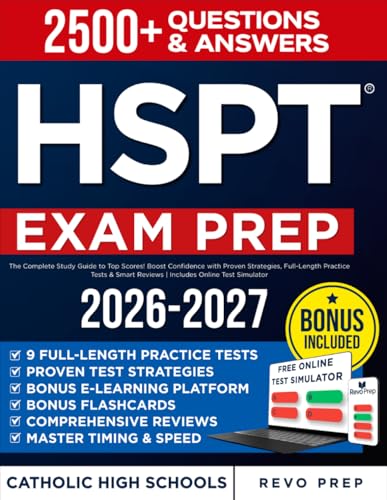
2. HSPT Exam Prep for Catholic High Schools
by Prep, Revo, Collins, Rose

Overview
This complete study guide from Revo Prep and Rose Collins is built around the HSPT exam for Catholic high schools. It combines proven strategies, smart reviews and full length practice tests, and it includes access to an online test simulator. The paperback runs 326 pages and was independently published in May 2026. It is designed to boost confidence as well as scores, making it a structured preparation option for students facing the exam.
Book Details
| Author | Prep, Revo, Collins, Rose |
| Pages | 326 pages |
| Publisher | Independently published |
| Published | May 27, 2026 |
| Language | English |
What sets this guide apart is the combination of paper and online practice. The full length tests in the book are backed by an online simulator, so students can get used to timed, screen based conditions as well as working through questions on paper. That double approach covers more ground than a book alone.
The 326 pages are organised around strategies and smart reviews rather than raw question drills. Revo Prep and Rose Collins write for students who need both technique and confidence, and the structure supports steady, planned study. The reviews help consolidate weak areas before the next practice round.
This guide suits eighth graders preparing for Catholic high school admissions, and the parents or tutors supporting them. It works best as a term long plan rather than a last minute cram. Families who want a single, thorough prep resource will find it well matched to the task.
“
A structured HSPT guide that pairs paper practice with an online simulator to build skill and confidence.
3. Ever After High a School Story 3 Books
by Suzanne Selfors

Overview
This three book collection by Suzanne Selfors gathers Next Top Villain, Kiss and Spell and A Semi-Charming Kind of Life in one paperback set. The stories are set at Ever After High, a school where the children of fairy tale characters study and choose their futures. Published by Little, Brown Books in April 2023, the set runs 672 pages in total. It offers a long run of school story reading built around familiar fairy tale names.
Book Details
| Author | Suzanne Selfors |
| Pages | 672 pages |
| Publisher | Little, Brown Books ltd |
| Published | April 6, 2023 |
| Language | English |
Suzanne Selfors brings a light, playful voice to these school stories, and the fairy tale backdrop gives the series its charm. The three titles, Next Top Villain, Kiss and Spell and A Semi-Charming Kind of Life, each follow the Ever After High setting from a different angle. Readers who like character driven school stories will settle in quickly.
At 672 pages across three paperbacks, the set offers plenty of reading for the price of one collection. The chapters are short and the tone is breezy, which keeps younger middle grade readers moving. The Little, Brown edition is a tidy way to own the run in one go.
This set suits readers around middle grade age who enjoy fairy tale twists and friendship drama, and it makes an easy gift for fans of the Ever After High world. Parents and teachers looking for light, engaging series reading will find it a safe pick. It is best read in order for the full effect.
“
Three breezy Ever After High stories that turn fairy tale school life into easy, charming reading.
4. Ever After High
by Selfors, Suzanne

Overview
Ever After High: Next Top Villain is a school story set at Ever After High, published by Little, Brown Books for Young Readers in January 2015. This hardcover edition runs 224 pages and is written in English by Suzanne Selfors. It is part of the Ever After High series, which follows the students of a fairy tale school.
Book Details
| Author | Selfors, Suzanne |
| Pages | 224 pages |
| Publisher | Little, Brown Books for Young Readers |
| Published | January 6, 2015 |
| Language | English |
Suzanne Selfors writes with a light, playful touch that suits the fairy tale school setting. The story moves quickly and keeps the tone fun, which makes it easy for younger readers to stay engaged. At 224 pages, it is a manageable length for middle school readers who want a full story without feeling overwhelmed.
This hardcover edition from Little, Brown Books for Young Readers is a solid choice for a classroom shelf or a gift. The book works well for readers who already enjoy the Ever After High world and for those meeting the characters for the first time. Teachers may find it useful for reluctant readers who respond to familiar characters and fast pacing.
It suits middle grade readers around ages 9 to 12, and parents looking for a series book with a school setting will find it approachable. The hardcover format makes it a nice present for a young reader who likes fairy tale retellings.
“
A fairy tale school story where familiar characters face the pressure of choosing who they will become.
5. Payback Time
by Deuker, Carl

Overview
Payback Time is a young adult mystery about a high school journalist investigating a football player with a secret past. Written by Carl Deuker, this sports book runs 304 pages in paperback, published by Clarion Books in February 2012 as a reprint edition. It is in English and combines sports and mystery for teen readers.
Book Details
| Author | Deuker, Carl |
| Pages | 304 pages |
| Publisher | Clarion Books |
| Published | February 28, 2012 |
| Language | English |
Carl Deuker blends sports and mystery in a way that gives the story two strong hooks. The high school journalist angle makes the investigation feel grounded, and the football setting gives the plot energy. At 304 pages, there is room for the mystery to build without losing momentum.
The writing is direct and readable, which suits teen readers who want a story that moves. The book works well for students who enjoy sports but may not pick up a traditional mystery. It also gives teachers a good option for a class read that raises questions about secrets and truth.
This paperback reprint from Clarion Books is a practical choice for a school library or a home shelf. It suits readers around ages 12 and up, and parents or gift buyers looking for a sports book with a bit more substance will find it fits.
“
A student journalist digs into a football star’s hidden past and finds more than a story.
6. The Catcher in the Rye
by J. D. Salinger

Overview
The Catcher in the Rye is a novel by J.D. Salinger, published in 1951. It details two days in the life of 16-year-old Holden Caulfield after he has been expelled from prep school. Confused and disillusioned, he searches for truth and rails against the phoniness of the adult world. This paperback edition runs 288 pages.
Book Details
| Author | J. D. Salinger |
| Pages | 288 pages |
| Publisher | Little, Brown Paperbacks |
| Published | January 30, 2001 |
| Language | English |
Salinger’s novel has stayed in classrooms for decades because Holden’s voice feels immediate and honest. The story covers just two days, but the narration carries a lifetime of confusion and frustration. The writing is plain and conversational, which makes the book accessible even when the ideas are heavy.
The central theme, searching for truth in a world Holden sees as phony, gives high school readers plenty to discuss. The 288-page paperback from Little, Brown is easy to carry and works well for class sets. Teachers often pair it with writing assignments about voice and point of view.
It suits high school readers around ages 14 and up, and parents or gift buyers looking for a modern classic will find it a safe choice. The book rewards rereading, and its questions about adulthood still land with teenagers.
“
A teenager spends two days searching for honesty in a world he believes is full of phonies.
7. Les Misérables
by Larsen, Matt, Hugo, Victor

Overview
Les Misérables is presented here in a high school edition, a paperback of 369 pages published independently in January 2018. The text appears in both English and French, and the edition is credited to Matt Larsen alongside Victor Hugo. It offers students a way into Hugo’s sweeping nineteenth century novel within a shorter, classroom friendly format. The dual language presentation makes it useful for readers who want to compare the original French with an English rendering.
Book Details
| Author | Larsen, Matt, Hugo, Victor |
| Pages | 369 pages |
| Publisher | Independently published |
| Published | January 7, 2018 |
| Language | English, French |
This edition is built for the classroom rather than the collector’s shelf. At 369 pages it trims the experience down to something a student can carry through a term, and the dual English and French text gives language learners something extra to work with. Matt Larsen’s involvement signals a version shaped with student readers in mind. Teachers looking for a manageable route into Hugo’s novel will find the format practical.
Hugo’s writing is dense with ideas about justice, poverty and mercy, and this edition keeps those themes in view for a younger audience. The French alongside the English rewards curious readers who want to see how the original reads. It is a book that asks for patience, and the shorter page count helps. Students who stick with it get a real sense of nineteenth century storytelling.
It suits high school readers ready for a challenge, and teachers building a unit around French language or classic fiction. Parents buying for a keen reader should know it is still a serious text, not a simplified retelling. The paperback format keeps it easy to annotate and carry between classes.
“
A shortened bilingual edition that opens Hugo’s great novel to students without losing its moral weight.
8. The Book of Everything
by Students, High School

Overview
The Book Of Everything gathers excerpts from high school students, published independently as a 131 page English paperback in March 2025. It is a collection written by students themselves rather than by a single established author. The title suggests a wide ranging selection of their writing, drawn together into one short volume. It offers a direct look at how young writers express themselves across a compact, accessible format.
Book Details
| Author | Students, High School |
| Pages | 131 pages |
| Publisher | Independently published |
| Published | March 6, 2025 |
| Language | English |
This is a collection with a difference, because the authors are high school students rather than seasoned novelists. At 131 pages it is short enough to dip into, and the excerpt format means readers can move between pieces without losing the thread. The independent publication gives it a fresh, unpolished energy. It reads like a snapshot of what young writers are thinking about right now.
The writing style varies from piece to piece, which is part of the appeal. Some entries are reflective, others more direct, and together they show a range of voices rather than one polished narrative. For students, seeing their peers in print can be genuinely motivating. Teachers may find it useful as a model for their own writing workshops.
It suits high school readers, creative writing groups and teachers looking for contemporary student voices. Parents and gift buyers should know it is an anthology, not a single story. Anyone curious about how teenagers write today will find it an honest and readable little book.
“
A short anthology that puts high school voices on the page and shows how varied young writing can be.
9. To Kill a Mockingbird
by Lee, Harper
Overview
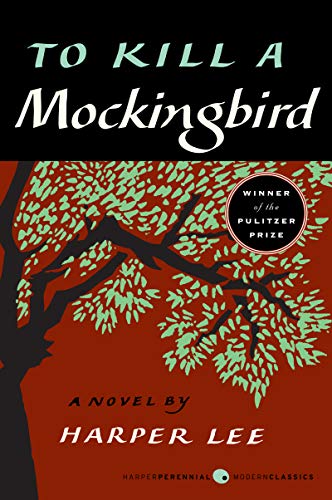
To Kill a Mockingbird is Harper Lee’s classic novel, issued here as a brand new paperback from Harper Perennial Modern Classics. This edition runs 336 pages in English and was published in March 2002. It is a staple of high school reading lists and one of the most widely taught novels in American literature. The modern classics imprint gives students a reliable, standard edition for study and discussion.
Book Details
| Author | Lee, Harper |
| Pages | 336 pages |
| Publisher | Harper Perennial Modern Classics |
| Published | March 5, 2002 |
| Language | English |
This is the edition most teachers reach for, and for good reason. Harper Perennial Modern Classics has kept it in print as a standard paperback, so page numbers and text match what most classrooms use. At 336 pages it is a substantial but manageable read for a term. The brand new paperback condition makes it a clean copy for annotating.
Lee’s writing is quiet and precise, and the novel carries big themes about justice, race and childhood innocence without shouting. Scout’s narration keeps the tone human and often funny, which helps younger readers stay with difficult material. It rewards close reading and class discussion. Few books on a high school list repay a second pass as well as this one.
It suits high school students meeting it for the first time, and teachers who need a dependable classroom edition. Parents and gift buyers will recognise it as a safe, meaningful choice for a reader ready for serious fiction. The paperback format is easy to carry and mark up.
“
A dependable classroom edition of Lee’s novel about conscience, prejudice and growing up in the American South.
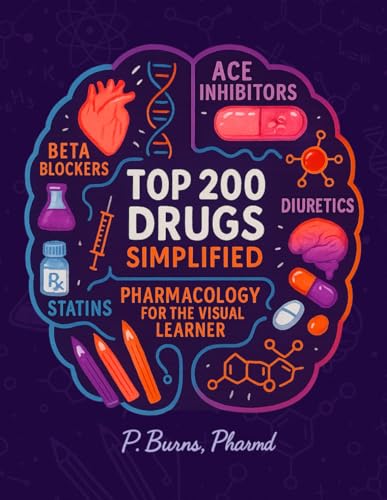
10. Top 200 Drugs Simplified
by Burns, PharmD, P.
Overview
Top literature books for high school lists usually focus on fiction, but this study guide earns its place for students heading into medicine. Top 200 Drugs Simplified is a pharmacology coloring book and study guide by P. Burns, PharmD. Across 330 pages it combines clinical pearls, memory aids and high-yield reviews aimed at medical, nursing and pharmacy learners preparing for exams such as NCLEX, PTCB, USMLE and NAPLEX. The paperback is independently published and pairs active coloring with structured review.
Book Details
| Author | Burns, PharmD, P. |
| Pages | 330 pages |
| Publisher | Independently published |
| Published | November 27, 2025 |
| Language | English |
Top 200 Drugs Simplified stands out because it turns dense drug facts into something students can color, label and repeat. The format mixes clinical pearls with memory aids and high-yield reviews, so revision becomes active rather than passive. At 330 pages there is plenty of room to work through the material slowly.
The author, P. Burns, PharmD, writes from a pharmacy background, and the content is organized for exam preparation. It suits students in medical, nursing and pharmacy programs, plus technicians working toward certification. The paperback format makes it easy to write in and carry between classes.
This is a practical pick for high schoolers already planning a health care path, and for teachers who want a supplement to standard revision. Parents may find it a useful gift for a student facing licensing exams later on. It works best as a companion to a main textbook, not a replacement.
“
Coloring and review turn a long drug list into something students can actually remember.
11. New York City SHSAT Prep Book 2026-2027
by ROWLAND, TESSA

Overview
New York City SHSAT Prep Book 2026-2027 is a test preparation guide by Tessa Rowland aimed at students applying to NYC’s specialized high schools. The paperback contains 12 full-length practice tests with complete answer explanations and proven strategies for tackling the exam. It runs 219 pages, is independently published, and comes in a large print edition, which helps with readability during long practice sessions.
Book Details
| Author | ROWLAND, TESSA |
| Pages | 219 pages |
| Publisher | Independently published |
| Published | February 7, 2026 |
| Language | English |
New York City SHSAT Prep Book 2026-2027 is built around practice, with 12 full-length tests that let students rehearse the real exam format. Complete answer explanations follow each test, so mistakes become learning points rather than dead ends. The strategies section gives structure to revision instead of leaving students to guess.
Tessa Rowland keeps the focus on preparation for NYC’s specialized high schools, and the large print edition makes the dense test material easier on the eyes. At 219 pages it is manageable for a study schedule spread over several weeks. The paperback format suits annotation and repeated use.
This book suits eighth graders and their parents who want a clear practice plan, and teachers running prep sessions will find the tests easy to assign. It is a focused tool for one specific exam, so families outside New York will get less from it. For the right student, it is a solid, practical companion.
“
Twelve full practice tests and clear explanations make exam preparation feel structured rather than overwhelming.
12. Fahrenheit 451
by Ray Bradbury

Overview
Fahrenheit 451 by Ray Bradbury is a classic novel in a reissue paperback from Simon & Schuster, running 249 pages. The book is a staple of high school literature courses and is often studied for its themes and its distinctive writing. This edition, published in January 2012, keeps the novel in a compact, affordable format that suits classroom sets, summer reading lists and personal shelves.
Book Details
| Author | Ray Bradbury |
| Pages | 249 pages |
| Publisher | Simon & Schuster |
| Published | January 10, 2012 |
| Language | English |
Fahrenheit 451 remains one of the most assigned novels in high school English, and this Simon & Schuster reissue keeps it accessible. Bradbury’s writing is vivid and propulsive, with images that stay with readers long after the final page. The themes invite discussion, which is why teachers return to it year after year.
At 249 pages the novel is short enough for a busy semester but dense enough to reward close reading. The paperback format is practical for annotating, carrying to class and building a classroom set. Bradbury’s style can challenge newer readers, but that challenge is part of its value.
This edition suits students meeting the book for the first time, teachers planning units around it, and parents looking for a meaningful gift for a teenage reader. It also works well for book clubs that want a classic with plenty to debate. A reliable choice for any high school literature list.
“
A short, vivid classic that asks readers what is lost when a society stops thinking for itself.
13. How to Win at College
by Newport, Cal

Overview
A practical guide for students heading to college, drawn from the habits of high achievers. Cal Newport packs the book with short, direct advice on studying, time management, relationships with professors and making the most of campus life. At 193 pages in paperback from Crown, it is a compact reference students can dip into again and again.
Book Details
| Author | Newport, Cal |
| Pages | 193 pages |
| Publisher | Crown |
| Published | April 12, 2005 |
| Language | English |
Cal Newport writes in a calm, practical voice that treats success as a set of habits rather than a mystery. The advice is specific and easy to act on, which suits busy students who want clear steps rather than long theory. Each chapter is short, so the book works well as a reference to revisit throughout the year.
The paperback runs 193 pages and stays focused on the student experience, from study routines to building good relationships with teachers. Parents and teachers will find it a useful conversation starter for students preparing for the transition to college. It also makes a sensible gift for a high school graduate.
Newport avoids vague motivational talk and sticks to concrete suggestions, which keeps the reading brisk. The tone is encouraging without being preachy, and the ideas feel achievable for ordinary students. Anyone who wants a straightforward roadmap to college life will get a lot from it.
“
Small, consistent habits matter more than talent when it comes to succeeding at college.
14. The Boy in the Striped Pajamas (Young Reader’s
by Boyne, John

Overview
John Boyne’s novel follows a young boy whose world changes when his family moves near a concentration camp during the Second World War. Told through a child’s eyes, the story explores friendship and innocence against a backdrop of terrible events. This paperback reprint from David Fickling Books runs 215 pages and is published in English.
Book Details
| Author | Boyne, John |
| Pages | 215 pages |
| Publisher | David Fickling Books |
| Published | October 23, 2007 |
| Language | English |
Boyne tells the story through a child’s limited understanding, and that choice gives the book its quiet power. The simple prose makes difficult history approachable for younger readers without softening it. Teachers often use it to open discussions about empathy, prejudice and the war.
At 215 pages, the paperback is a manageable length for high school students, and the reprint edition keeps the text accessible. The story raises moral questions that reward classroom discussion and careful reading. Parents should be ready for the serious themes the book handles.
The writing is restrained and clear, which lets the emotional weight build slowly rather than through dramatic prose. Readers who like historical fiction with a strong human center will find it memorable. It suits students studying the period and anyone looking for a book that stays with them.
“
A child’s friendship can reveal the human cost of hatred and division.
15. The Call of the Wild
by London, Jack

Overview
Jack London’s classic adventure follows a dog named Buck as he is pulled from domestic life into the harsh world of the northern wilderness. The story charts his struggle to survive and his growing connection to his wild instincts. This Reader’s Library Classics paperback edition runs 106 pages and is published in English.
Book Details
| Author | London, Jack |
| Pages | 106 pages |
| Publisher | Reader’s Library Classics |
| Published | February 18, 2021 |
| Language | English |
London’s writing is vivid and direct, and the northern setting comes across with real force. The story moves quickly, and Buck’s journey raises questions about instinct, survival and the pull of nature. The short chapters make it easy to read in class or in short sittings.
At 106 pages, this paperback edition is a compact way to introduce high school readers to a classic. The language is older but still readable, and the adventure keeps students engaged. Teachers will appreciate how much discussion the book invites in a short space.
Readers who enjoy survival stories and animal-centered tales will find plenty here. The book suits students building confidence with classic literature and adults revisiting a familiar title. It works well as a gift for a young reader ready for a serious adventure.
“
The wild calls to something deep inside us that civilization cannot erase.
How to Choose the Best Literature Books for High School
Start with the Reader and the Goal
Before you look at titles, think about who the book is for and what it needs to do. A strong Year 9 reader and a reluctant Year 11 reader need very different books, even if both are studying literature. Ask whether the goal is exam preparation, independent reading, or building a lifelong reading habit.
A book like High-Interest, Low-Reading-Level Books for Teens suits older students who need age-appropriate content at an easier reading level. Titles such as HSPT Exam Prep for Catholic High Schools or New York City SHSAT Prep Book 2026-2027 serve a very different purpose, so match the book to the job first.
Look at the Writing Style and Themes
Style matters as much as story. Some classics use long sentences and dense description, while modern novels often move faster and feel more immediate. The Catcher in the Rye is a good example of a distinctive first-person voice, and that voice is either the reason a student loves it or the reason they bounce off it.
To Kill a Litmus test of patience, so it helps to know a reader’s tolerance for slower pacing before you assign it. Fahrenheit 451 offers big ideas about censorship and technology in a compact form, which suits students who like discussion more than description.
Weigh Format and Length
Format affects how a book fits into a school term or a bedtime routine. A slim novel like The Book Of Everything or The Boy in the Striped Pajamas (Young Reader’s edition) can be finished in a couple of weeks, which keeps momentum going. A longer work like Les Misérables or The Call of the Wild demands more time and may suit a summer reading list rather than a busy term.
Boxed sets such as Ever After High A School Story 3 Books work well for readers who like series and want the next book ready to go. Check page counts and editions, because abridged and young reader versions can change the experience a lot.
Decide Between Ideas and Practice
Some literature books are built around discussion, themes, and interpretation. Others are built around exercises, drills, and test-style questions. Payback Time and Ever After High sit closer to story-driven reading, while Top 200 Drugs Simplified and the exam prep titles are practical study tools. How to Win at College leans toward advice and strategy rather than fiction.
Think about whether the student needs to analyse a text, practise a skill, or simply enjoy reading, because mixing these up leads to frustration.
Check Reader Feedback and Reading Age
Reader reviews and stated reading ages are useful signals, especially when you are buying for a student you do not know well. Look for comments about pacing, difficulty, and whether the book held attention. Reading age guidance helps you avoid handing a mature theme to a younger student or a simple book to someone who will feel patronised.
If a title is widely taught, such as To Kill a Mockingbird, feedback often tells you how students respond to the length and language. Use that feedback as a filter, not a verdict, since every reader is different.
Quick Comparison
| Book | Best for | Watch out for |
|---|---|---|
| The Catcher in the Rye | Students ready for voice and character study | Distinctive style that divides readers |
| Fahrenheit 451 | Discussion-led classes and theme work | Ideas-heavy, lighter on action |
| Les Misérables | Confident readers with time to spare | Length and density |
| High-Interest, Low-Reading-Level Books for Teens | Older reluctant readers | May feel too easy for strong readers |
| HSPT Exam Prep for Catholic High Schools | Test-focused study | Not a literature read |
Use the table as a starting point, then go back to the reader’s goal and level. A book that fits the person will always beat a book that only looks impressive on a list. If you are unsure, choose something shorter and more immediate first, then build up to the heavier classics. That approach keeps reading positive rather than turning it into a chore.
How Much Impact Can Books About Literature Books for High School Have?
Books about literature for high school can change how a student reads, but the change rarely happens overnight. Think of them as tools that open doors rather than magic spells. A good guide can explain what to look for in a novel, how to track themes, and why a writer chooses one word over another. That knowledge builds slowly, one chapter and one discussion at a time.
The realistic gain is confidence. A student who understands how to approach a dense text like Les Misérables or The Catcher in the Rye is less likely to give up on page ten. Guides and companion books break big ideas into smaller pieces, so readers can see structure where they once saw a wall of words. That shift in perspective often shows up within a few weeks of steady reading, though every reader moves at their own pace.
Some books do more than explain. A novel like To Kill a Mockingbird puts a student inside a moral dilemma and asks what they would do. Fahrenheit 451 raises questions about censorship and screens that feel urgent today. The Boy in the Striped Pajamas, in its young reader’s edition, lets younger high schoolers grapple with heavy history at a manageable reading level. The Call of the Wild offers a shorter, punchier route into themes of survival and instinct.
Then there are books that support the practical side of high school English. High-Interest, Low-Reading-Level Books for Teens helps students who find standard texts intimidating, giving them real stories at an accessible level. Ever After High A School Story 3 Books and the Ever After High series offer lighter fare that keeps reluctant readers turning pages. Payback Time and The Book Of Everything add variety for readers who want something different from the classic canon.
Getting the Most Out of These Books
Reading once is a start. Reading with a pencil in hand is better. Students who mark passages, jot questions in the margin, or keep a short list of themes tend to retain far more than those who simply finish the last page. A second pass through a key chapter often reveals details the first read missed entirely.
Discussion matters just as much. A book club of two, whether a parent and child or two classmates, forces readers to put their impressions into words. That act of explaining sharpens understanding. Teachers can use the same principle in class, asking students to defend an interpretation with evidence from the text.
Application is the final step. When a student notices a writer’s technique in one book, they can look for it in the next. When they learn how an author builds tension, they can spot the same moves in a film or a song lyric. Literature guides work best when their lessons spill beyond the page.
An Honest Word About Limits
No book about literature will turn a struggling reader into a scholar in a month. Progress depends on the reader, the text, and the time invested. Some students will click with The Catcher in the Rye immediately, while others need the gentler entry point of High-Interest, Low-Reading-Level Books for Teens. Matching the book to the reader matters more than any single title.
Exam prep titles serve a different purpose and should not be confused with literary study. HSPT Exam Prep for Catholic High Schools, New York City SHSAT Prep Book 2026-2027, and Top 200 Drugs Simplified are practical tools for specific tests and career paths, not guides to great writing. How to Win at College sits in a similar camp, offering advice rather than literary analysis. Knowing which shelf a book belongs on helps buyers spend wisely.
The honest takeaway is this. Books about literature give high schoolers vocabulary for what they feel when they read. They offer context, structure, and companionship. The impact grows with re-reading, discussion, and a willingness to apply what they learn. That combination, more than any single purchase, is what moves a reader forward.
Frequently Asked Questions
What Are the Top Literature Books for High School Students Who Are Just Starting to Read Classics?
Start with books that have a strong story and a clear voice. To Kill a Mockingbird by Harper Lee is a common starting point, and it suits readers from around 14 and up. The language is direct and the themes of justice and empathy give new readers plenty to discuss. Animal Farm by George Orwell is short and easy to finish, which helps build confidence.
For students who like a challenge without feeling lost, The Great Gatsby by F. Scott Fitzgerald is a good next step. It is often studied in the later years of high school, and the writing rewards close reading. Lord of the Flies by William Golding is another strong choice because the situation is simple and the questions it raises are big.
Which Top Literature Books for High School Are Best for Reluctant Readers?
Reluctant readers often do better with a short book and a fast pace. Of Mice and Men by John Steinbeck is a novella with plain language and a tight story, and it is widely read in the early high school years. Fahrenheit 451 by Ray Bradbury is longer but moves quickly, and the idea of a world without books pulls many teenagers in.
The Hate U Give by Angie Thomas is a modern novel with a strong first-person voice, and it suits older high school readers who want something current. The Book Thief by Markus Zusak uses a narrator and short sections that make it easy to read in small chunks. Pairing any of these with a film version can also help keep momentum.
What Reading Age Should I Look for When Buying Top Literature Books for High School?
Most books taught in high school sit in the 14 and up range, but the label is only a rough guide. To Kill a Mockingbird, Lord of the Flies and Of Mice and Men are usually read from around 14. Books like The Great Gatsby and 1984 by George Orwell are often kept for the senior years because the themes are heavier.
Check the edition notes and the publisher’s reading age rather than guessing from the cover. Some titles, such as The Hate U Give, deal with mature issues and suit older teenagers better. If you are buying for a school library or a classroom, it helps to match the book to the year group the teacher has in mind.
Are Top Literature Books for High School a Good Gift for Teenagers?
A classic can make a thoughtful gift, especially if you choose one that matches the reader’s interests. A student who enjoys history might like 1984 or Fahrenheit 451, while a reader who prefers family stories may connect with To Kill a Mockingbird. A good edition with a clear introduction adds context without spoiling the story.
It helps to pick a format the teenager will actually use. A paperback is light and easy to carry, while a hardback or a larger print edition can suit a reader who struggles with small text. If you are unsure, choose a shorter title such as Of Mice and Men or Animal Farm, and include a short note about why you picked it.
Which Top Literature Books for High School Work Well for Classroom Teaching?
Teachers usually want books with clear themes and plenty of material for discussion. Lord of the Flies raises questions about power and group behaviour, and it gives classes a lot to argue about. To Kill a Mockingbird covers race, justice and moral courage, and it is widely taught for that reason. Both have straightforward chapter structures that make lesson planning easier.
Animal Farm is short enough to teach in a few weeks and works well as an introduction to allegory. The Great Gatsby suits older classes because the writing is dense and rewards close reading. When choosing, look at the page count and the edition’s supporting notes, since a good introduction and glossary can save a class a lot of time.
What Is the Difference Between the Common Editions of These Top Literature Books for High School?
The story is the same, but editions differ in page count, print size and extra material. Some copies include an introduction, notes on the author or discussion questions aimed at students. A larger print size can make a long book like The Book Thief less daunting for a teenager who finds small text tiring.
Hardbacks tend to last longer on a classroom shelf, while paperbacks are cheaper and lighter in a school bag. Before buying, check the page count and whether the edition is abridged, since abridged copies can miss passages a teacher expects. Matching the edition to the class set matters if several students need to follow along page by page.
How Do I Choose Among the Top Literature Books for High School If My Teenager Dislikes Reading?
Start with length and voice rather than reputation. Of Mice and Men and Animal Farm are both short, and their plain language makes them easier to finish. Fahrenheit 451 has a gripping idea at its centre, which can hold a reader who needs a reason to keep going. Ask what films or shows they enjoy and look for a book with a similar mood.
It also helps to let the teenager choose from two or three options instead of handing over a single title. A modern novel such as The Hate U Give may feel more relevant than a nineteenth-century classic, and that can make a real difference. Reading the first chapter together, or listening to an audiobook version, is another low-pressure way to get started.
Last Word
High-Interest, Low-Reading-Level Books for Teens is the best overall pick because it gives struggling readers real stories without the frustration. It suits teachers and parents who want teens to build confidence and finish a book.
For students facing entrance exams, HSPT Exam Prep for Catholic High Schools is the practical choice. The Catcher in the Rye suits older teens ready for a classic coming of age story, while The Boy in the Striped Pajamas works well for younger high school readers.
Match the book to the reader, not the reading list. A book a teen actually finishes teaches more than a harder one left on the shelf.